Installation guide
 Owner’s manual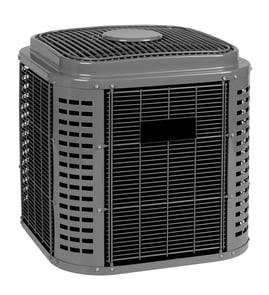





Is it worth repairing a 10 year old air conditioner?
For an Icp NAC036AKA1 condensing unit that is 10 years old, repair is worth it when the failure is a single, non-refrigerant component and the system has been reliable. Replacement is the better value when you are facing compressor or refrigerant-leak repairs, or repeated breakdowns.
Quick decision checklist
- Repair when the problem is isolated (electrical control, fan airflow issue, loose wiring).
- Replace when repairs are frequent across multiple seasons.
- Replace when the compressor is failing or the coil is leaking refrigerant.
- Repair when the unit is otherwise cooling well and the repair restores normal operation.
- Replace when comfort is consistently poor even after maintenance and airflow checks.
What the NAC036AKA1 warranty language points to
Icp warranty terms commonly tie compressor coverage to the installation date, original ownership, and matched-coil requirements. We use the warranty section in the NAC036AKA1 owner's manual to confirm what applies to your specific installation.
| Repair scenario | Typical outcome at 10 years | What it usually means |
|---|---|---|
| Single electrical failure | Repair | Lower labor and parts cost; fast turnaround |
| Outdoor fan airflow issue | Repair | Protects the compressor by restoring heat rejection |
| Refrigerant leak | Replace | High labor cost; risk of repeat leaks |
| Compressor failure | Replace | Highest-cost repair; long-term value drops |
Parts that often make a 10-year repair worthwhile
These are common, serviceable items that can cause “no cool,” hard starting, or outdoor fan issues:
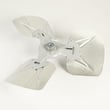
- Central air conditioner condenser fan blade 1085958 (noise, wobble, reduced airflow)
- Capacitor, wiring connections, and electrical terminals (burnt, loose, corroded)
- Contactor (pitted contacts, chattering, intermittent starts)
Why it matters
A condensing unit that runs with weak airflow or unstable electrical switching overheats and stresses the compressor. Fixing a small electrical or fan-related problem early prevents bigger failures and keeps energy use under control.
Last updated: January 2026
What is the average lifespan of a central air conditioning unit?
Most central air conditioning systems last 15 to 20 years with regular maintenance; in real-world conditions, poor airflow, dirty coils, low refrigerant, and electrical wear can shorten that. For the Icp NAC036AKA1 condensing unit, following the service and care guidance in the NAC036AKA1 owner's manual helps you get the longest practical life.
Typical lifespan ranges (what we see most often)
- 15 to 20 years: common for well-maintained central AC systems
- 10 to 15 years: common when maintenance is inconsistent or the unit runs in harsh conditions
- 20+ years: possible, but efficiency and repair frequency usually become concerns
| Condition | Typical lifespan | What usually drives it |
|---|---|---|
| Regular annual service | 15 to 20 years | Clean coils, correct refrigerant charge, tight electrical connections |
| Minimal maintenance | 10 to 15 years | Dirty condenser coil, restricted airflow, overheated compressor |
| Coastal or corrosive environment | 10 to 15 years | Corrosion on coil and electrical components |
What matters most for extending life
- Keep the outdoor condenser coil clean and unobstructed (leaves, lint, grass clippings)
- Replace/clean the indoor air filter on schedule to protect airflow and pressures
- Have a technician check refrigerant charge and temperature split during annual service
- Inspect and tighten electrical connections; replace worn controls before they arc or overheat
- Watch for early warning signs: hard starts, buzzing at the contactor, fan wobble, frequent breaker trips
Why it matters
A central AC often still “runs” past its prime, but aging components can reduce SEER efficiency, increase run time, and raise the risk of compressor damage. The manual also emphasizes keeping records and proof of yearly qualified service for warranty-related requirements, which aligns with best practices for long equipment life.
Last updated: January 2026
What tonnage is NAC036AKA1?
The Icp NAC036AKA1 condensing unit is a 3-ton central air conditioner. In HVAC model numbers, “036” typically indicates about 36,000 BTU/hr of cooling capacity, and 36,000 BTU/hr divided by 12,000 equals 3 tons.
Quick way to confirm tonnage from the model number
Most central AC model numbers use the middle digits to show nominal capacity.
- 018 = about 1.5 tons (18,000 BTU/hr)
- 024 = about 2 tons (24,000 BTU/hr)
- 030 = about 2.5 tons (30,000 BTU/hr)
- 036 = about 3 tons (36,000 BTU/hr)
- 048 = about 4 tons (48,000 BTU/hr)
- 060 = about 5 tons (60,000 BTU/hr)
For the most accurate confirmation, match the model number and capacity information on the unit rating plate and in the NAC036AKA1 manual.
Tonnage and capacity at a glance
| Model capacity code | Approx. BTU/hr | Nominal tons |
|---|---|---|
| 036 | 36,000 | 3.0 |
Why it matters
Correct tonnage matters because your indoor evaporator coil, refrigerant line sizing, and refrigerant charge adjustments are selected around the system’s nominal capacity. Using the wrong tonnage match can reduce efficiency, comfort, and compressor life.
Related specs we commonly see with this model family
These are common characteristics for this type of Icp condensing unit; use the rating plate and NAC036AKA1 installation guide for the exact requirements for your setup.
- Single-phase 208/230V, 60 Hz supply is typical for this style of unit
- Refrigerant line sizing is commonly based on tonnage and line length
- Charge adjustments are commonly based on liquid line diameter and total length
- A crankcase heater is often recommended where liquid floodback is likely
Last updated: January 2026