Owner’s manual
 View engine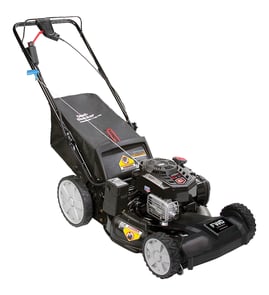


Should I use 87 or 89 gas for lawn mower?
Use 87 octane regular unleaded in your Craftsman 917388621 gas walk-behind lawn mower; higher octane (like 89) is not needed for normal operation. Our owner’s manual also recommends buying fresh fuel you can use within about 30 days and not mixing oil into the gasoline. See the owner's manual for the exact fuel guidance and capacity.
What fuel to use (and what to avoid)
- Use fresh, clean, regular unleaded gasoline (minimum 87 octane).
- Do not mix oil with gasoline (this is a 4-cycle engine setup).
- Avoid stale fuel; buy only what you will use in about 30 days.
- Avoid alcohol-blended fuels that cause storage issues; do not use fuel with more than 10% ethanol (E10).
- If the mower will sit 30 days or longer, run it dry or drain the tank before storage.
Quick comparison: 87 vs 89 for this mower
| Fuel choice | Works in model 917388621? | When to use it | Notes |
|---|---|---|---|
| 87 octane (regular) | Yes (recommended) | Everyday mowing | Meets the manual’s minimum octane requirement |
| 89 octane (mid-grade) | Yes | Only if 87 is unavailable | No performance benefit for a typical small mower engine |
Why it matters
Using the correct octane and keeping fuel fresh helps prevent hard starting, rough running, and carburetor varnish. Ethanol-heavy fuel and long storage with fuel in the system are two of the most common causes of small-engine fuel problems.
Related maintenance tips while you are fueling
- Check engine oil before each use; low oil can damage the engine quickly.
- Keep the air filter clean so the engine does not run rich.
- If the mower starts but dies, old fuel and a dirty carburetor are common causes.
- If you are doing seasonal storage, follow the storage steps in the manual.
Last updated: February 2026
How do you tell if a mower is commercial or residential?
A quick way to tell is by how the mower is rated for use and warranty coverage. For the Craftsman 917388621 gas walk-behind mower, the owner's manual shows a 2-year warranty for residential use and a 90-day warranty if used for commercial or rental use, which is a common residential-mower pattern.
Fast checks you can do
- Check the warranty section; commercial use typically has a much shorter coverage period.
- Look for a heavy-duty deck and frame; commercial units usually have thicker steel and reinforced mounting points.
- Check the drive system; commercial mowers often use serviceable transmissions and heavier belts.
- Look for service features like grease fittings, replaceable wear plates, and easy access to the blade brake clutch.
- Compare duty cycle expectations; commercial mowers are built for daily, all-day mowing.
What “commercial” vs “residential” usually means
Commercial and residential mowers can look similar, so we recommend using a few signals together.
| Feature | Residential mower (typical) | Commercial mower (typical) |
|---|---|---|
| Warranty when used for business | Shortened (often 30-90 days) | Longer, business use allowed |
| Build | Lighter deck and handle hardware | Heavier deck, reinforced controls |
| Serviceability | More sealed components | More rebuildable components |
| Intended use | Weekly home mowing | Daily, high-hour mowing |
Why it matters
Using a residential mower like the Craftsman 917388621 for commercial work usually accelerates wear on high-load parts such as the drive belt, blade adapter, and control cable. Staying within the intended duty cycle helps prevent breakdowns and keeps maintenance predictable.
Last updated: February 2026
Is it cheaper to repair or replace a lawnmower?
For a Craftsman 917388621 gas walk-behind lawn mower, it’s usually cheaper to repair when the problem is a normal wear item (blade, belt, cable, fasteners) and you can do the work yourself. Replacement makes more sense when labor costs are high or the engine or deck has major damage.
Quick cost rule of thumb
- Repair is the better value when the mower needs routine maintenance parts and basic adjustments.
- Replace is the better value when the repair involves major engine work, a bent crankshaft, or extensive deck damage.
- If the mower is still within the limited warranty period, follow the maintenance requirements in the owner's manual so you do not lose coverage.
What typically makes repair the cheaper option
Wear items are expected to be replaced over time (the manual calls these “expendable items”), so fixing these is usually cost-effective:
- Drive or blade-related wear (common on power-propelled mowers)
- Control issues caused by a stretched or broken cable
- Loose or missing hardware on the handle or wheels
- Bagging problems from a worn grass catcher
Common examples for this model’s parts list include:
- Belt, 21-in 532406712 (drive belt)
- Control cable 532168552 (operator control cable)
- Lawn mower blade adapter 581547901 (blade mounting adapter)
When replacement is usually the better value
Replacement is typically the smarter spend when:
- The engine has internal damage or compression problems
- The crankshaft is bent (often after striking a solid object)
- The deck is cracked or severely rusted through
- Multiple major systems need work at the same time (engine + drive + deck)
DIY vs. paid repair comparison
| Scenario | Usually cheaper | Why |
|---|---|---|
| DIY repair with common parts | Repair | Parts cost is controlled; labor is your time |
| Shop repair for multiple issues | Replace | Labor can exceed the mower’s remaining value |
| Routine seasonal maintenance | Repair | Prevents bigger failures and protects performance |
Why it matters
A walk-behind mower like the Craftsman 917388621 is designed for periodic service. The manual’s maintenance schedule (oil checks/changes, air filter service, blade inspection, spark plug replacement) helps you avoid the expensive failures that push the decision toward replacement.
Last updated: February 2026
What are the common problems with Craftsman lawn mowers?
Common problems on the Craftsman 917388621 gas walk-behind mower are no-start conditions (stale fuel, dirty air filter, bad spark plug, or a released/defective control bar), loss of power from grass buildup or incorrect cutting height, and poor cut quality from a worn or loose blade or blade adapter. For model-specific procedures and the troubleshooting chart, use the owner's manual.
Most common symptoms and what usually causes them
- Engine will not start: out of fuel, stale fuel, water in fuel, spark plug wire disconnected, bad spark plug, control bar released/defective
- Loss of power: dirty air filter, grass and debris packed under the deck, cutting too much grass, oil overfilled, walking speed too fast
- Poor cut or uneven cut: worn/bent/loose blade, uneven wheel height settings, debris under the deck
- Hard to pull starter rope: blade or adapter issue, debris jammed under the deck (also see lawn mower pull cord stuck)
Quick checks we recommend (fastest wins first)
- Drain old fuel and refill with fresh gasoline if the mower sat more than 30 days.
- Clean or replace the air filter; a dirty filter is a top cause of no-start and power loss.
- Remove the spark plug, inspect it, and replace if fouled or worn.
- Tip the mower safely (spark plug wire off) and clear packed grass from under the deck.
- Confirm the control bar is fully depressed to the handle during starting and mowing.
Parts that commonly solve these issues
If you find looseness or damage at the blade mount, replace the worn mounting components rather than forcing them tight.
| Problem you see | Part that often relates | Example part for this model |
|---|---|---|
| Blade feels loose, vibration | Blade adapter hardware | Lawn mower blade adapter 581547901 |
| Mower will not self-propel | Drive belt worn or stretched | Belt, 21-in 532406712 |
| Control bar does not engage | Control linkage/cable issue | Control cable 532168552 |
Why it matters
Running with a loose blade or damaged blade adapter can cause severe vibration, poor cut quality, and additional wear on the crankshaft and deck. Keeping the underside of the mower deck clean also prevents power loss and improves airflow for bagging.
Last updated: February 2026
Why is my self-propelled lawn mower pulling to one side?
On your Craftsman 917388621 gas walk-behind mower, “pulling” to one side is typically caused by uneven wheel height settings, a worn or loose blade, or grass buildup under the deck. Set all wheels evenly and clean the underside first (see the owner's manual).
Quick checks that fix most tracking problems
- Set all wheels to the same cutting height; uneven wheel heights make the mower drift.
- Inspect the blade for wear, bends, or looseness; tighten the blade bolt if it is loose.
- Clean grass, leaves, and debris from under the mower housing (deck).
- Avoid mowing wet or very tall grass; it can load the deck unevenly and steer the mower.
- If pulling comes with vibration, stop and inspect the blade and blade adapter area.
Safe step-by-step
- Stop the engine and wait for the blade to come to a complete stop.
- Disconnect the spark plug wire.
- Verify wheel adjusters match side-to-side and front-to-back.
- Tip the mower on its side with the air filter and carburetor facing up, then clean the underside.
- Check the blade mounting hardware; replace worn mounting parts as needed.
Symptoms and likely causes
| Symptom | Most likely cause | What to do |
|---|---|---|
| Pulls left or right consistently | Wheel heights uneven | Match wheel settings on all corners |
| Pulling plus ragged cut | Worn, bent, or loose blade | Tighten blade bolt; replace blade if bent |
| Pulling after heavy mowing | Deck packed with clippings | Clean underside; raise cut height |
| Pulling plus vibration | Blade or adapter issue | Inspect blade mount; replace worn parts |
Why it matters
A mower that does not track straight is harder to control and usually indicates a deck, wheel-height, or blade issue. Correcting it improves cut quality and reduces stress on the blade mounting components.
Last updated: February 2026