Installation guide
 Owner’s manual
 Error Codes


How to hard reset Amana washing machine?
To hard reset your Amana NTW4630YQ0 washer, we recommend a power reset first: unplug the washer (or switch off the breaker) for 5 minutes, then restore power and start a cycle. This clears many control glitches and false error conditions.
Quick reset steps (power reset)
- Turn the cycle knob to Off.
- Unplug the washer (or turn OFF the dedicated breaker).
- Wait 5 minutes.
- Restore power.
- Lift and close the lid once, then select a cycle and press Start.
When a reset is not enough
A “hard reset” fixes temporary control issues. If the washer still will not start, fill, drain, or spin after the reset, focus on the symptom:
| Symptom after reset | Most common checks | Parts often involved |
|---|---|---|
| Won’t start or lid won’t lock | Lid fully closed, latch area clear | Washer lid lock assembly W10404050 |
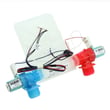
| Won’t fill or fills slowly | House valves open, inlet screens clear | Washer water inlet valve assembly WPW10683603 |
| Won’t drain or leaves water | Drain hose height/kinks, pump obstruction | Washer drain pump assembly WPW10276397 |
Deeper reset: calibration/diagnostics (when needed)
Some Amana top-load washers use a calibration routine after certain repairs (control, actuator, drive system) to restore normal sensing and agitation behavior. Follow the exact diagnostic and calibration steps for NTW4630YQ0 in the NTW4630YQ0 owner’s manual.
Why it matters
Resetting the control can clear a stalled program and restore normal sensing, but repeating resets can hide an underlying issue (like a lid lock problem, a restricted inlet valve, or a drain pump blockage) that will keep coming back.
Last updated: January 2026
How long do Amana washers last?
Most Amana washers, including the Amana NTW4630YQ0, typically last 8 to 12 years with normal household use. With consistent care (proper loading, correct detergent, and basic maintenance), it’s common to reach the upper end of that range.
Typical lifespan and what affects it
A washer’s life is driven more by use and upkeep than the badge on the lid.
- Loads per week: more cycles equals more wear on the drive system and drain pump
- Overloading: strains the drive belt, gear case, and suspension
- Water quality: sediment can shorten the life of the inlet valve and pump
- Leveling and vibration: excessive shaking accelerates wear on moving parts
- Maintenance habits: cleaning, checking hoses, and addressing small issues early
What “end of life” usually looks like
These are the most common symptoms we see as top-load washers age:
- Won’t spin or drains slowly
- Loud grinding, squealing, or burning rubber smell
- Lid won’t lock or the cycle won’t start
- Leaks underneath or intermittent filling problems
- Repeated out-of-balance shaking during spin
Parts that commonly determine whether repair is worth it
If your NTW4630YQ0 is otherwise in good shape, these repairs are often practical:
| Symptom | Common part area | Example part for this model |
|---|---|---|
| Won’t drain | Drain pump | Washer drain pump assembly WPW10276397 |
| Won’t fill or fills slowly | Water inlet valve | Washer water inlet valve assembly WPW10683603 |
| Won’t start or lid error | Lid lock | Washer lid lock assembly W10404050 |
| Won’t spin, squeals | Belt/drive | Washer drive belt WPW10006384 |
Why it matters
Knowing the typical lifespan helps you decide whether to invest in a repair (often smart for a simple belt, lid lock, or valve issue) or plan for replacement if multiple major systems are failing.
For model-specific operating and care guidance, follow the maintenance and loading recommendations in the NTW4630YQ0 manual.
Last updated: January 2026
Is Amana a low-end brand?
Yes. Amana is widely positioned as a value-focused, budget-friendly appliance brand; you typically get straightforward features and practical performance rather than premium options. For an Amana washer like model NTW4630YQ0, that usually means simpler controls and lower upfront cost, with repairs handled using standard service parts.
What “low-end” usually means in real use
- Fewer premium features (fewer specialty cycles, fewer convenience options)
- More basic control layouts and simpler user interface
- Lower purchase price compared with many mid-range and premium lines
- Repairs tend to be more cost-sensitive; replacing a single failed part is often the best path
- Parts availability is typically strong for common wear items
How to decide if it is the right fit
Use this quick comparison to match expectations to how you do laundry.
| If you want... | Amana is usually a good fit | Consider stepping up if you need... |
|---|---|---|
| Reliable basics at a lower price | Yes | Advanced wash customization and smart features |
| Simple cycles and controls | Yes | Quieter operation and more premium build feel |
| Straightforward repairs | Yes | More specialty fabric care options |
Why it matters for repairs and parts
Value brands can be excellent long-term when you maintain them and replace common wear parts as needed. On NTW4630YQ0, issues like no spin, no drain, or fill problems are often tied to serviceable components such as a belt, actuator, lid lock, or drain pump.
Common parts that affect performance
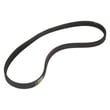
- Washer drive belt WPW10006384 (slipping or broken belt can cause weak or no spin)
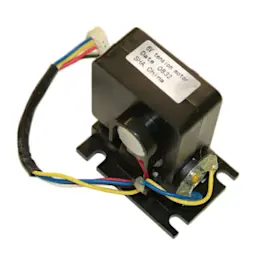
- Washer actuator WPW10006355 (shifting problems between agitate and spin)
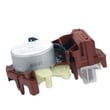
- Washer lid lock assembly W10404050 (won’t start or won’t spin if the lid won’t lock)
- Washer drain pump assembly WPW10276397 (won’t drain, slow drain)
Best next step
For cycle details, normal sounds, and operating expectations specific to NTW4630YQ0, use the NTW4630YQ0 owner's manual.
Last updated: January 2026
Is 3.8 cubic feet a large washer?
No. A 3.8 cu. ft. washer is not considered large; it falls in the medium-capacity range for most top-load washers. For your Amana NTW4630YQ0, the best way to judge “large enough” is whether bulky items fit without packing and the washer can spin without going out of balance; use the NTW4630YQ0 owner's manual for model-specific loading guidance.
Washer capacity categories (typical ranges)
These are the common capacity labels shoppers and manufacturers use:
- Compact: under about 3.5 cu. ft.
- Medium: about 3.5 to 4.4 cu. ft.
- Large: about 4.5 to 5.0 cu. ft.
- Extra-large: over about 5.0 cu. ft.
What to load in a 3.8 cu. ft. washer
A 3.8 cu. ft. top-load washer handles everyday laundry well and many bedding items when loaded correctly.
- Load items loosely, not tightly packed
- Keep items below the top rim of the basket
- Balance the load by mixing large and small items
- Use the right cycle for towels and bedding to improve rinse and spin
- Use the correct detergent amount to reduce residue and rewash needs
Medium vs large: what changes
| What you care about | Around 3.8 cu. ft. (medium) | 4.5+ cu. ft. (large) |
|---|---|---|
| Weekly laundry volume | More loads | Fewer loads |
| Bulky items (comforters) | May need careful loading | More room, easier fit |
| Out-of-balance risk | Higher if overfilled | Lower with extra space |
Why it matters
Overfilling is a common cause of poor cleaning and spin issues. It also increases strain on drive and shifting parts such as the washer actuator WPW10006355 and washer drive belt WPW10006384.
Last updated: January 2026