Owner’s manual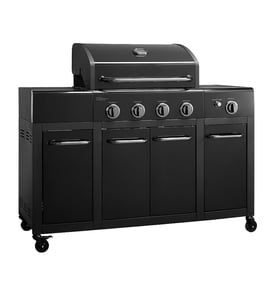

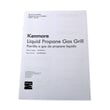
How to find Kenmore Grill model number?
On a Kenmore gas grill, the model number is printed on the rating label; for model 14845962610, that label is typically on the back panel of the grill base or inside the cabinet area. Use the full model number exactly as shown to match the correct parts and diagrams.
Where to look on your Kenmore grill
Check these common label locations first:
- Back panel of the grill base (rear of the lower cart)
- Inside the cabinet (on an inner side wall or back wall)
- Side panel near the control knobs (inside the cart area)
- Under the side shelf (underside or inner edge)
- Near the propane tank bracket area (inside the cart)
What to write down (and why)
Record the information exactly as it appears on the label.
- Model number (example format: 14845962610)
- Serial number (if present)
- Gas type listed (LP/propane or natural gas)
- Any manufacturing code/date shown
Why it matters
The model number is what ties your grill to the correct burner, igniter, regulator, heat plates, and cooking grate options. Even small differences in a Kenmore grill series can change fit and fuel setup.
Quick ID checklist
Use this to avoid common mix-ups:
| Item on label | What it does | Common mistake |
|---|---|---|
| Model number | Matches parts diagrams and lists | Using a series name instead of the full number |
| Serial number | Identifies production run | Swapping 0 (zero) and O (letter) |
| Gas type | Confirms correct regulator/orifices | Assuming LP and natural gas parts interchange |
If the label is hard to read
- Wipe the label gently with a damp cloth; let it dry
- Use a flashlight at an angle to make faded print stand out
- Take a close-up photo and zoom in
- If the label is missing, compare your grill’s burner count, control panel layout, and cart style to the diagrams in the 14845962610 owner's manual
Last updated: February 2026
Is it worth fixing a gas grill?
Yes, it’s usually worth fixing a Kenmore gas grill model 14845962610 when the problem is limited to common wear items (ignition, burners, regulator, grates) and the firebox and frame are still solid. Replace the grill when structural rust, a damaged firebox, or recurring gas-safety issues make repairs unreliable.
Quick repair vs replace checklist
- Fix it if the grill heats unevenly, won’t ignite, or has low flame but the cabinet, lid, and firebox are intact.
- Fix it if the issue is isolated to a single system (ignition, burner, fuel supply).
- Replace it if the firebox is cracked, the base is warped, or the frame has deep rust-through.
- Replace it if you smell gas repeatedly after tightening connections and replacing obvious wear parts.
- Replace it if multiple major components are failing at once (burners plus manifold plus firebox).
Typical costs and effort (what most owners see)
| Issue | Most common cause | Typical DIY difficulty | Typical outcome |
|---|---|---|---|
| Won’t ignite | Weak igniter, bad electrode, dead battery | Easy | Often fully fixable |
| Low heat | Regulator lock-up, low LP level, clogged burner ports | Easy to moderate | Often fully fixable |
| Uneven heating | Dirty burners, blocked venturi, grease buildup | Moderate | Often fully fixable |
| Flare-ups | Grease tray and firebox buildup | Easy | Fixable with cleaning |
| Rusted-through firebox | Structural corrosion | Not practical | Replace grill |
Safety first (do this before deciding)
- Turn off the control knobs.
- Shut off the LP tank valve (or natural gas shutoff).
- Let the grill cool completely.
- Check for obvious damage: cracked hoses, melted wires, heavy rust at the firebox seams.
- If you suspect a leak, do a soap-and-water bubble test on fittings before lighting.
Why it matters
A solid firebox and stable frame mean repairs restore safe, predictable heat. Once the structure is compromised, heat control and gas routing become less reliable, so replacement is the safer long-term choice.
Helpful DIY resources
- Use the owner's manual for model-specific lighting steps, cleaning intervals, and fuel type guidance.
- If ignition or heat is the issue, follow gas grill wont ignite or light video and how to fix uneven heating on a gas grill video to pinpoint the most likely failure.
Last updated: February 2026
Are Kenmore gas grills any good?
Yes. Kenmore gas grills such as model 14845962610 are a solid choice for everyday backyard cooking: they typically preheat quickly, deliver even heat when maintained, and offer practical features for the price. Long-term satisfaction mostly depends on routine cleaning and keeping ignition and burner parts in good condition (see the owner's manual).
What “good” looks like for a Kenmore gas grill
A good-performing gas grill should do these things consistently:
- Ignite reliably (push-button or electronic ignition)
- Preheat to grilling temps in about 10 to 15 minutes
- Hold steady heat with the lid closed
- Heat evenly across the cooking grates (minimal hot and cold spots)
- Clean up easily with a manageable grease system
Common pros and common pain points
These are the most typical strengths and issues we see across many Kenmore gas grills.
- Pros: quick warm-up, good cooking space for the footprint, straightforward assembly, strong value
- Pain points: ignition misfires, uneven heating from clogged burner ports, wheel or cart wear, flare-ups from grease buildup
Quick checks to judge your grill’s condition
If you are deciding whether your grill is “any good” right now, these checks give a clear answer:
- Confirm burners light smoothly and stay lit with the lid open
- Look for an even blue flame (small yellow tips are normal; large yellow flames indicate a problem)
- Inspect burner tubes for rust-through, cracks, or heavy blockage
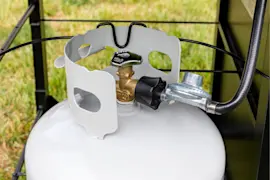
- Verify the regulator and hose are not kinked and connections are tight
- Clean grease trays and heat plates to reduce flare-ups
Troubleshooting guide (symptom to likely cause)
| Symptom | Most common cause | What to do first |
|---|---|---|
| Won’t ignite | weak igniter spark, dead battery, dirty electrode | Clean electrode tip; check battery; follow gas grill wont ignite or light video |
| Heats unevenly | clogged burner ports, dirty heat plates | Deep clean burners and heat plates; use how to fix uneven heating on a gas grill video |
| Low heat | regulator flow restriction, low propane | Reset regulator; check tank level; use how to check the propane level on an lp tank video |
| Flare-ups | grease buildup | Clean cook box and grease system; use how to prevent grease flare ups on a gas grill video |
Why it matters
A grill that ignites reliably and heats evenly is safer, wastes less fuel, and cooks more predictably. Most “bad grill” complaints come from normal wear items (burners, igniter parts, regulator) or from grease and carbon buildup, not from the grill body itself.
Last updated: February 2026
Who made Kenmore gas grills?
Kenmore gas grills are built for Kenmore by outside manufacturers (Kenmore is the brand, not the factory). For Kenmore gas grill model 14845962610, the most reliable way to identify the actual manufacturer is the rating label on your grill and the identification details shown in the 14845962610 owner's manual.
How to identify the manufacturer on your exact grill
Use the rating label because it ties your unit to the correct parts diagrams and fuel system.
- Find the data plate inside the cart, on the rear panel, or near the LP tank bracket
- Confirm the model number is 14845962610 (match all digits)
- Record the serial number and any certification markings (CSA/UL/ETL)
- Look for a “Manufactured by” or company name line on the label
- Note the fuel type listed (LP propane or natural gas)
Why Kenmore grills have different manufacturers
Kenmore commonly sourced grills from multiple OEMs over time. That matters because similar-looking grills can use different components.
- Burner tubes and carryover channels
- Control valves and manifold layout
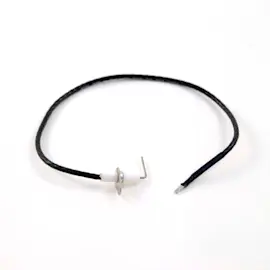
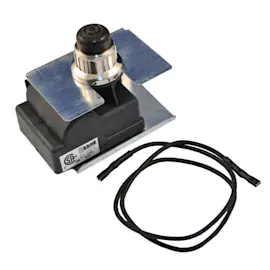
- Ignition module, electrodes, and wiring
- Heat plates (flame tamers) and cooking grates
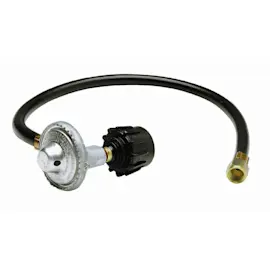
- Regulator and hose assemblies
Quick reference: what to use for identification
| What you check | What it tells you | Why it matters |
|---|---|---|
| Kenmore nameplate | Brand line | Helps confirm you are in the right product family |
| Model number 14845962610 | Exact configuration | Determines the correct diagrams and replacement parts |
| Rating label “Manufactured by” | Actual OEM | Helps match OEM-style parts and specs |
Why it matters
Correct manufacturer and model identification helps prevent ordering the wrong ignition, regulator, valve, or burner parts, and it reduces the risk of ignition problems, uneven heating, and gas-flow issues after a repair.
Last updated: February 2026