Installation guide
 Owner’s manual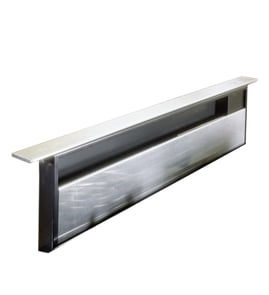




Do downdraft range vents work?
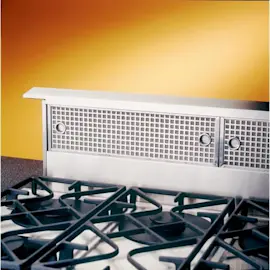
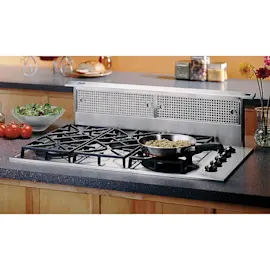
Yes, downdraft range vents work well for everyday cooking on a Dacor ERV36-ER raised vent when the vent is installed correctly and the ductwork is planned properly; they capture steam and odors close to the cooktop, but they are less effective than an overhead hood for heavy smoke and high-heat searing because heat naturally rises. For model-specific installation requirements, use the installation guide.
What affects how well a downdraft vent works
Downdraft performance depends more on installation details than most people expect.
- Duct routing and length: Longer or more restrictive duct runs increase noise and reduce airflow.
- Exhaust direction: The ERV series can be configured to vent through the back, bottom, or a side, so layout matters.
- Knockout and foil removal: If the foil inside the knockout is not removed, the vent will not work.
- Blower power and wiring: The blower must receive power from the raised vent.
- Cooking style: Simmering and light sauteing are easier to capture than wok cooking or hard searing.
Quick expectations: downdraft vs overhead hood
| Cooking situation | Downdraft vent result | Overhead hood result |
|---|---|---|
| Boiling water, light odors | Typically good capture | Excellent capture |
| Pan frying | Good to fair | Very good |
| High-heat searing, heavy smoke | Fair to poor | Best option |
Installation checks that directly impact performance (ERV36-ER)
These are the most common setup items that decide whether the vent “works” in real use.
- Confirm the vent is configured for the intended exhaust path (rear, bottom, or side).
- Remove the correct exhaust knockout and cut/remove the foil inside the opening.
- Allow room for the exhaust duct coming out of the unit; avoid tight bends.
- Verify the power switch is on, then raise the vent and test the variable speed control.
- Make sure the top cap does not catch on the cooktop edge when lowering.
Why it matters
A downdraft system can feel weak even when the motor is fine if the duct run is too restrictive or the exhaust opening is partially blocked. Getting the duct layout and knockout prep right is what turns the ERV36-ER into a reliable everyday ventilation solution.
If you need replacement components that affect airflow and fit, you can order model-matched parts like the Dacor plenum 27811 from the parts list for ERV36-ER, or search by model on Sears PartsDirect.
Last updated: February 2026
Do downdraft vents need to be vented outside?
Yes. For the Dacor ERV36-ER downdraft ventilation system, a ducted installation must vent to the outdoors for proper exhausting and fire safety; venting into walls, ceilings, attics, crawl spaces, or garages is not acceptable. See the installation guide for approved ducting layouts and requirements.
What “vented outside” means for ERV36-ER
A ducted downdraft pulls cooking smoke, heat, grease, and odors into the vent and sends them through metal ductwork to an exterior wall or roof termination.
Key requirements we follow for this model:
- Ducted fans must always be vented to the outdoors.
- Do not discharge exhaust air into enclosed spaces (walls, ceilings, attics, crawl spaces, garages).
- Use only metal ductwork.
- Tape and fasten duct joints securely (do not rely on duct tape alone).
Duct planning tips that improve performance
Good duct design matters as much as the blower because long, restrictive duct runs reduce capture.
- Choose the shortest, most direct route to the outside
- Avoid unnecessary elbows and transitions
- Never reduce duct size along the run (increasing size is acceptable)
- Use a damper at the outlet if needed to prevent backdrafts
- Do not add extra blowers to “boost” airflow; mismatched airflow can reduce draw
Quick comparison: ducted vs. ductless (recirculating)
The ERV36-ER installation guidance is written around ducting to the outdoors. If you are considering a ductless setup, confirm the exact configuration options in the documentation for your installation.
| Setup type | Where air goes | Best for | Tradeoffs |
|---|---|---|---|
| Ducted (recommended) | Outdoors | Heavy cooking, best odor and smoke removal | Requires exterior duct route |
| Ductless (recirculating) | Back into kitchen through filters | Locations with no practical duct route | Less effective at removing heat and moisture |
Why it matters
Venting outdoors protects indoor air quality and helps prevent grease and moisture buildup inside cabinets and hidden cavities. It also reduces the risk of backdrafting when other fuel-burning appliances are present.
Parts that commonly relate to ducting and airflow
If you are repairing an air leak, rattle, or poor capture, these model-specific parts are often involved:
- Dacor plenum 27811 (air collection chamber)
- Dacor filter support 36873 (supports the filter and helps maintain proper airflow path)
You can order replacement parts for your Dacor ERV36-ER from the parts list for this model, or search by model number on Sears PartsDirect.
Last updated: February 2026
How does a downdraft ventilation system work?
A downdraft ventilation system like the Dacor ERV36-ER pulls cooking smoke, steam, and odors downward across the cooktop surface into an intake, then moves that air through a duct path (typically out of the home) using a blower that turns on when the vent is raised. See the installation guide for venting and wiring basics.
What happens when you turn it on
When you press the control to raise the vent, the intake rises to its operating position and the system begins drawing air. You can then adjust airflow using the variable speed control; when you lower the vent, the intake retracts.
- The vent raises to create an intake opening near the cooking surface
- Air is pulled down into the plenum and transition area
- The blower moves air through ductwork (back or bottom venting are common)
- Speed control changes how strongly it captures smoke and steam
- Filters must be installed before operation to protect the system
Venting and electrical basics (ERV36-ER)
The ERV36-ER raised vent can be configured to exhaust through the back or the bottom, depending on your cabinet and duct layout. The installation instructions also call out keeping the electrical outlet accessible so the plug can be disconnected for service.
| Topic | What to plan for | Why it matters |
|---|---|---|
| Exhaust direction | Back or bottom routing | Impacts cabinet cutouts and duct path |
| Blower control wiring | Blower is wired to turn on with the raised vent | Ensures the fan runs whenever the vent is operating |
| Clearance | Top cap must not catch on the cooktop/range edge | Prevents scraping, binding, and damage |
Why it matters for performance
Downdraft systems capture best when the intake is fully raised, filters are installed, and the duct run is smooth and properly sized. Long duct runs, sharp elbows, and restrictions reduce airflow and can let smoke escape into the kitchen.
Parts that commonly relate to airflow and fit
If you are troubleshooting weak capture, rattles, or fit issues after service, these model-specific parts are often involved:
- Dacor plenum 27811 (air collection chamber area)
- Dacor filter support 36873 (helps position filters correctly)
- Dacor sleev rear 36868 and Dacor sleve fron 701220 (ducting or transition sleeve components)
For ordering, use the parts list for model ERV36-ER on this page, or search by model number on Sears PartsDirect.
Last updated: February 2026
How to clean a Dacor downdraft vent?
For your Dacor ERV36-ER downdraft ventilation system, we clean it by turning power off, removing the vent filters and trim/cover pieces you can access, then washing degreaseable parts with hot, soapy water and wiping the plenum and surrounding surfaces clean. Use the ERV36-ER installation guide for safe access points and reassembly.
Safety first (before you start)
- Turn off power to the raised vent at the breaker (and verify it is off).
- Let the cooktop and surrounding surfaces cool completely.
- Avoid spraying cleaner into the electrical access area.
- Do not use abrasive pads that can scratch stainless or painted surfaces.
- Reinstall filters and any supports before operating the vent.
Step-by-step cleaning (routine grease and dust)
- Raise the vent (if your setup allows) and remove the filters.
- Wash filters in hot water with a grease-cutting dish soap; rinse and dry fully.
- Wipe the intake area, vent housing, and accessible duct opening with a damp cloth and mild degreaser.
- Clean the filter support area; if it is bent or loose, inspect the filter support 36873.
- Reinstall filters and confirm the vent raises and lowers without scraping.
What to clean and how often
| Item | What to use | Typical frequency |
|---|---|---|
| Filters | Hot, soapy water; soft brush | Every 2 to 4 weeks |
| Intake grille area | Mild degreaser; microfiber cloth | Monthly |
| Plenum and interior surfaces | Damp cloth; non-abrasive cleaner | Every 1 to 3 months |
| Duct entry (visible area only) | Vacuum with brush attachment | Every 3 to 6 months |
If the vent is noisy or scrapes after cleaning
A scraping sound or poor raising/lowering is usually caused by an obstruction or misalignment. After cleaning:
- Check for debris along the lift path and around the intake opening.
- Confirm filters are seated correctly and the support is secure.
- Make sure nothing in the cabinet is contacting the vent body.
- If you recently had duct work adjusted, confirm joints are secure and not pushing against the unit.
Why it matters
A clean downdraft vent pulls smoke and steam more effectively, reduces grease buildup in the plenum and duct, and helps the raise/lower mechanism move smoothly. Keeping filters clean also helps protect internal components and wiring from grease contamination.
You can order model-specific replacement parts (including vent structure pieces and hardware) from the parts list for ERV36-ER, or search by model on Sears PartsDirect.
Last updated: February 2026
Can you install a downdraft vent behind a range?
Yes, you can install a downdraft vent behind a range when the cabinetry and range cutout are designed for a separate raised vent system. For the Dacor ERV36-ER, the raised vent installs in the back of the cutout (separate from the range) and must be installed to the clearances and duct rules in the installation guide.
What “behind a range” means for ERV36-ER
This is a built-in raised vent that needs dedicated space behind the range for the vent chassis, wiring access, and the exhaust duct connection.
Key requirements:
- Install the raised vent before pushing the range into place.
- Plan the duct exit (rear, bottom, or side) and leave room for the duct coming out of the unit.
- Install with a remote or in-line blower; use only one blower.
- Position the vent and range so they can be removed for service.
Quick fit check
Use these checks before committing to a layout:
- Verify the minimum cutout dimensions for your specific range and the ERV36-ER.
- Confirm the duct path avoids tight turns and excessive length (noise increases, performance drops).
- Confirm the vent can lower without catching the back edge of the cooktop or range.
- Confirm an accessible electrical outlet and blower wiring connection.
Common outcomes
| Scenario | Result | What to do |
|---|---|---|
| Cabinetry designed for a raised vent | Works as intended | Follow cutout and duct specs |
| Limited rear depth behind range | Poor fit or impossible | Rework cabinet/duct layout |
| Vent hits range/cooktop edge | Risk of damage | Reposition range or vent |
Why it matters
Downdraft performance depends on capture area and an unrestricted airflow path. A cramped behind-the-range install leaves smoke and odors in the kitchen and makes the system louder.
If you need model-matched replacement parts during service, we stock items such as the Dacor plenum 27811 for the ERV36-ER; you can also search by model on Sears PartsDirect.
Last updated: February 2026