Installation guide
 Owner’s manual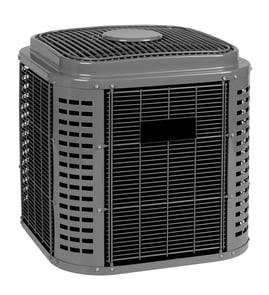



What tonnage is 38TRA060?
The Carrier 38TRA060 condensing unit is a 5-ton central air conditioner. In this model family, the “060” size denotes a nominal capacity of about 60,000 BTU/h, and 60,000 BTU/h divided by 12,000 BTU/h per ton equals 5 tons (typical rating).
Quick capacity conversion
- “060” indicates about 60,000 BTU/h nominal cooling
- 1 ton = 12,000 BTU/h
- 60,000 ÷ 12,000 = 5 tons
- This “size code” is used for matching the outdoor condensing unit to the indoor coil and lineset
| Model size code | Nominal BTU/h | Nominal tons |
|---|---|---|
| 018 | 18,000 | 1.5 |
| 024 | 24,000 | 2.0 |
| 030 | 30,000 | 2.5 |
| 036 | 36,000 | 3.0 |
| 048 | 48,000 | 4.0 |
| 060 (38TRA060) | 60,000 | 5.0 |
Why tonnage matters for installation and parts
Correct tonnage helps ensure the refrigerant lines, indoor evaporator coil, and metering device are sized to the outdoor unit. For the 38TRA “060” size, the installation instructions list 3/8-inch liquid line and a larger vapor line (depending on application and line length), which is one reason matching by size is important.
Where to confirm the exact match-up details
Use the installation guide to verify recommended line sizes, connection details, and any long-line considerations for your specific setup.
Last updated: February 2026
What size air conditioner do I need for a 300 sq ft room?
For a 300 sq ft room, we typically size a room air conditioner at about 6,000 to 8,000 BTU/hr (higher if the room is sunny, poorly insulated, or has multiple occupants). Your Carrier 38TRA060 is a central A/C condensing unit; it is sized for an entire home system, not a single room.
Quick sizing guide for a 300 sq ft room
Use these common rules of thumb to pick a BTU range:
- 6,000 to 8,000 BTU/hr: most 300 sq ft bedrooms and offices
- Add 10% to 20%: lots of sun exposure or weak insulation
- Add ~600 BTU/hr per extra person (beyond 2 people)
- Add ~1,000 to 2,000 BTU/hr: if it is a kitchen or has heat-producing equipment
- If ceilings are over 8 ft, size up proportionally
Why central A/C sizing is different (and why it matters)
Central air conditioners like the Carrier 38TRA060 are matched to an indoor coil/furnace or fan coil, ductwork, and refrigerant line set. Oversizing can cause short cycling and poor humidity removal; undersizing can run constantly and still not keep up on hot days.
What we can confirm for Carrier 38TRA060 from the installation guidance
The installation information for this model family includes refrigerant line sizing guidance that matters for system performance:
| Line set type | Typical max size called out | Notes |
|---|---|---|
| Liquid line | 3/8-in O.D. | Common residential maximum noted in the install guidance |
| Vapor line (unit size 060) | 7/8-in connection; up to 1-1/8-in tube diameter | Tube diameter depends on length and application |
For the exact match requirements for your specific indoor unit pairing and line length, use the installation guide.
If you are trying to cool one room using a central system
These options usually work better than trying to “size” a central condenser for one room:
- Balance airflow with supply registers and returns
- Check for duct leaks and insulation issues
- Verify thermostat placement and settings
- Confirm the indoor blower and filter are clean
- Have a technician verify refrigerant charge and airflow
Last updated: February 2026
How to buy Carrier parts?
For your Carrier 38TRA060 condensing unit, we recommend buying replacement parts by matching the exact model and the part listing for your unit. Use the model and serial information from your documentation, then order the correct replacement from the parts list for 38TRA060.
How we recommend you identify the right part
Use your unit’s identification details so you get the correct electrical and refrigerant-side components.
- Locate the model number and serial number on the outdoor unit data plate
- Confirm the unit size (38TRA060) before selecting parts
- Match the part description to the function (starting, airflow, refrigerant protection)
- Verify compatibility notes and any required accessories in the documentation
- Use the wiring and installation information as your reference for safe service steps (power off first)
Common parts customers replace on 38TRA060
These are examples of parts available for this model that commonly relate to no-cool, hard-start, or outdoor fan issues.
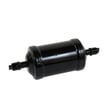
- Liquid-line protection: filter drier P502-8163S
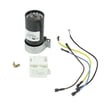
- Compressor starting help: central air conditioner compressor hard start kit KSAHS1501AAA
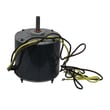
- Outdoor fan drive: central air conditioner condenser fan motor HC37GE233
Quick “what it does” guide
| Part | What it helps with | Common symptom when failing |
|---|---|---|
| Filter drier | Keeps moisture/debris out of the refrigerant circuit | Restrictions, poor cooling after service |
| Hard start kit | Helps the compressor start under load | Humming, hard starting, breaker trips |
| Condenser fan motor | Moves air through the outdoor coil | Outdoor fan not spinning, overheating shutdown |
Why it matters
Carrier’s installation guidance calls out using a liquid-line filter drier in specific situations (for example, when reusing an existing lineset/coil or after a compressor burnout). Following the documented requirements helps protect the compressor and keeps the system operating efficiently. See the installation guide for the model-specific installation and start-up requirements.
Last updated: February 2026
How much does a 3 ton Carrier AC cost?
A 3-ton Carrier central AC system typically costs about $3,000 to $15,000 installed, depending on the equipment efficiency, your home’s ductwork and electrical needs, and whether the job requires refrigerant line modifications. For Carrier model 38TRA060, confirm accessory and installation requirements in the installation guide.
What drives the price the most
- Equipment efficiency and features (higher SEER2 and premium controls cost more)
- Installation complexity (pad, disconnect, whip, condensate routing, clearances)
- Refrigerant line set work (new line set vs. reusing existing, brazing, evacuation)
- Long-line or low-ambient needs (may require additional accessories)
- Indoor match-up (coil/fan coil compatibility and any ductwork changes)
Model-specific notes for 38TRA060 that can add cost
Carrier’s installation instructions for the 38TRA series call out situations where accessories are required or recommended, such as low-ambient operation and long refrigerant line sets. The guide also emphasizes using proper charging information and safe installation practices.
Accessory situations (quick reference)
| Situation | What often changes | Why it affects cost |
|---|---|---|
| Long line set (over ~50 ft) | Additional controls or components may be needed | More labor and materials |
| Low-ambient operation (below ~55°F) | Low-ambient controls and related parts | Added parts plus setup time |
| Reusing an existing line set | Liquid-line filter drier is typically added | Protects the system; adds parts and labor |
Parts that may be involved during installation or service
If you are reusing an existing field service line set or replacing a compressor after a burnout, a liquid-line filter drier is commonly used to protect the sealed system. For this model, we list a compatible option: filter drier P502-8163S.
Why it matters
A “3-ton AC cost” number is only accurate when it includes the real installation scope. Line set length, accessory requirements, and indoor coil compatibility can change the total more than the outdoor unit alone.
Last updated: February 2026
How much do AC spare parts usually cost?
AC spare parts for your Carrier 38TRA060 condensing unit range from a few dollars for small hardware to several hundred dollars for major electrical components and motors. On this model, common replacement parts on the outdoor unit typically land in the roughly $50 to $700 range, depending on the part.
Typical part cost ranges (what you can expect)
Parts pricing varies by brand, availability, and whether the part is a control, motor, or refrigerant-side component.
- Small items (grommets, straps, fasteners): often under $5 to $25
- Electrical parts (capacitors, relays, hard start kits): often $50 to $250
- Motors (condenser fan motor): often $300 to $900
- Refrigerant-side parts (filter drier): often $50 to $200
Real examples for Carrier 38TRA060 parts
Here are examples from the parts available for this model (prices change over time, but the categories are consistent):
| Part type | Example part | What it affects | Typical symptom when failing |
|---|---|---|---|
| Compressor assist | Central air conditioner compressor hard start kit KSAHS1501AAA | Helps the compressor start | Hums, struggles to start, trips breaker |
| Fan motor | Central air conditioner condenser fan motor HC37GE233 | Moves air across outdoor coil | Outdoor fan not spinning, overheating shutdown |
| Refrigerant protection | Filter drier P502-8163S | Protects system from moisture/debris | Often replaced during sealed-system service |
Why “maintenance parts” can save money
We see the biggest cost swings when airflow and cleanliness are ignored. The manual calls out that a dirty indoor air filter can strain the compressor and blower motor, leading to overheating and shutdown; it also recommends checking filters every 3 to 4 weeks and keeping the outdoor unit clear of debris and vegetation (about 12 inches of clearance). Use the owner's manual to match the maintenance schedule to your system setup.
Before you buy: quick checks that prevent wrong-part orders
- Confirm the model number (38TRA060) and the unit’s rating plate information
- Identify whether the issue is indoor (filter, blower, coil) or outdoor (fan, capacitor, compressor)
- If you’re diagnosing electrical parts, test safely with proper tools
- Compare the failed part’s markings to the replacement listing
- If the system is shutting down, address airflow restrictions first (filter, blocked registers, debris)
Last updated: February 2026