Owner’s manual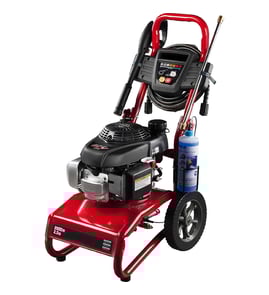



What kind of gas goes in a Craftsman 580752193 pressure washer?
Use clean, fresh unleaded gasoline (87 octane/87 AKI minimum) in your Craftsman pressure washer model 580752193; avoid old fuel and refill with fresh gas if the engine runs rough or will not start. For fuel handling and starting steps, follow the 580752193 owner's manual.
- Use unleaded gasoline, 87 AKI (87 octane) minimum.
- Use fresh fuel; stale gas is a common cause of hard starting.
- Do not mix oil into the gasoline (this is a 4-cycle engine setup).
- Do not store fuel in the tank for long periods; drain and refresh if performance changes.
If your 580752193 will not start, starts and runs rough, or shuts down, fuel quality is one of the first things we check.
- Fill the tank with fresh unleaded gas.
- If it still runs poorly, drain the tank and refill with fresh fuel.
- Check that the spark plug wire is firmly connected.
- Inspect the air filter; replace it if dirty.
| Symptom | Common fuel-related fix | Next checks |
|---|---|---|
| Won’t start | Fill tank; drain and refill with fresh fuel | Air filter, spark plug, wire connection |
| Runs rough | Drain and refill with fresh fuel | Air filter, spark plug |
| Shuts down | Out of fuel | Refill; check for leaks |
Fresh, correct-octane gasoline helps the engine start easier and run steadily; old fuel can gum up the carburetor and cause surging, stalling, or no-start conditions.
Last updated: January 2026
Is it worth repairing a pressure washer?
Yes, it’s worth repairing a Craftsman pressure washer like model 580752193 when the problem is a wear item (hose, spray tip, O-rings) or routine maintenance, and the total repair cost stays well below the cost of replacement. For major failures (especially pump issues), replacement is usually the better value.
Use this checklist before you buy parts or schedule service:
- If the engine runs well and pressure loss is tied to a hose/nozzle leak, repair it.
- If the unit has been reliable and only needs maintenance, repair it.
- If the pump is failing internally (low pressure plus unusual noise/leaks), replacement is often smarter.
- If you see repeated breakdowns season after season, replacement is usually the better long-term choice.
- If the repair is simple and you can do it safely, repair it.
These are the fixes that most often restore performance quickly:
- Replace a worn or leaking high-pressure hose (inspect for cuts, bulges, abrasion, or coupling damage).
- Replace a clogged or worn spray tip.
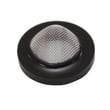
- Clean the water inlet screen and purge air from the pump before use.
- Replace leaking O-rings or seals (never use sealant on leaking high-pressure connections).
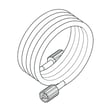
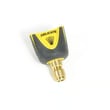
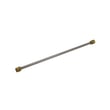
Helpful parts for these repairs include the pressure washer hose 84006753 and a pressure washer spray nozzle 195983XGS.
| Situation | Best choice | Why |
|---|---|---|
| Hose/nozzle leak, kinked hose, worn O-rings | Repair | Low cost, fast improvement |
| Unit needs routine maintenance | Repair | Extends life and performance |
| Pump performance is failing (internal wear) | Replace | Many pumps are not economical to rebuild |
| Multiple major issues at once | Replace | Cost and downtime add up |
A pressure washer depends on proper water supply, purging air from the pump, and leak-free high-pressure connections. Skipping basics like inlet-screen cleaning or running with a damaged hose can shorten the life of the pump and reduce cleaning power.
Follow the startup and maintenance steps in the 580752193 owner’s manual, including checking hose condition, cleaning the inlet screen, and purging the pump system of air and impurities.
Last updated: January 2026
What PSI should my pressure washer be?
For the Craftsman pressure washer model 580752193, the rated maximum outlet pressure is 2,550 PSI, which is the PSI you should expect under ideal conditions with the correct spray tip and adequate water supply. For most home cleaning jobs, you typically use less than max PSI by choosing a wider spray nozzle.
Your actual working pressure changes based on setup and technique. Use these checks to get consistent performance:
- Use the correct spray tip for the job (wider fan for siding and vehicles, narrower for concrete)
- Make sure the garden hose supply is strong enough (steady flow, no kinks)
- Purge air from the pump by squeezing the trigger with water on before starting
- Keep the throttle in the fast position while washing (per normal operating procedure)
- Avoid running the pump without water connected and turned on
For model-specific operating and safety details, follow the steps in the 580752193 operator's manual.
These ranges help you choose a spray nozzle and technique without overdoing pressure.
| Cleaning task | Typical effective PSI range | Tip choice (general) |
|---|---|---|
| Cars, patio furniture | 1,200 to 1,900 | Wide fan, keep distance |
| Decks, fences | 1,500 to 2,400 | Medium fan, test spot |
| Driveways, concrete | 2,000 to 2,800 | Narrower fan, steady passes |
If the washer is not hitting expected pressure, these are the most common culprits:
- Clogged or worn spray nozzle
- Air in the pump (not fully purged)
- Water supply below what the pump needs (low flow or low inlet pressure)
- Hose or fittings leaking at the high-pressure outlet or spray gun
- Pump protection cycling warm water to prevent overheating (automatic cool down)
If you suspect the spray tip is the issue, replacing the nozzle is often the fastest fix; use the exact-match part such as the pressure washer spray nozzle 195983XGS when it matches your setup.
Using more PSI than needed can damage wood, etch concrete, and force water behind siding. Matching PSI to the task helps you clean faster, protect surfaces, and reduce wear on the pump and hose.
Last updated: January 2026
What pressure washer is better, 3.5 gpm or 4.0 gpm?
A 4.0 GPM pressure washer is better than 3.5 GPM when you want faster cleaning and quicker rinsing on large areas. For comparison, the Craftsman model 580752193 is rated at a maximum flow of 2.3 GPM, so both 3.5 and 4.0 GPM are higher-flow machines than this model (see the 580752193 owner's manual).
GPM (gallons per minute) is the “rinsing and productivity” spec; higher flow moves more water across the surface, so you finish jobs faster.
- Cleans large flatwork faster (driveways, patios, sidewalks)
- Rinses detergent and loosened grime more quickly
- Reduces visible “striping” because you can maintain a wet edge
- Lets you use a wider spray pattern more effectively
- Improves downstream chemical rinsing on many setups
Both are strong choices; 4.0 GPM is the upgrade for speed and frequent use.
| Spec | 3.5 GPM | 4.0 GPM |
|---|---|---|
| Cleaning speed | Very fast | Fastest (of the two) |
| Best for | Most large home jobs | Large areas, frequent use |
| Water use | High | Higher |
| Typical tradeoff | Often lighter, lower cost | Often heavier, higher cost |
Higher flow only helps if your water supply and accessories can support it.
- Verify your spigot supply can keep up (flow and steady pressure)
- Use a short, larger-diameter garden hose to reduce restriction
- Keep the high-pressure hose in good condition; leaks and restrictions reduce performance (for this model, see pressure washer hose 84006753)
- Match the spray tip to the job; the wrong tip can feel weak or overly aggressive
- Plan for more runoff and faster water consumption
PSI helps break dirt loose, but GPM is what carries it away. If you want the biggest productivity gain, moving from 3.5 to 4.0 GPM is a noticeable step up.
Last updated: January 2026