Error Codes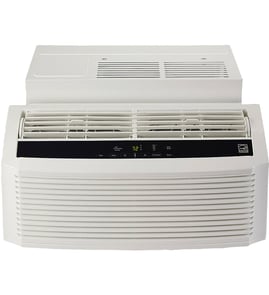


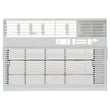


Is it cheaper to run AC or a window unit?
For cooling one room, a window unit like the GE AHC14AZW1 is cheaper to run than central AC because you only cool the space you’re using. For cooling an entire home, central AC is typically cheaper overall than running multiple window units.
What usually costs less (and when)
- One room or small area: Window unit wins (lower energy use because you’re not cooling unused rooms).
- Whole-home cooling: Central AC often wins (one system designed to cool the full load efficiently).
- Occasional cooling: Window unit wins (you can run it only when needed).
- All-day, multi-room cooling: Central AC often wins (especially with good duct sealing and insulation).
Quick comparison
| Scenario | Cheaper to run | Why |
|---|---|---|
| Bedroom at night | Window unit | Targeted cooling, shorter runtime |
| Apartment or small home (few rooms used) | Window unit | Zone cooling without duct losses |
| Large home, many rooms cooled daily | Central AC | One system sized for whole-home load |
| Several rooms cooled with separate units | Depends | Multiple compressors and fans add up |
How to lower the cost with a window unit (AHC14AZW1)
- Clean or replace the air filter regularly; a clogged filter reduces airflow and efficiency (see filter WJ85X35473).
- Keep doors closed and use curtains or blinds to reduce heat gain.
- Set a realistic temperature (for example, 74 to 78°F) and use Eco mode if available.
- Make sure the unit tilts slightly outward so it drains correctly; poor drainage can hurt performance.
- If the unit is running but not cooling well, check for dirty coils, icing, or airflow restrictions.
Why it matters
Cooling cost is mostly about how much space you cool and how hard the system has to work. A window air conditioner is a cost-effective way to “zone cool” a single room, while central AC is built for consistent whole-home comfort.
Helpful troubleshooting resource
If your unit shows a code or isn’t behaving normally, use our GE error codes guide to narrow down the cause before replacing parts.
For replacement parts for GE AHC14AZW1, order from the parts list for this model or search by model number on Sears PartsDirect.
Last updated: February 2026
What is the capacity of a 14 * 14 room AC?
A 14 ft x 14 ft room is about 196 sq ft, and most rooms that size typically need about 6,000 to 8,000 BTU/hr of cooling capacity. For your GE AHC14AZW1 room air conditioner, the exact BTU rating depends on the specific unit configuration and is best matched by room conditions and heat load.
Quick BTU sizing for a 14 x 14 room (196 sq ft)
Use these common targets to pick the right cooling capacity:
- 6,000 BTU/hr: shaded room, good insulation, low ceiling height
- 7,000 BTU/hr: average sun exposure and typical insulation
- 8,000 BTU/hr: sunny room, higher ceilings, or warmer upstairs space
- Add capacity if the room has many occupants, large west-facing windows, or heat-producing electronics
Adjust for real-world conditions
Room size is only the starting point. These factors change the “right” capacity:
- Sun exposure (south and west windows raise BTU needs)
- Insulation and air leaks (drafty windows and doors raise BTU needs)
- Ceiling height (taller ceilings increase air volume)
- Occupancy (more people adds heat)
- Kitchen or adjacent heat sources (can push you to the next BTU size)
What happens if BTU is too low or too high?
| If the AC is... | What you’ll notice | Why it matters |
|---|---|---|
| Too small | Runs constantly, still feels warm | Higher wear, poor comfort |
| Too large | Short cycles, clammy air | Worse humidity control, uneven temps |
Helpful parts and controls to check
If comfort is inconsistent, the issue is often airflow or control, not BTU size:
- Clean or replace the air filter regularly (see filter WJ85X35473)
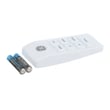
- If the unit will not respond to settings, check the remote (see remote contr WJ26X27734)
- For display or button issues, inspect the overlay (see user interface overlay WJ71X27865)
Why it matters
Correct capacity helps your GE room air conditioner cool steadily, remove humidity, and avoid short-cycling. If your unit is properly sized but still “runs but not cooling,” airflow restrictions and dirty coils are the most common causes.
For more troubleshooting and sizing context, see room air conditioner installation and operation tips. You can also order replacement parts for GE AHC14AZW1 from the parts list for this model, or search by model number on Sears PartsDirect.
Last updated: February 2026
How do I find the model number on my AHC14AZW1?
The model number for your GE room air conditioner is printed on the unit’s rating label; on most window and room air conditioners, that label is on the side of the cabinet, behind the front grille, or near the power cord area. Use the full model number (AHC14AZW1) when ordering parts.
Where to look on a GE room air conditioner
Check these common label locations (start with the easiest to access):
- Behind the front panel or front grille (often near the air filter area)
- On the right or left side of the cabinet (visible when the unit is slid out of the sleeve)
- Along the lower front frame, near the control panel area
- On the back of the unit near the condenser coil cover
- Near where the power cord enters the cabinet
What the label looks like
Most rating labels include several identifiers. Use the model number for parts lookup.
| Label item | What it’s used for | Example |
|---|---|---|
| Model number | Finding correct diagrams and replacement parts | AHC14AZW1 |
| Serial number | Identifying production run and date | (varies) |
| Electrical ratings | Verifying power requirements | (varies) |
Why it matters
GE often uses similar-looking cabinets across multiple models; the exact model number ensures the correct fit for items like the filter WJ85X35473 and control components.
Quick tips before you order
- Write the model number exactly as shown, including letters and numbers
- Take a clear photo of the label for reference
- If the label is hidden, unplug the unit before removing the front panel
Last updated: March 2026