


How to find furnace model number?
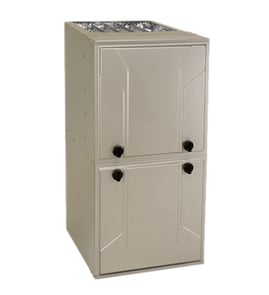
For your York upflow gas furnace, the model number is printed on the furnace rating plate (data tag), usually on the inside of the front access panel or on the cabinet wall. Turn off power to the furnace before removing panels, then copy the full model number exactly.
Check these common rating-plate locations:
- Inside the upper front access panel (burner/controls compartment)
- Inside the lower blower door area
- On an interior side wall of the cabinet
- On the outside of the cabinet near the gas valve area (less common)
- On paperwork left by the installer (startup sheet) if available
- Set the thermostat to OFF
- Turn off electrical power to the furnace at the switch or breaker
- Remove the front access panel(s) and look for a rating plate or data tag
- Write down the entire model number and serial number (take a clear photo too)
- Reinstall panels fully before restoring power (many furnaces will not run with a door switch open)
| Label item | What it’s used for |
|---|---|
| Model number | Matching the correct parts list and diagrams |
| Serial number | Identifying production run and compatible revisions |
| Input BTU and fuel type | Confirming correct gas furnace specifications |
| Electrical ratings | Verifying correct voltage and control power |
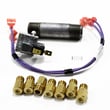
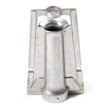
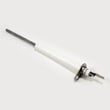
We use the exact model number to match the right York furnace parts (controls, igniter, flame sensor, pressure switch, inducer, blower components). One missing character can pull the wrong parts breakdown.
For help confirming you have the full model number (for example, G9T08016UPC13), use how to find your appliance model number (and what it means for parts).
Last updated: February 2026
Should a 25 year old furnace be replaced?
Yes. A 25-year-old York upflow gas furnace like model G9T08016UPC13 is past the typical furnace lifespan (about 15 to 20 years), so replacement is the practical choice for better reliability, lower operating cost, and safer, more consistent heat.
- Repair frequency: repeated no-heat calls, nuisance shutdowns, or hard starts
- Efficiency: rising gas bills compared with prior winters
- Comfort: uneven temperatures, long run times, or poor airflow
- Parts condition: rust, soot, or heat-related wire damage in the burner/control area
- Safety controls: rollout switch trips, limit switch trips, or burner flame issues
- Budget risk: a major repair during peak season often costs more than planned replacement
Use this as a quick way to decide what makes sense for a 25-year-old furnace.
| Situation | Usually makes sense | Why |
|---|---|---|
| Minor, one-time fix (loose wire, dirty flame sensor, clogged filter) | Repair | Low cost, quick restore |
| Repeated ignition problems (hot surface igniter, gas valve, control board symptoms) | Replace | Age-related failures tend to cascade |
| Blower motor or inducer motor failing | Replace | High-cost repair on an end-of-life unit |
| Any sign of combustion or venting problems | Replace (and stop using until checked) | Safety and reliability are the priority |
At 25 years, the furnace is operating beyond its design window. Even if it runs today, the chance of an in-season breakdown is high, and older equipment typically delivers less comfort per dollar spent on fuel.
- Replace or clean the air filter regularly to prevent overheating
- Keep supply and return vents open to protect the limit switch
- Watch for new noises from the blower or inducer
- If the furnace shuts down repeatedly, stop resetting it and have it checked
For help identifying the correct model number before ordering parts or comparing options, use how to find your appliance model number (and what it means for parts).
Last updated: February 2026
How many square feet will a 80,000 BTU furnace heat?
An 80,000 BTU furnace like the York G9T08016UPC13 typically heats about 1,600 to 2,800 sq ft, depending on your climate zone and your home’s insulation and air sealing. In colder regions, the same furnace covers fewer square feet because heat loss is higher.
Use these as planning numbers; your actual result depends on heat loss and duct design.
- Warm climates: about 2,400 to 2,800 sq ft
- Mixed climates: about 1,900 to 2,400 sq ft
- Cold climates: about 1,600 to 2,000 sq ft
- Very leaky or older homes: expect the lower end of the range
- Tight, well-insulated homes: expect the higher end of the range
These factors often matter more than the BTU number on the nameplate:
- Insulation levels (attic, walls, rim joist)
- Air leakage (drafts, unsealed penetrations, leaky return ducts)
- Window quality and window area
- Ceiling height and open floor plans
- Duct sizing and duct leakage
- Furnace efficiency (AFUE) and how well the system is set up
| Home condition | Typical BTU per sq ft | 80,000 BTU rough coverage |
|---|---|---|
| Tight, well-insulated | 25 to 30 | ~2,600 to 3,200 sq ft |
| Average | 30 to 40 | ~2,000 to 2,600 sq ft |
| Older or drafty | 40 to 50 | ~1,600 to 2,000 sq ft |
Oversizing can cause short cycling (more on/off starts, uneven temperatures, and more wear on parts like the igniter and blower). Undersizing can mean long run times and trouble keeping up on the coldest days.
For the York G9T08016UPC13, the most accurate way to confirm coverage is a room-by-room heat loss calculation (often called a Manual J). If you are troubleshooting comfort issues, start by checking filters, return airflow, and obvious duct leaks before assuming the furnace is the wrong size.
For general DIY electrical checks related to furnace controls and safeties, use how to use a multimeter to test electrical parts video.
Last updated: February 2026
What does code 13 mean on a furnace?
On a York upflow gas furnace like model G9T08016UPC13, code 13 most often points to a limit circuit fault or lockout (the furnace sensed overheating or an open high-limit/rollout safety circuit), so it shuts the burners down to protect the heat exchanger and your home.
In most homes, code 13 is triggered by airflow restriction or a safety switch opening.
- Dirty or overly restrictive air filter
- Closed or blocked supply registers or return grilles
- Blower or blower wheel issues (weak airflow, heavy dust buildup)
- Dirty evaporator coil (AC coil above the furnace) restricting airflow
- High-limit switch or rollout switch opening due to heat buildup
- Venting or combustion air problems that cause abnormal heat or rollout
Before resetting anything repeatedly, focus on airflow and obvious blockages.
- Turn thermostat to OFF, then turn furnace power OFF at the switch/breaker
- Replace the filter with the correct size and a reasonable MERV rating
- Open all supply registers; make sure returns are not blocked by furniture or rugs
- Confirm the blower compartment door is fully seated (some furnaces will fault if it is not)
- If you recently added a high-MERV filter, switch to a less restrictive filter and recheck
| What you see | What it usually means | What to do |
|---|---|---|
| Code 13 after 2 to 10 minutes of heat | Airflow restriction or weak blower | Fix airflow items first; then retry heat |
| Code 13 only on very cold days | Marginal airflow or venting issue | Check filter, registers, return air; then have venting checked |
| Code 13 returns immediately after reset | Safety circuit still open | Stop resetting; schedule service |
A limit or rollout event is a safety shutdown. Repeated overheating can damage components and shorten furnace life, and rollout-related faults can indicate a combustion or venting condition that needs professional diagnosis.
We recommend contacting a qualified technician if code 13 repeats after you correct airflow basics, or if you notice burner flame rollout, scorching, a burning smell, or the furnace short-cycling.
For model-number-specific parts lookup and diagrams, use the model search on Sears PartsDirect.
Last updated: February 2026