
Is it better to undersize or oversize a furnace?
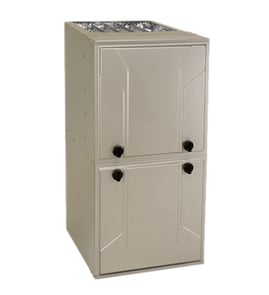
It’s better to size a furnace correctly for the home; if you must choose, we prefer slightly undersized over oversized. Oversizing a Trane furnace like model BAY96X1414 often causes short cycling, uneven temperatures, noisier operation, and faster wear on parts such as the igniter, blower components, and control board.
Why oversizing is usually the bigger problem
An oversized furnace heats the house too quickly and shuts off before it runs long enough to distribute heat evenly. That repeated on and off operation increases stress on ignition and airflow systems.
Common oversizing symptoms include:
- Short cycles (runs a few minutes, shuts off, repeats)
- Hot and cold rooms, especially far from the thermostat
- More noticeable temperature swings
- Higher repair frequency from repeated starts
- Reduced comfort even when the house reaches set temperature
What happens if the furnace is undersized
A slightly undersized furnace tends to run longer to keep up. That can be more comfortable than short cycling, but it can still be a problem in extreme weather.
Typical undersizing symptoms include:
- Furnace runs for long periods or nearly nonstop
- Set temperature is hard to reach on the coldest days
- Some rooms stay cool even with good airflow
- Higher gas use because of long run times
The right way to choose furnace size
We recommend using a proper heat-loss calculation (often called a Manual J load calculation) instead of sizing by square footage alone. Square footage rules miss key factors like insulation, windows, air leakage, and duct design.
| Sizing approach | What it uses | How reliable it is |
|---|---|---|
| Manual J load calculation | Insulation, windows, climate, leakage, orientation | Best |
| “Same size as old furnace” | Old equipment label | Often wrong |
| Rule of thumb by square feet | Area only | Least reliable |
Why it matters
Correct sizing improves comfort, efficiency, and reliability. It also helps protect expensive components by avoiding excessive cycling and overheating.
For general DIY safety and planning before any repair or replacement work, we recommend reviewing are diy appliance repairs safe.
Last updated: February 2026
Are Trane parts interchangeable with other brands?
Trane parts for the BAY96X1414 furnace are usually not interchangeable with other brands because many components are engineered for specific control logic, mounting, and electrical ratings. Some universal items (like certain filters or fasteners) can cross over, but brand-specific parts should match the exact model.
What typically is and is not interchangeable
In furnaces, “interchangeable” depends on whether the part is a universal service item or a model-specific control or safety component.
- Often interchangeable (if size and ratings match):
- Air filters (correct dimensions and MERV rating)
- Some standard hardware (screws, wire terminals)
- Some generic wiring supplies (proper gauge and temperature rating)
- Usually not interchangeable (match the model exactly):
- Control boards and ignition controls
- Gas valves and pressure switches
- Limit switches and flame sensors (mounting and calibration vary)
- Inducer and blower components (speed taps, ECM compatibility)
How to decide if a “substitute” part is safe
Use this checklist before swapping any furnace component across brands.
| Check | What must match | Why it matters |
|---|---|---|
| Electrical | Voltage, amperage, connector type | Prevents nuisance failures and damage |
| Mechanical | Mounting holes, port sizes, orientation | Avoids air leaks, vibration, misalignment |
| Control logic | OEM sequence timing, sensor inputs | Prevents ignition lockouts and unsafe operation |
| Safety rating | Same type and rating (limit, rollout, pressure) | Protects against overheating and flame rollout |
Why it matters
Furnace parts are tied to safety circuits and combustion performance. Using a mismatched control, switch, or valve can cause no-heat symptoms, repeated lockouts, or unsafe operation. For the best reliability, we match parts to the exact Trane model number BAY96X1414.
Helpful related DIY reading
Last updated: February 2026
What size furnace do I need for a 2000 square foot home?
For a 2,000 sq. ft. home, most furnaces land in the 60,000 to 80,000 BTU/h range, but the right size depends on your climate, insulation, air sealing, and ductwork. For the most accurate result, we size using a Manual J load calculation before choosing equipment.
Quick sizing ranges we use (rules of thumb)
These ranges help you estimate, then confirm with a load calculation.
- Warm climates, tight/updated home: ~40,000 to 60,000 BTU/h
- Mixed climates, average insulation: ~60,000 to 80,000 BTU/h
- Cold climates, older or leaky home: ~80,000 to 100,000+ BTU/h
- High ceilings, lots of glass, or poor ducts: often pushes sizing higher
- Air sealing and insulation upgrades: often let you size smaller and run longer, steadier cycles
A simple way to estimate BTUs
A common starting point is BTU per square foot, then adjust for your conditions.
| Home condition (2,000 sq. ft.) | Rule of thumb | Estimated furnace size |
|---|---|---|
| Tight, well-insulated | 20 to 30 BTU/sq. ft. | 40,000 to 60,000 BTU/h |
| Average | 30 to 40 BTU/sq. ft. | 60,000 to 80,000 BTU/h |
| Drafty/older, colder region | 40 to 50 BTU/sq. ft. | 80,000 to 100,000 BTU/h |
Why it matters (oversized vs. undersized)
Correct sizing improves comfort and efficiency. Oversizing usually causes short cycling (more on/off), noisier operation, and uneven temperatures. Undersizing can mean long run times and trouble keeping up during the coldest weather.
What to check before you buy or replace a furnace
Even if you are looking at Trane equipment like model BAY96X1414, the home and system details drive the final size.
- Your climate zone and typical winter lows
- Insulation levels (attic, walls) and air leaks around doors/windows
- Window type and amount of glass (especially west and north exposures)
- Ceiling height and open floor plans
- Duct sizing, duct leakage, and whether rooms heat evenly
- Fuel type and venting setup (gas, propane, electric)
Helpful DIY reading
If you are gathering details for a repair or replacement plan, start with your exact model identification so you match the right parts and system information: how to find your appliance model number (and what it means for parts).
Last updated: February 2026
How many square feet will a 60,000 BTU furnace heat?
A 60,000 BTU furnace typically heats about 1,200 to 2,000 sq. ft. The real coverage depends on your climate zone, insulation and air sealing, ceiling height, and duct condition; a tighter, well-insulated home needs fewer BTUs per square foot than a drafty one.
Quick sizing rule of thumb (BTU per sq. ft.)
Use these common planning ranges to estimate coverage for a 60,000 BTU furnace:
- Mild climates: ~25 to 30 BTU/sq. ft.
- Moderate climates: ~30 to 40 BTU/sq. ft.
- Cold climates: ~40 to 50 BTU/sq. ft.
- Older or leaky homes: add toward the high end of the range
- High ceilings or lots of glass: add toward the high end of the range
| Climate / home condition | Typical BTU per sq. ft. | 60,000 BTU estimated coverage |
|---|---|---|
| Mild, efficient home | 25 to 30 | ~2,000 to 2,400 sq. ft. |
| Moderate, average home | 30 to 40 | ~1,500 to 2,000 sq. ft. |
| Cold, average home | 40 to 50 | ~1,200 to 1,500 sq. ft. |
What changes the square-foot estimate the most
These factors often move the answer by hundreds of square feet:
- Insulation level (attic, walls, rim joists)
- Air leakage (drafts, unsealed penetrations, leaky returns)
- Windows and doors (age, glazing, weatherstripping)
- Ceiling height (more volume to heat)
- Duct losses (leaks or ducts in unconditioned spaces)
- Furnace efficiency (AFUE) and whether “60,000 BTU” is input or output
Why it matters
Oversizing can cause short cycling, uneven temperatures, and higher wear on igniters and blowers. Undersizing can leave rooms cold during the lowest outdoor temperatures. For the most accurate result, HVAC pros size equipment using a Manual J style load calculation, then match the furnace output to that load.
Helpful DIY check before you size or replace
If your Trane furnace (including model BAY96X1414) struggles to keep up, these quick checks often help before you assume you need more BTUs:
- Replace or clean the air filter and confirm correct airflow direction
- Make sure supply registers and return grilles are open and not blocked
- Check for obvious duct disconnections or crushed flex duct
- Confirm the thermostat is set correctly and has fresh batteries (if applicable)
- If you suspect an electrical issue, use safe testing practices from how to use a multimeter to test electrical parts video
Last updated: February 2026
How much does a 96 furnace cost?
A “96 furnace” (96% AFUE condensing gas furnace) typically runs $2,500 to $7,500 installed for a home replacement. For a Trane BAY96X1414, the exact total depends on your local labor rates and whether the job needs venting and condensate-drain changes.
Typical price ranges (what most homeowners see)
These are practical planning ranges for a 96% AFUE furnace project; your final quote will land in a band based on install complexity and regional pricing.
- Furnace equipment only: $1,500 to $4,500
- Installed total (common replacement): $2,500 to $7,500
- Higher-complexity installs: $7,500+
| Cost bucket | What it usually includes | When it increases most |
|---|---|---|
| Equipment | Furnace cabinet, blower, control board | Larger BTU, two-stage, variable-speed |
| Labor | Removal, setting, startup, testing | Tight closets, attic/crawl installs |
| Venting | PVC intake/exhaust, terminations | Converting from metal flue, long runs |
| Condensate | Drain line, trap, pump if needed | No nearby drain, long lift to drain |
What changes the price the most on a 96% AFUE install
A 96% furnace is a condensing furnace; it often needs extra materials and time compared with an 80% unit.
- PVC venting conversion (intake and exhaust routing)
- Condensate drain setup (trap, tubing, possible condensate pump)
- Gas and electrical updates (shutoff, sediment trap, wiring corrections)
- Airflow and duct adjustments (return sizing, restrictive ductwork)
- Permits and code-required items (varies by location)
How to get a quote that matches your home
Use these checkpoints so bids are comparable and complete.
- Confirm the exact model number and configuration; use how to find your appliance model number (and what it means for parts).
- Ask whether the quote includes venting and condensate materials (not just the furnace).
- Verify startup testing is included (combustion check, temperature rise, static pressure).
- Get at least 2 to 3 itemized quotes; labor rates vary widely by region.
Why it matters
Installed price swings more from local labor and required venting/condensate work than from the furnace box itself. Planning around those job-specific items prevents surprise add-ons after the install starts.
Last updated: February 2026