



Is Rheem reversing valve energized in heat or cool?
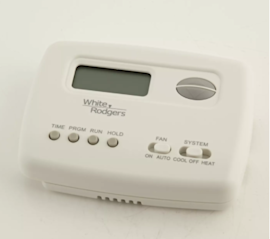
On Rheem heat pump systems, the reversing valve is energized in heat mode (not cool). That means your thermostat’s reversing-valve setting typically needs to be set to B (energize in heat) so the RRMA-A030 runs the correct mode.
What this means for thermostat wiring and settings
If the thermostat is set wrong, the unit can run the opposite mode (cooling when you call for heat, or heating when you call for cool).
- O setting: energizes the reversing valve in cooling (common on many other brands)
- B setting: energizes the reversing valve in heating (typical for Rheem and Ruud)
- If you get cold air during a heat call, the O/B setting is the first thing to verify
- If you get warm air during a cool call, the O/B setting is also a top suspect
Quick symptom check
Use this as a fast cross-check after you confirm the thermostat is calling for the right mode.
| Thermostat call | Air feels like | Most likely issue to check first |
|---|---|---|
| Heat | Cool or room-temp air | O/B set wrong (should be B for Rheem) |
| Cool | Warm air | O/B set wrong (should be B for Rheem) |
| Heat or cool | Outdoor unit starts then stops | Electrical start components (capacitor, start kit) |
Why it matters
The reversing valve controls refrigerant flow direction. If it is energized in the wrong mode, the system can still run but it conditions the air opposite of what you expect, which wastes energy and can make troubleshooting feel confusing.
If the setting is correct but performance is still wrong
After confirming the thermostat is set to B, common next checks on a gas/electric package unit like the Rheem RRMA-A030 include:
- Test the run/start capacitor values and wiring connections
- Check for loose, burned, or damaged low-voltage wires
- Verify the outdoor fan and compressor are operating normally
For electrical testing basics, use our guide how to use a multimeter to test electrical parts video.
Last updated: February 2026
Does Rheem use O or B wire?
For a Rheem RRMA-A030 gas/electric package unit, the common industry convention is B is energized in heat (not O). When you replace or rewire a thermostat, that typically means landing the reversing-valve lead on B if your equipment uses a heat pump style reversing valve.
Quick answer you can wire by
- Rheem and Ruud: B is typically energized in heat
- Most other brands: O is typically energized in cool
- Always match the existing thermostat wiring and the unit control-board terminal labels
- If your RRMA-A030 is configured as straight cool with gas heat (no heat pump), you may not use O/B at all
How to confirm on your unit (best practice)
- Turn off power at the disconnect and breaker.
- Open the control compartment and find the low-voltage terminal strip.
- Look for terminals labeled O, B, or O/B.
- Trace the wire color from the thermostat cable to the terminal strip.
- If you see a single O/B terminal, set the thermostat for B (energize in heat) when the equipment is Rheem/Ruud.
What O vs B changes (why it matters)
O/B controls the reversing valve on heat pump systems. If it is set wrong, the unit can run in the opposite mode (cool when calling for heat, or heat when calling for cool), which can also cause short cycling and comfort issues.
Common symptoms of the wrong O/B setting
| What you see | Likely cause | What to change |
|---|---|---|
| Heat call blows cool air | Reversing valve set to O instead of B | Set thermostat to B (heat) |
| Cool call blows warm air | Reversing valve set to B instead of O | Set thermostat to O (cool) |
| System runs but comfort is backwards | O/B logic reversed | Correct O/B selection |
Related repair tip
If you are troubleshooting a no-cool or hard-start complaint while you are in the unit, checking the capacitor and fan motor condition is often part of the same service visit. For this model, a common replacement is the motor WG840465.
Last updated: February 2026
Can you mix and match air handler and condenser?
Yes, you can sometimes mix and match an air handler and condenser, but we only recommend doing it when the combination is an approved match for your Rheem RRMA-A030 gas/electric package unit. The wrong pairing can cause poor comfort, higher energy use, and control or safety issues.
What determines whether a mix-and-match pairing will work
A “works” pairing is one that matches in capacity, refrigerant, metering, and electrical controls. The most common compatibility factors are:
- Capacity match: tonnage and airflow requirements must align (for example, a 2.5 ton outdoor unit needs the correct indoor airflow).
- Refrigerant type: components must be designed for the same refrigerant (and oil type).
- Metering device: TXV or fixed orifice must be correct for the outdoor unit.
- Electrical and controls: thermostat staging, contactor/relay logic, and safety circuits must match.
- Blower performance: indoor blower must deliver required CFM across the coil and duct static pressure.
- Efficiency and ratings: mixing can change the effective SEER/EER and may affect performance targets.
Quick compatibility checklist (before you buy parts)
Use this as a practical screen; if any item is a “no”, do not proceed without a verified match.
| Check | What you want to see | Why it matters |
|---|---|---|
| Tonnage | Indoor and outdoor capacities align | Prevents short cycling or poor cooling |
| Refrigerant | Same refrigerant family | Avoids reliability and service issues |
| Metering | Correct TXV/orifice for condenser | Protects compressor and capacity |
| Voltage | Same rated voltage and phase | Prevents electrical damage |
| Staging | 1-stage/2-stage/variable compatible | Ensures proper control and comfort |
Why it matters
A mismatched system can run, but it often runs inefficiently and can stress major components like the compressor. If you are troubleshooting a “won’t start” or “hard start” situation, the issue is usually electrical or mechanical, not a brand mismatch.
Parts that commonly relate to pairing or start-up problems
If your concern is that the outdoor unit is not starting or is struggling to start, these parts are commonly involved:
- Motor WG840465 (condenser fan motor)
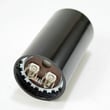
- Start capacitor (part number 43-17075-04)
- Capacitor (part number 43-20847-12)
- Start kit (part number SK-A1-1)
For electrical testing during diagnosis, we use steps like those in how to use a multimeter to test electrical parts video.
Last updated: February 2026
What's the most common Rheem furnace error?
For Rheem gas heat systems like the RRMA-A030 package unit, the most common furnace-related faults are ignition or flame-sensing problems. In practice, that usually points to a dirty flame sensor, weak ignition, or airflow/venting issues that prevent safe burner operation.
What you’ll typically see (common causes)
These are the most frequent “root causes” behind Rheem furnace error indications across many installations:
- Dirty flame sensor: burner lights briefly, then shuts off and retries
- Restricted airflow: clogged filter, blocked return, closed registers, dirty blower wheel
- Venting or pressure switch issues: blocked intake/exhaust, condensate restriction (if applicable)
- Ignition problems: worn ignitor, loose wiring, poor ground
- Gas supply issues: shutoff valve partially closed, low supply pressure (requires a pro to verify)
Quick checks we recommend first (safe homeowner steps)
Turn power off at the disconnect/breaker before opening panels.
- Replace or clean the air filter and make sure returns are not blocked
- Confirm the thermostat is calling for heat and set to HEAT (not EM HEAT unless intended)
- Check that supply registers are open and not covered
- Inspect visible wiring for loose connectors or heat damage
- If the burner lights then drops out quickly, clean the flame sensor (lightly) or replace it if cleaning does not help
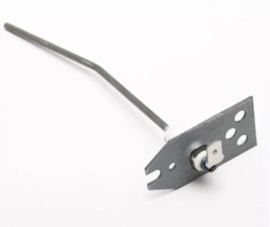
A common repair part for flame-sensing shutdowns is the furnace burner flame sensor 62-23543-02.
Why it matters
Ignition and flame-proving errors are safety-related. The unit will shut the gas valve if it cannot prove flame, which prevents raw gas from flowing and protects the heat exchanger and controls.
Symptom-to-part cheat sheet
| Symptom | Most likely area | Part that often fixes it |
|---|---|---|
| Burner lights, then shuts off in seconds | Flame proving | Furnace burner flame sensor 62-23543-02 |
| Heat starts, then stops on high temperature | Overheat/limit trip | Limit switch 470015 |
| Outdoor unit struggles to start (cooling side) | Start components | Start capacitor or start kit |
Last updated: February 2026
Does a heat pump have 2 TXV?
Many heat pumps use two TXVs (thermal expansion valves), but some use a single TXV with check valves, a fixed orifice/piston, or an electronic expansion valve. For the Rheem RRMA-A030 package unit, confirm the metering-device style by checking the refrigeration parts breakdown and the metering-device listing for your exact unit configuration.
What “2 TXVs” means on a heat pump
A heat pump changes refrigerant flow direction in heating vs cooling. If the system uses two TXVs, one meters refrigerant in cooling and the other meters in heating; check valves route flow so the inactive TXV is bypassed.
Common components involved:
- Reversing valve (changes flow direction)
- One or two TXVs (metering)
- Check valves (bypass the inactive metering device)
- Filter drier/strainer (protects the metering device)
One TXV vs two TXVs: quick comparison
| Metering design | How it’s typically arranged | Common symptom pattern |
|---|---|---|
| Two TXVs + check valves | Separate metering for heat and cool | Issue can be mode-specific (only heat or only cool) |
| One TXV + check valves | One TXV used in both modes | Restrictions often affect both modes, but not always equally |
| Fixed orifice/piston | No TXV; fixed metering | Performance changes with load; more sensitive to charge |
| EEV | Electronically controlled valve | Electrical/sensor faults can mimic a restriction |
How to confirm what your RRMA-A030 uses
We recommend using the model-specific parts list and diagrams to identify the metering device type and quantity.
Steps that work well:
- Locate the refrigeration circuit section in the parts breakdown for RRMA-A030.
- Look specifically for “TXV,” “expansion valve,” “orifice,” “piston,” or “EEV.”
- Match by description and quantity; some designs list separate valves for indoor vs outdoor coils.
- If you’re troubleshooting a mode-specific problem, test electrical items safely using the how to use a multimeter to test electrical parts video.
Why it matters
Knowing whether the unit uses one or two metering devices helps narrow diagnosis. A restriction, stuck valve, or leaking check valve often shows up as poor capacity, coil icing, or abnormal pressures in only one operating mode.
Last updated: February 2026