Owner’s manual
 Error Codes


What is the lifespan of an LG refrigerator?
Most LG refrigerators, including the LG LRMVS3006D, typically last 10 to 15 years with normal use and basic maintenance. Lifespan depends most on compressor health, airflow (clean coils and vents), and keeping door seals tight; consistent care helps the refrigerator run cooler with less strain.
Typical lifespan and what to expect
A practical way to think about lifespan is by major systems. The compressor and sealed system usually determine whether a refrigerator is worth repairing later in life.
- Typical overall lifespan: 10 to 15 years
- Common early-life issues: ice maker and water system problems (filter, inlet valve, air in lines)
- Common mid-life issues: fan noise, temperature swings, frost buildup
- Common late-life issues: sealed system or compressor performance decline
For model-specific operating and care guidance, follow the maintenance and use recommendations in the LRMVS3006D owner's manual.
Maintenance that extends life (and reduces repairs)
These habits reduce compressor run time and help prevent temperature and ice maker complaints.
- Keep condenser area clean and maintain airflow around the cabinet
- Avoid overpacking; leave space for air circulation inside
- Keep doors closed as much as possible; confirm doors fully seal
- Replace filters on schedule and flush the water system after long periods of non-use
- Level the refrigerator so doors self-close and seals sit evenly
Quick “what to do” table
| Goal | What we recommend | Why it helps |
|---|---|---|
| Reduce compressor strain | Keep airflow clear and temps stable | Less run time, less wear |
| Improve ice and water quality | Flush water after installation or long non-use | Reduces odor and particles |
| Prevent warm spots | Don’t block vents with food containers | Improves even cooling |
Why it matters
A refrigerator that runs efficiently cycles less often, holds temperature better, and puts less load on the compressor and sealed system. That is the difference between a fridge that reaches 10 years and one that reaches 15 years.
When a repair is more likely than “end of life”
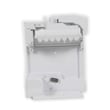
If cooling is fine but ice production is inconsistent, a targeted part replacement is often the right fix. For example, ice maker failures are commonly resolved by replacing the refrigerator ice maker AEQ73449909 rather than replacing the entire refrigerator.
Last updated: January 2026
What is the most common problem with an LG refrigerator?
For the LG LRMVS3006D refrigerator, the most common service complaints we see are loss of cooling (often tied to airflow, fan, or control issues) and ice maker or dispenser problems such as no ice, jammed ice, or dripping after dispensing. Use the LRMVS3006D owner's manual troubleshooting section to narrow the cause.
Most common issues and what they look like
- Not cooling or no power: warm fresh food section and freezer, lights may be off, or compressor may not run.
- Ice maker not making ice: empty bin, slow production, or small/odd cubes.
- Ice dispenser jams: ice stuck in the chute, crushed/cubed issues, or intermittent dispensing.
- Water dispenser drips or sputters: dripping after dispensing or air in the line after filter changes.
- Temperature swings: food freezing in the refrigerator section or freezer softening.
Quick checks we recommend first
- Confirm the refrigerator is not in Demo/Display Mode (a common “looks on but won’t cool” situation).
- Verify power at the outlet and check for a tripped breaker or GFCI.
- Make sure doors fully close and gaskets seal all the way around.
- If ice or water quality is off after sitting unused, flush the system (discard the first bin of ice and flush water in timed cycles as described in the manual).
- If ice is jamming in the chute, avoid very narrow/deep glasses and dispense ice into an empty glass first.
Common symptoms and likely parts to inspect
| Symptom | What to inspect first | Example part for this model |
|---|---|---|
| No ice production | Water supply, inlet valve, ice maker | Refrigerator ice maker AEQ73449909 |
| Weak/no water to dispenser | Inlet valve, water line restrictions | Refrigerator water inlet valve (model-specific options) |
| Ice clumps or chute jams | Chute door operation, bin condition | Dispenser chute components and ice container |
Why it matters
Cooling and ice maker issues can quickly lead to food spoilage, leaks, and repeated ice jams. Catching the early signs (demo mode, airflow restrictions, dispenser habits) helps prevent bigger repairs and keeps temperatures stable.
Last updated: January 2026
What does dH mean on a fridge?
On an LG refrigerator like model LRMVS3006D, dH commonly indicates a defrost heater related problem (the unit is not heating properly during defrost, so frost can build up and airflow can drop). Use the LRMVS3006D owner's manual to confirm the display meaning and the recommended reset or service steps.
What you may notice when dH shows up
- Refrigerator or freezer temperature starts rising
- Frost or ice buildup on the rear freezer panel
- Weak airflow from vents, uneven cooling
- Ice maker slows down or stops making ice
- Fan noise changes (fan hitting ice) or the unit runs longer than normal
Quick checks we recommend first
- Power reset: Unplug the refrigerator (or turn off the breaker) for 2 to 5 minutes, then restore power.
- Door sealing: Make sure doors close fully and gaskets are sealing; warm air leaks increase frost.
- Airflow: Keep packages from blocking vents in the freezer and fresh food sections.
- Condenser area: Make sure the grille and airflow around the machine compartment are not blocked.
- Ice and water basics (if symptoms include ice issues): Confirm the water supply valve is open and the line is not kinked.
Parts that are often involved (when service is needed)
A dH condition is usually tied to the defrost system (heater, wiring, sensors, or control). If you are also seeing ice dispensing issues, these model-specific parts can be relevant:
| Symptom you see | Common area to inspect | Example model part |
|---|---|---|
| Ice clumps, chute not opening/closing | Dispenser chute door mechanism | Refrigerator dispenser ice chute door motor EAU59551204 |
| No ice production along with cooling issues | Ice maker operation (secondary symptom) | Refrigerator ice maker AEQ73449909 |
| Water not filling ice maker | Water supply into refrigerator | Refrigerator water inlet valve AJU75632502 |
Why it matters
When the defrost heater system is not working, frost can cover the evaporator and restrict airflow. That forces longer run times, warmer temperatures, and can lead to poor ice production and food spoilage.
Last updated: January 2026