Owner’s manual
 Error Codes




How big is the Samsung rf27t5241sr?
The Samsung RF27T5241SR is a 36-inch class French door, bottom-mount refrigerator. Per the factory specifications in the RF27T5241SR user manual, it measures 35 3/4 in. wide, 70 in. overall height, and 35 3/8 in. deep (with handles), with a cabinet depth of 32 7/8 in.
Key dimensions (factory specs)
Use these measurements to confirm fit through doorways and to plan cabinet clearance.
- Width (B): 35 3/4 in. (908 mm)
- Overall height (D): 70 in. (1777 mm)
- Case height (C): 68 7/8 in. (1749 mm)
- Depth with handles (E): 35 3/8 in. (898 mm)
- Cabinet depth (A): 32 7/8 in. (836 mm)
Quick size table
| Measurement | Inches | Millimeters |
|---|---|---|
| Width | 35 3/4 | 908 |
| Overall height | 70 | 1777 |
| Depth with handles | 35 3/8 | 898 |
| Cabinet depth | 32 7/8 | 836 |
What to measure before you move it in
The manual recommends measuring the full path to the install location. We also suggest checking these common pinch points:
- Doorway width (including trim)
- Hallway turns and stair landings
- Ceiling height on stairs
- Floor transitions (thresholds)
- Space to fully open doors (for drawers and bins)
Why it matters
Correct width, depth, and height measurements help prevent delivery day surprises and ensure proper airflow around the refrigerator for stable cooling performance.
Last updated: February 2026
What is the average lifespan of a Samsung refrigerator?
Most Samsung refrigerators last about 10 to 14 years with normal household use. For the Samsung RF27T5241SR, consistent maintenance (cleaning, good airflow, and staying on top of cooling or ice maker issues) is what most directly determines whether you land closer to 10 years or closer to 14.
What affects lifespan the most
We see these factors make the biggest difference in real-world refrigerator life:
- Condenser and airflow cleanliness (dust buildup makes the sealed system work harder)
- Door seal performance (warm air leaks increase run time and frost)
- Ice maker and dispenser health (clogs, freezing, and leaks create repeat stress)
- Stable temperatures (avoid overpacking and blocking vents)
- Fast repair of small problems (fan noise, warming, water leaks)
Maintenance habits that extend life
Use the care and maintenance guidance in the RF27T5241SR owner's manual and stick to a simple routine:
- Keep food away from interior vents so air can circulate
- Clean spills and wipe gaskets so doors seal fully
- Replace water filtration parts on schedule if your unit uses them
- Listen for new noises (buzzing, whooshing, cracking can be normal; persistent grinding is not)
- Address puddles, frost, or temperature swings quickly
Quick “life extender” checklist
| Task | How often | Why it matters |
|---|---|---|
| Clean door gaskets | Monthly | Prevents warm-air leaks and frost |
| Vacuum dust from intake areas | Every 6 to 12 months | Reduces compressor workload |
| Confirm vents are not blocked | Weekly | Keeps temperatures stable |
| Check ice maker output and clumping | Monthly | Prevents auger and chute strain |
Why it matters
A refrigerator’s most expensive wear items are in the cooling and air-moving systems. When airflow is restricted or doors leak, the compressor and fans run longer, which shortens overall lifespan and increases the chance of cooling problems.
When a repair is more likely than “end of life”
If your RF27T5241SR is warm, noisy, or icing up, these are common fix paths before replacement:
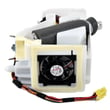
- Ice clumping or dispenser issues: inspect the ice bin and auger area; the refrigerator auger motor assembly DA97-12540G is a common related component
- Temperature swings: a failed sensor can cause poor regulation; check the refrigerator temperature sensor DA32-10104V
- Fan noise or weak cooling: evaporator or circulation fan problems are common service items
Last updated: February 2026
What is the most common problem with Samsung refrigerators?
Cooling-related complaints are the most common issue we see on Samsung refrigerators like model RF27T5241SR; they often show up as a warm fresh-food section, a freezer that will not hold temperature, or heavy frost that restricts airflow. Ice maker problems and water leaks are also frequent.
Most common symptoms
- Fresh-food section warms up while the freezer seems OK
- Freezer temperature rises, soft ice cream, thawing food
- Ice maker stops making ice or dispenses slowly
- Fan noise, buzzing, or rattling (often ice contacting a fan)
- Water under crisper drawers or puddles near the front
What usually causes it
Many “common” problems trace back to airflow restrictions, defrost drainage, or ice room/dispenser issues.
| Symptom | Likely area | First checks |
|---|---|---|
| Warm temps | Airflow/defrost, evaporator fan | Vents blocked by food or bags; frost buildup |
| No ice | Ice maker, ice bin/auger, ice room airflow | Clumped ice; bin jam; chute door sealing |
| Water leaks | Defrost drain, filter/water circuit | Drain blockage; loose connections |
Quick checks before replacing parts
Use the safety and operating guidance in the RF27T5241SR owner's manual.
- Confirm vents are not blocked; the manual warns blocked vents can contribute to cooling problems and leaks.
- If the unit was unplugged, wait at least 5 minutes before plugging it back in.
- Check for heavy frost behind interior panels; that points to a defrost or airflow problem.
- For ice issues, empty the bin, break up clumps, and retest.
Parts that can be involved (after diagnosis)
- Refrigerator temperature sensor DA32-10104V (temperature feedback problems)
- Refrigerator evaporator fan motor DA31-00287B (reduced airflow, warm compartments)
- Refrigerator water filter housing assembly DA97-21041A (leaks at housing or connections)
Why it matters
Airflow drives cooling, ice production, and moisture control. When vents are blocked or frost builds up, temperatures drift, ice production drops, and meltwater can end up as leaks.
Last updated: February 2026