Owner’s manual
 View engine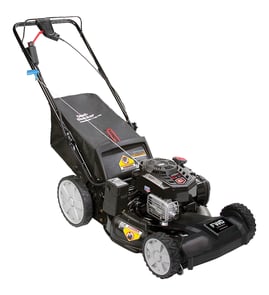

How to find Craftsman model number?
On a Craftsman walk-behind mower like model 917374380, the model number is typically printed on a sticker or tag on the mower deck, most often on the rear (back) of the deck near the lower handle mounting points. For diagrams and identification details, use the 917374380 owner's manual.
Where to look on the mower
Check these common spots on walk-behind mower decks:
- Back of the deck, between or near the lower handle mounts
- Rear skirt area (the metal panel at the back of the deck)
- Side of the deck near the rear wheel height adjuster
- Under the rear discharge door or near the discharge opening (if equipped)
What you should write down
We recommend recording the full ID information before ordering parts:
- Model number (example: 917374380)
- Serial number (often on the same sticker)
- Product number or engine model (sometimes listed separately)
- Any letter suffixes or extra digits (they matter for parts compatibility)
Quick ID checklist
| Item | What it’s used for |
|---|---|
| Model number | Matches the correct parts diagrams for your mower |
| Serial number | Helps confirm production run and compatible revisions |
| Engine model | Helps match engine-specific parts like filters and ignition parts |
Why it matters
Craftsman walk-behind mowers can look similar across multiple model series, but small differences in the deck, discharge system, and handle hardware change which parts fit. Using the exact model number helps ensure you get the right blade, wheel, or discharge components the first time.
Last updated: January 2026
Should I use 87 or 91 gas for lawn mower?
For the Craftsman 917374380 gas walk-behind mower, we recommend using fresh 87-octane (regular) unleaded gasoline for normal operation. Higher octane (like 91) does not add power or “clean” the engine; it mainly resists knock in high-compression engines.
What to use (and what to avoid)
- Use 87 octane unleaded gasoline from a busy station (fresher fuel).
- Use fuel that is no more than 30 days old unless it’s treated with stabilizer.
- Avoid E15/E85 blends; most walk-behind mower engines are designed for E10 or less.
- Avoid “premium” fuel as a fix for hard starting; it usually points to a fuel, spark, or carburetor issue.
- If the mower will sit, stabilize the fuel and follow the storage steps in the 917374380 owner's manual.
Quick comparison: 87 vs 91 in a walk-behind mower
| Fuel choice | What it changes | Best use case |
|---|---|---|
| 87 octane (regular) | Normal combustion for small engines | Everyday mowing |
| 91 octane (premium) | Higher knock resistance (not extra power) | Only if the engine specifically calls for it |
If your mower runs rough or won’t start
Higher octane is not the solution. These checks fix most “bad gas” symptoms:
- Drain old fuel and refill with fresh 87-octane.
- Inspect the air filter and replace if dirty.
- Check the spark plug condition and gap.
- If fuel sat in the carburetor, clean the bowl and jets.
- For off-season storage, follow how to winterize a lawn mower.
Why it matters
Using the right fuel helps the Craftsman 917374380 start easier, run smoother, and reduces varnish buildup that can clog the carburetor and cause surging or stalling.
Last updated: January 2026
What is the average lifespan of 917374380?
A Craftsman walk-behind mower like model 917374380 typically lasts 8 to 12 years with normal residential use and routine maintenance. Lifespan depends most on engine care, blade impacts, and how well the deck and wheels are kept clean and adjusted; see the 917374380 owner's manual for the maintenance schedule.
What affects lifespan the most
- Oil changes and air filter service (most important for engine life)
- Blade condition and balance; hitting rocks and roots shortens life
- Deck corrosion from wet grass buildup and storage outdoors
- Wheel and height adjuster wear from rough terrain
- Cable and handle hardware loosening from vibration
Maintenance checklist that adds years
- Change engine oil on schedule; check level before mowing.
- Keep the underside of the deck clean and dry after use.
- Sharpen or replace the blade when it’s nicked, bent, or won’t hold an edge.
- Inspect the blade mounting parts for wear; replace a worn lawn mower blade adapter 532418373 when the blade won’t seat tightly.
- Replace damaged cutting parts promptly; a bent lawn mower blade 532406712 increases vibration and can damage the crankshaft.
Quick “replace vs. keep” guide
| What you notice | Most likely cause | What to do |
|---|---|---|
| Excess vibration | Bent/dull blade, worn adapter | Replace blade and inspect adapter |
| Poor cut quality | Dull blade, wrong height | Sharpen/replace blade, adjust height |
| Uneven height | Worn wheel/adjuster parts | Inspect wheels and height levers |
| Rusty deck | Wet grass buildup, storage | Clean deck, improve storage |
Why it matters
A mower usually fails early from neglected maintenance or impact damage, not age alone. Keeping the blade system tight and balanced and following the tune-up intervals prevents vibration-related wear and protects the engine.
Last updated: March 2026