Owner’s manual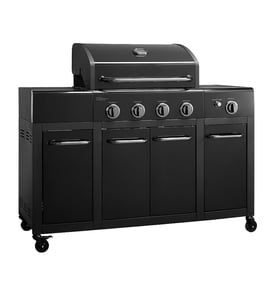



Who manufactures Kenmore grills?
Many Kenmore gas grills, including model 14610016510, are manufactured by Permasteel for the Kenmore brand. This matters when you are matching replacement parts (like cabinet hardware or rails) and using the correct assembly diagrams and part IDs.
The most reliable way is to match the ID information on the grill to the documentation and parts breakdown.
- Check the rating label (usually inside the cabinet or on a side panel) for the manufacturer name and serial information
- Compare the label details to the parts diagrams in the 14610016510 owner's manual
- Match parts by part ID (not just description) when ordering
- If you are replacing cabinet pieces, verify left vs. right orientation before ordering
- Keep the fuel type consistent (LP vs. natural gas) when servicing gas components
If you are trying to confirm you have the correct parts list for a Permasteel-built Kenmore grill, these model-specific cabinet parts are good cross-checks:
| What you are replacing | Example part on this model | What it does |
|---|---|---|
| Cabinet rail | Rail 41600045 | Supports/aligns cabinet or door components |
| Door hardware | Gas grill door bracket 40700082 | Helps mount and align the cabinet door |
| Tank support | Permasteel gas grill tank holder 40800130 | Secures the LP tank in the cabinet |
Knowing the manufacturer helps us narrow down the correct Kenmore parts breakdown, hardware fit, and compatible assemblies. It also reduces ordering errors when multiple Kenmore grills share similar styling but use different brackets, rails, or panels.
Last updated: February 2026
How to find Kenmore Grill model number?
For a Kenmore gas grill, including model 14610016510, the model number is printed on the rating label attached to the grill cabinet or firebox area. We recommend writing the model and serial numbers down exactly as shown before ordering parts or using the 14610016510 owner's manual.
Check these common label locations (look for a silver or white sticker/plate with model and serial information):
- Back panel of the grill base or cabinet
- Inside the cabinet (on an inner side wall near the tank area)
- Side panel of the cart
- Under the control panel (sometimes on the frame behind the knobs)
- On the firebox (near the lid hinge area on some designs)
Most Kenmore grill rating labels list the same key identifiers.
| Label item | What it’s used for | Example format |
|---|---|---|
| Model number | Matching the correct parts diagrams and parts | 146.10016510 or 14610016510 |
| Serial number | Identifying production run details | Letters and numbers |
| Gas type | Confirming LP vs natural gas setup | LP or NG |
| Input rating | Burner output reference | BTU/hr |
Small differences in model number formatting can point to different versions of a grill.
- Copy every digit exactly; do not guess missing numbers
- If the label shows dots (example: 146.10016510), keep them in your notes
- Take a clear photo of the label before it fades or gets greasy
- Match parts by model first, then confirm by part description
- If you’re replacing cabinet hardware, compare the old part shape to listings like the gas grill door bracket 40700082 or gas grill door handle 40900076
Kenmore grills often share similar cabinets and control panels across multiple models, but burner systems, ignition parts, and mounting hardware can differ. Using the exact model number helps us match the correct parts and diagrams the first time.
Last updated: February 2026
Is Kenmore a good brand for grills?
Kenmore grills, including the Kenmore 14610016510 gas grill, are a solid choice for everyday backyard cooking when you want good heat output, straightforward controls, and widely available replacement parts. Overall performance depends most on upkeep (cleaning, burner care, and ignition maintenance) and proper assembly.
A good gas grill consistently lights, heats evenly, and holds temperature with the lid closed. For most Kenmore gas grills, you can expect:
- Fast preheat when burners and ports are clean
- Even heat across the cooking surface when flame is properly adjusted
- Practical cabinet and shelf design for propane tank storage and tools
- Repairability when wear items (igniter, regulator, burners) eventually need service
Based on typical customer feedback for Kenmore grills, the strengths are usually cooking performance and design, while the most common complaints involve ignition and rolling stability.
| Area | What’s typical | What improves it most |
|---|---|---|
| Heating | Strong heat, good searing | Clean burners and preheat with lid closed |
| Ignition | Can be finicky over time | Keep electrode area clean and dry |
| Mobility | Wheels/casters can wear | Tighten hardware, replace worn wheel parts |
Use these quick checks to decide if your grill is meeting expectations:
- Lights reliably on the first few clicks (or lights easily with a match when needed)
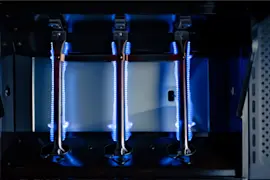
- Flames are mostly blue with minimal yellow tipping
- No major hot spots after a 10 to 15 minute preheat
- Cabinet doors align and close smoothly (hardware stays tight)
- Grease management is easy to clean and doesn’t cause frequent flare-ups
A “good” grill is one you can keep running safely and consistently. With Kenmore, long-term satisfaction usually comes down to routine cleaning and replacing small wear parts instead of living with weak ignition, uneven heating, or loose cabinet hardware.
For model-specific operating and care steps, follow the 14610016510 owner’s manual. For performance tips that apply to most grills, see the secret to great grilling.
Last updated: February 2026
How to light a Kenmore gas grill?
To light your Kenmore gas grill model 14610016510, we recommend opening the lid first, turning on the gas, then lighting the burner farthest from the fuel source and confirming you have flame before preheating. Follow the exact lighting sequence in the 14610016510 owner's manual.
- Move the grill outdoors to a well-ventilated area and open the lid.
- Make sure all burner control knobs are OFF.
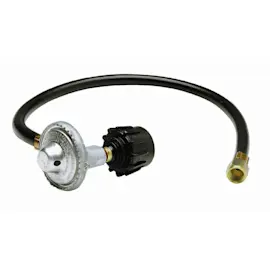
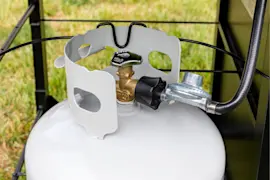
- Open the propane tank valve slowly (this helps prevent regulator lock-up).
- Push in and turn the first burner knob to HIGH/IGNITE.
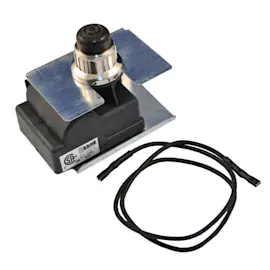
- Press the igniter button (or turn the electronic ignition knob) until the burner lights.
- Visually confirm flame, then light remaining burners and preheat on HIGH.
Use this quick checklist before replacing parts:
- Confirm the propane tank has fuel and the valve is fully open.
- Turn everything OFF, wait 5 minutes, then try again with the lid open.
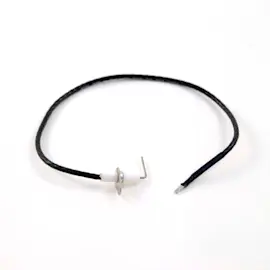
- Check for a loose igniter wire, dead battery (if equipped), or a dirty electrode tip.
- Make sure burner ports are not clogged with grease or debris.
- If flames are weak or inconsistent, the regulator can be in bypass; reset by turning tank and knobs OFF, then reopen the tank valve slowly.
| Symptom | Most common cause | What to do next |
|---|---|---|
| Clicking but no flame | No gas flow or clogged burner | Reset regulator; clean burner ports |
| No clicking/spark | Ignition issue | Check battery/wires; inspect electrode |
| Lights with match only | Weak spark or bad module | Inspect electrode gap; test ignition module |
Lighting with the lid open and confirming ignition reduces flare-up risk and prevents unburned gas from collecting in the firebox. Preheating after all burners are lit helps stabilize temperature for even cooking.
For deeper troubleshooting, use our step-by-step video: gas grill wont ignite or light video.
Last updated: February 2026