Installation guide
 Owner’s manual



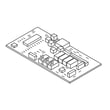
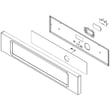
How to hard reset a KitchenAid microwave?
To hard reset (power cycle) your KitchenAid built-in microwave KMBS104ESS02, turn it off and remove power for about 5 minutes, then restore power. If the display shows a blinking ":" afterward, press CANCEL and reset the clock as described in the KMBS104ESS02 owner's manual.
- Press CANCEL to stop cooking and clear the display.
- Unplug the microwave; if it is built-in and not accessible, switch OFF the dedicated circuit breaker.
- Wait 5 minutes.
- Restore power (plug back in or turn the breaker ON).
- If ":" is blinking, press CANCEL, then set the clock.
These items look like a “dead” microwave but are normal settings or modes:
- Control Lock: If you see LOC, touch and hold CANCEL for 5 seconds to unlock.
- Demo mode: With the microwave OFF, open the door and touch and hold COOK for 5 seconds to toggle Demo mode.
- Cooling fan delay: If COOL shows, the fan is running after cooking; it shuts off automatically.
| Display or symptom | What it means | What to do |
|---|---|---|
| Blinking ":" | Power interruption | Press CANCEL, reset clock |
| LOC | Control Lock is on | Hold CANCEL 5 seconds |
| "no" then "HEAt" | Demo mode is on | Door open; hold COOK 5 seconds |
A power cycle clears minor control-board glitches and restores normal keypad operation without replacing parts. If the microwave repeatedly loses power, trips the breaker, or shows an oven status error message, schedule service.
Last updated: February 2026
What is the capacity of the KitchenAid Superba oven?
The KitchenAid KMBS104ESS02 is a built-in microwave, not a Superba wall oven; its cooking capacity is listed in the product specifications section of the KMBS104ESS02 use and care guide. If you are trying to confirm an oven’s cubic-foot capacity, match the exact model number on the rating plate first because “Superba” can refer to multiple KitchenAid oven models.
Use these steps so you end up with the right spec for the right model:
- Locate the model and serial tag (often inside the door opening or on the frame).
- Confirm the model number matches KMBS104ESS02 exactly (characters and suffix matter).
- Check the “Parts and features” and specifications sections in the manual.
- If you have a wall oven model instead, use that oven’s manual, not the microwave guide.
- When shopping parts, always search by the full model number to avoid fit issues.
| Appliance type | Capacity is usually stated as | Typical range |
|---|---|---|
| Built-in microwave (like KMBS104ESS02) | Cubic feet of cavity volume | About 1.0 to 2.2 cu. ft. |
| Wall oven (often called “Superba” in older lines) | Cubic feet of oven cavity | About 3.0 to 5.0+ cu. ft. |
Capacity affects what cookware fits, how much food you can cook at once, and which accessories (racks, turntables, trim kits) are compatible. Using the exact model number prevents ordering the wrong KitchenAid parts for your appliance.
Last updated: February 2026
What is the disadvantage of a convection microwave oven?
A convection microwave (including combo models like the KitchenAid KMBS104ESS02) trades capacity and simplicity for versatility; the biggest disadvantage is limited usable cooking space and the extra cookware and settings needed for convection-style cooking compared with a standard microwave. See the KMBS104ESS02 owner's manual for mode-specific cookware rules.
- Smaller effective capacity: you typically cook one dish at a time, especially when using racks or pans.
- More setup and learning curve: convection, combination, grill, and other modes add settings and timing adjustments.
- Cookware limitations: some items that are fine for microwave-only are not suitable for convection or combination modes.
- More cleanup: convection-style cooking can create more splatter and baked-on residue than reheating.
- Longer preheat-style behavior in some uses: convection cooking can feel slower than microwave-only for quick tasks.
The KMBS104ESS02 manual calls out important restrictions that can feel like “disadvantages” day to day:
- Do not use paper products when the appliance is operated in convection, combination, grill, or “PAN BROWN” mode.
- Do not cover racks or other interior parts with metal foil; it can cause overheating.
- Avoid oversized foods or oversized metal utensils that can create fire or shock risk.
| Feature | Standard microwave | Convection microwave |
|---|---|---|
| Best at | Reheating, defrosting | Reheating plus baking/roasting-style results |
| Space for multiple dishes | Limited | Often more limited due to racks/pans |
| Cookware flexibility | Higher | Lower (mode-dependent) |
| Learning curve | Low | Medium to high |
If you mainly reheat and defrost, a convection microwave’s extra modes can feel like extra steps. If you want browning and crisping in the same built-in unit, the tradeoff in space and cookware rules is usually worth it.
Last updated: February 2026