Owner’s manual
 Error Codes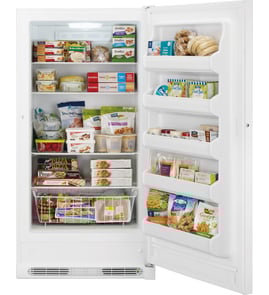

What is the disadvantage of an upright freezer?
An upright freezer like the Wc Wood R1813DW3 is easier to organize, but its main disadvantage is efficiency: when you open the door, cold air spills out quickly, so it typically uses more energy than a chest freezer and can be less forgiving during frequent door openings.
Common disadvantages (what you will notice day to day)
- More temperature swing with door openings: cold air falls out when the door is open.
- Less usable space for bulky items: shelves and door bins can limit tall or awkward packages.
- More frost management on some models: if your unit is not frost-free, you will need periodic defrosting.
- More parts that can need attention over time: door gasket sealing and door alignment matter more because the door is opened often.
Upright vs. chest freezer: quick comparison
| Feature | Upright freezer | Chest freezer |
|---|---|---|
| Organization | Best (shelves, bins) | Harder (stacking) |
| Energy use | Typically higher | Typically lower |
| Bulk storage | Harder for large items | Best for bulky items |
| Door-open impact | Higher (cold air escapes) | Lower |
Why it matters
If your household opens the freezer often, an upright can run longer to recover temperature, which increases energy use and can contribute to frost buildup on non-frost-free designs. Good habits (quick door openings, strong door seal, proper loading) reduce these downsides.
Tips to minimize the disadvantages
- Keep the freezer well stocked (a fuller freezer holds temperature better).
- Open the door only as long as needed; plan what you are grabbing first.
- Keep packages flat and squared off so air can circulate and the door closes fully.
- Clean and inspect the door gasket so it seals tightly.
- If frost builds up, defrost and clean when it reaches about 1/4 inch (6 mm); follow the steps in the owner's manual.
Last updated: February 2026
Is it worth fixing an upright freezer?
Yes, it’s worth fixing a Wc R1813DW3 upright freezer when the problem is a common, serviceable issue (door seal leak, heavy frost buildup, dirty condenser area, or a control problem) and the repair cost is well under the price of a comparable replacement. If the sealed system is failing (compressor or refrigerant leak), replacement is usually the better value.
Quick decision checklist
- Age: Upright freezers typically last 12 to 20 years.
- Repair cost rule: Repair is usually the smart choice when the total cost is under 50% of a replacement.
- Symptom type: Frost, warm temps, or door not sealing often points to fixable issues.
- Food loss risk: If temps are unstable, you risk spoilage and waste.
- Energy use: Older units can cost more to run; a major repair may not pay back.
Common “worth fixing” problems (and why)
These issues are often straightforward and cost-effective:
- Door not sealing: Warm air leaks in, causing frost and poor cooling.
- Frost buildup around 1/4 inch: The manual recommends defrosting and cleaning at that point; heavy frost reduces airflow and cooling performance.
- Dirty interior or odors: Cleaning with mild detergent; baking soda and water helps remove odors.
- Power interruption concerns: The manual outlines food-safety steps (keep doors closed; use dry ice for longer outages).
For model-specific care steps and defrost guidance, use the owner's manual.
When replacement is usually the better choice
Major sealed-system problems tend to be expensive and less predictable:
- Compressor not running or very loud and overheating
- Freezer won’t cool even after defrosting and ensuring good door seal
- Suspected refrigerant leak or repeated warm-temperature episodes
Cost and outcome comparison
| Situation | Typical outcome | Usually worth fixing? |
|---|---|---|
| Door seal leak, light frost, minor airflow issue | Restores normal temps and reduces frost | Yes |
| Defrost/cleaning overdue (heavy frost) | Cooling improves after full defrost | Yes |
| Electrical/control issue | Repair varies by part and labor | Often |
| Compressor or refrigerant issue | High cost, major repair | Usually no |
Why it matters
A freezer that’s struggling often runs longer, builds more frost, and can’t hold safe temperatures. Fixing a simple airflow or sealing issue protects food quality and reduces energy waste; replacing after a major sealed-system failure avoids repeated breakdowns.
Last updated: February 2026
What is the average lifespan of an upright freezer?
Most upright freezers last 10 to 15 years. With steady upkeep and a stable indoor environment, many units run closer to 15 to 20 years. For your Wc Wood upright freezer model R1813DW3, good cleaning and airflow habits from the owner's manual help maximize service life.
Typical lifespan and what changes it
An upright freezer’s lifespan is mainly driven by compressor run time, heat removal, and door-seal performance.
- Location: Indoor, temperature-controlled spaces extend life; hot garages shorten it.
- Condenser coil cleanliness: Dirty coils make the compressor work harder.
- Door gasket condition: Leaks cause longer run times and frost issues.
- Defrost and moisture control: Heavy frost buildup reduces efficiency.
- Loading and door openings: Frequent openings increase run time.
Maintenance that extends lifespan (practical checklist)
The R1813DW3 manual emphasizes regular cleaning and safe defrost practices.
- Clean the interior about once a month to prevent odors and buildup.
- Clean condenser coils regularly (this is one of the biggest life-extenders).
- Defrost and clean when frost reaches about 1/4 inch (6 mm); do a full defrost/clean at least yearly.
- Use mild detergent or a baking soda solution; avoid abrasive or harsh cleaners.
- Never use sharp tools (ice pick, knife) to remove frost; use a plastic scraper.
Quick “replace vs. repair” guide
| What you notice | What it usually means | What we do next |
|---|---|---|
| Runs constantly, cabinet feels warm | Poor airflow, dirty coils, gasket leak | Clean coils, check door seal, confirm ventilation clearance |
| Heavy frost on walls/shelves | Door not sealing, frequent openings, humidity | Inspect gasket, reduce openings, defrost at 1/4 inch |
| Loud clicking or repeated start attempts | Compressor start components stressed | Check power supply, then diagnose start components |
| Food softening during outages | Normal warming risk | Follow outage steps in the manual (keep door closed) |
Why it matters
A freezer that runs longer and hotter than it should wears out the compressor faster and can lead to temperature swings that affect food quality. Simple habits like coil cleaning and gasket checks reduce run time and extend the freezer’s usable years.
Last updated: February 2026
What is the most reliable brand of upright freezer?
No single brand is “most reliable” for every upright freezer; reliability depends more on the specific model’s cooling design, defrost system, and how it’s installed and maintained. For your Wc Wood upright freezer model R1813DW3, use the R1813DW3 owner's manual to confirm care and operating details that directly affect long-term performance.
What “reliable” means for an upright freezer
We judge reliability by how consistently the freezer holds safe temperatures and how often common failure points show up over time.
Key indicators to prioritize:
- Stable temperatures with minimal warm swings
- A door that seals evenly (gasket condition and hinge alignment)
- A defrost approach that matches your tolerance for maintenance
- Clean condenser coils for efficient cooling
- Simple, durable controls and clear alarms/indicators
Brand vs. model: what to compare before you buy
Brand reputation helps, but model-level features and build choices matter more day to day.
| What you compare | More reliable outcome | What can reduce reliability |
|---|---|---|
| Defrost type | Frost-free reduces heavy frost; manual defrost reduces complexity | Neglected manual defrost leads to heavy frost and poor airflow |
| Door sealing | Tight seal prevents warm air leaks and frost | Warped door, torn gasket, or misaligned hinges |
| Maintenance access | Easy coil cleaning supports compressor life | Dirty coils increase run time and stress components |
| Placement | Proper ventilation and stable room temps | Hot, cramped, or unheated locations without proper rating |
Practical steps that improve reliability on any brand
These actions prevent the most common upright-freezer problems (warm temps, frost buildup, and long run times):
- Keep the freezer reasonably full; a full freezer holds temps longer during door openings
- Clean condenser coils on a regular schedule
- Check the door seal with a paper-strip test; resistance should feel even all around
- Defrost and clean when frost reaches about 1/4 inch on manual-defrost designs
- Avoid sharp tools when removing frost; use a plastic scraper
Why it matters
A reliable upright freezer protects food quality by maintaining consistent freezing temperatures and avoiding frost buildup that reduces storage space and airflow; it also helps control energy use by reducing unnecessary run time.
Last updated: February 2026