Owner’s manual
 Error Codes


What is the most common problem with LG refrigerators?
The most common issue we see with LG refrigerators is a cooling failure, often tied to the sealed system (compressor, refrigerant flow, or defrost-related sensing). On the LG LRFXC2406D, start by confirming temperatures and checking for airflow, ice buildup, and fan operation using the owner's manual.
- Fresh food section warm but freezer seems closer to normal
- Freezer warm and ice production slows or stops
- Clicking, humming, or frequent cycling from the rear lower area
- Frost buildup on the back wall inside the freezer
- Temperature swings after door openings
- Verify settings: Set the refrigerator to about 37°F and freezer to about 0°F.
- Check door seal and closing: A poor seal causes warm air leaks and moisture that turns into frost.
- Look for blocked vents: Overpacked shelves can block airflow between compartments.
- Inspect for frost/ice: Heavy frost points to a defrost problem (sensor, heater circuit, or airflow restriction).
- Listen for fans: Evaporator and condenser fan issues can mimic compressor problems.
If basic checks point to a component failure, these parts commonly relate to the most frequent symptoms:
| Symptom | Most likely system | Example model-matched part |
|---|---|---|
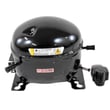
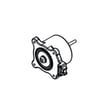
| Warm temps in both sections, unit runs a lot | Sealed system/compressor | Refrigerator compressor TCA36811409 |
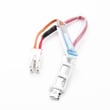
| Frost buildup, erratic defrosting | Defrost sensing | Refrigerator defrost sensor assembly 6615JB2005R |
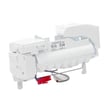
| No water dispense or weak ice production | Water supply/valve | Refrigerator water inlet valve AJU75632502 |
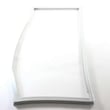
| Door not sealing, moisture/frost near door | Door gasket | LG refrigerator door gasket, left ADX72930460 |
Cooling problems can start as a simple airflow or door-seal issue, but if they continue, food safety and ice maker performance drop quickly. Catching the cause early also helps you avoid replacing the wrong part.
You can order replacement parts for your LG LRFXC2406D from the parts list for this model, or search by model number on Sears PartsDirect.
Last updated: February 2026
Why is my LG refrigerator not making ice on the bottom?
If your LG LRFXC2406D bottom-mount refrigerator is not making ice in the lower ice bin, the most common causes are the icemaker being turned off, the freezer temperature being too warm (target 0°F), or a water supply issue such as a closed or clogged shutoff valve. Confirm the basics first using the owner's manual.
- Make sure the icemaker is turned ON.
- Set the freezer to 0°F; warmer settings reduce or stop ice production.
- Allow up to 24 hours after installation or reconnecting water for ice to start.
- Confirm the house shutoff valve is fully open and the supply line is not kinked.
- Check for frost or debris blocking the ice-detecting sensor area.
Your refrigerator needs adequate cold-water pressure and flow to fill the icemaker mold. Low pressure, a partially closed valve, or a restriction can stop ice production.
- If you use reverse osmosis, it can reduce pressure enough to affect ice making.
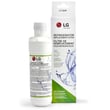
- Replace the water filter about every 6 months, or sooner if water flow slows or cubes get smaller.
For water flow problems, the refrigerator water inlet valve AJU75632502 is a common part to inspect or replace when the valve is electrically failing or mechanically restricted.
Under normal conditions, LG’s icemaker output varies with temperature and door openings.
| Condition | What you’ll see | What to do |
|---|---|---|
| New install or recently reconnected | Little to no ice at first | Wait up to 24 hours |
| Freezer above 0°F | Slow or no ice | Lower freezer temp |
| Low water flow/pressure | Small cubes or no cubes | Check valve, line, filter |
| Sensor obstructed | Icemaker stops early | Clear frost/debris |
When the freezer runs warmer than 0°F or the water supply is restricted, the icemaker cannot fill and freeze properly. Fixing temperature, airflow, and water flow prevents repeated “no ice” cycles and protects food storage performance.
We list model-matched replacement parts for LRFXC2406D on this page; you can also search by model number on Sears PartsDirect.
Last updated: February 2026
How to turn on bottom ice maker on LG fridge?
To turn on the bottom ice maker on your LG LRFXC2406D, make sure the refrigerator is connected to the water supply, then set the icemaker power switch to ON (I). The ice maker starts producing ice automatically once the freezer reaches 15°F (-9°C) or colder (see the LRFXC2406D owner's manual).
- Confirm the water line is connected and the household shutoff valve is fully open.
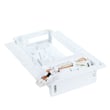
- Pull out the freezer drawer and locate the ice maker.
- Move the ice maker power switch to ON (I).
- Close the drawer and allow time for the unit to reach temperature.
- Discard the first few batches of ice after installation or long downtime.
These are the most common causes we see after the switch is set to ON:
- The refrigerator is still cooling down (ice production can take up to 24 hours after install or reconnect).
- The ice-detecting sensor area is blocked by frost or ice.
- Water supply is off, kinked, or restricted.
- Water pressure is too low (reverse osmosis systems often reduce pressure enough to affect ice making).
- The ice maker was turned on before water was connected (turn it OFF, connect water, then turn it back ON).
| Check | What “good” looks like | What to do if not |
|---|---|---|
| Freezer temperature | 15°F (-9°C) or colder | Lower freezer setting; wait several hours |
| Water shutoff valve | Fully open | Open valve completely |
| Ice bin and sensor area | Clear of frost and obstructions | Clear ice buildup; reseat bin |
| First-time startup | Normal delay | Wait up to 24 hours |
The ice maker on the LRFXC2406D is temperature-dependent; even with the switch ON, it will not cycle until the freezer is cold enough. Turning it on with no water connected can also cause buzzing at the inlet valve and prevent normal operation.
If you suspect a water supply problem, the refrigerator water inlet valve AJU75632502 is one of the parts that controls water flow to the ice maker. You can also find additional model-specific parts on this page or search by model at Sears PartsDirect.
Last updated: February 2026
Why does my LG freezer keep icing up at the bottom?
Ice building up on the bottom of the freezer in your LG LRFXC2406D is caused by a defrost drain problem: meltwater cannot flow to the drain pan, so it refreezes on the freezer floor and gradually forms a thick sheet of ice.
- Unplug the refrigerator or turn off power at the breaker.
- Remove the freezer drawer and lower bin to expose the freezer floor.
- Look for a solid ice slab at the bottom or ice around the rear interior panel.
- Fully defrost the freezer (doors open) until the drain area is completely clear.
- After defrosting, pour a small amount of warm water into the drain trough; it should flow freely.
Most “ice sheet at the bottom” complaints come from one of these issues:
- Drain trough iced over: A partial defrost leaves ice in the drain channel; it refreezes quickly.
- Drain tube blocked (food particles, ice, debris): Water backs up and freezes on the floor.
- Door not sealing or not closing fully: Extra moisture enters, increasing frost and drain icing.
- Freezer overpacked: Items can block airflow and contribute to uneven frost and melt patterns.
If you also notice the doors not closing smoothly, inspect the closer and hinges; a worn closer can let the door stay slightly ajar.
If you clear the drain and the problem returns, a defrost control or sensing issue can contribute to heavy frost that overwhelms the drain.
| Symptom you see | What it often points to | Example part for this model |
|---|---|---|
| Heavy frost on rear freezer panel | Defrost sensing/heater control issue | Refrigerator defrost sensor assembly 6615JB2005R |
| Frost plus warm temps or poor cooling | Sealed system or airflow issue | (diagnosis needed) |
| Moisture and frost near door edges | Door seal leak | Refrigerator door gasket, left ADX72930460 / LG refrigerator door gasket, right ADX72930461 |
When the drain stays blocked, water repeatedly refreezes and can eventually interfere with the drawer closing, restrict airflow, and cause temperature swings that affect ice production and food quality.
- Use the owner's manual for your LRFXC2406D to locate compartments and safe handling steps.
- If you need to order replacement parts for this refrigerator, use the parts list for LRFXC2406D on this page or search by model at Sears PartsDirect.
Last updated: February 2026