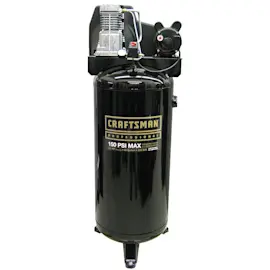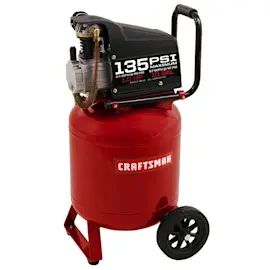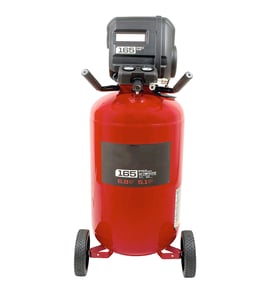

What company makes Craftsman air compressors?
Craftsman is a brand, so Craftsman air compressors (including model 91915216) have been built by different original equipment manufacturers over the years. The actual maker varies by model and production run; the most reliable way to identify it is by checking the data plate and any manufacturer or code information on the unit.
How to identify who made your Craftsman 91915216
Look for a label or stamped plate on the tank, shroud, or frame. Common places include near the motor, pressure switch, or rear of the tank.
- Find the data plate and record all numbers and letters
- Look for an OEM name (sometimes listed as “MFG” or “Manufactured by”)
- Note any prefix codes or long ID strings (often more useful than the Craftsman name)
- Record the voltage and amperage ratings (helpful when matching motors and switches)
- Take a clear photo before ordering parts or troubleshooting
Why the manufacturer can vary
Craftsman-branded compressors have been sourced from multiple OEMs depending on the era and design. That is why two Craftsman compressors can look different internally even if they are similar in size or tank style.
Common OEM clues (what you may see on the label)
| What you see on the unit | What it usually means | Why it matters for repairs |
|---|---|---|
| “Manufactured by …” company name | Direct OEM identification | Best for matching pump, valve, and switch styles |
| A long model/serial string beyond 91915216 | Internal production identifier | Helps narrow down compatible components |
| Only Craftsman branding, no OEM listed | OEM not printed on the exterior | Use the model number and component specs instead |
What to do next for parts and troubleshooting
Even when the OEM name is unclear, we can still narrow down the right repair path by symptom and component type (pressure switch, check valve, regulator, gauges, pump).
- Use the model number 91915216 when searching parts and diagrams
- Match parts by function and specs (pressure range, port size, electrical rating)
- Start with the symptom that matches your issue
- If the compressor will not start, follow air compressor won't start
- If it runs but will not build pressure, follow air compressor won't build tank pressure
Why it matters
Knowing the OEM helps when designs changed between production runs; however, for most repairs, matching the correct component type and specifications is what prevents wrong-part orders and repeat failures.
Last updated: February 2026
What is the most common cause of air compressor failure?
The most common cause of failure on a Craftsman air compressor like model 91915216 is poor maintenance that leads to overheating and accelerated wear (dirty intake filter, restricted cooling airflow, moisture left in the tank, and small air leaks that make the pump run too long).
Most common failure drivers (and what they damage)
- Restricted airflow and overheating: breaks down seals, valves, and motor components.
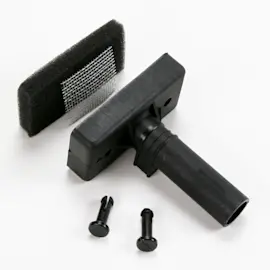
- Dirty or clogged intake filter: reduces output, increases run time, and raises pump temperature.
- Moisture left in the tank: corrodes fittings and can cause persistent leaks.
- Air leaks (hoses, fittings, drain valve, regulator area): forces longer cycles and overheats the pump.
- Electrical issues (switch, cord, capacitor, breaker): causes hard starting, nuisance trips, or no-start.
Quick checks you can do first
- Listen and look for leaks: spray soapy water on fittings and watch for bubbles.
- Confirm cooling airflow: keep vents clear; do not run in a tight enclosure.
- Drain the tank: after use, open the drain to remove water and reduce corrosion.
- Watch the gauges: if pressure stalls low, suspect leaks, valve issues, or pump wear.
- Check power supply: use the correct outlet and avoid undersized extension cords.
Symptoms to cause map
| Symptom | Most likely cause | Why it matters |
|---|---|---|
| Won’t start | Power issue, pressure switch problem, stuck check valve | Prevents motor damage from repeated hard-start attempts |
| Runs but won’t build pressure | Leak, reed/valve problem, worn pump | Long run time overheats the pump |
| Builds pressure slowly | Dirty filter, small leaks, restricted intake | Efficiency drops and heat rises |
| Tank won’t hold air | Leak at fittings/drain valve, corrosion | Compressor cycles more often and wears faster |
Why it matters
Air compressors usually fail because heat and contamination compound over time. When the unit runs hotter and longer than designed, the pump and motor wear quickly, and small leaks turn into constant cycling.
Related troubleshooting and repair help
- Use air compressor won't start if the motor is dead silent, hums, or trips a breaker.
- Use air compressor won't build tank pressure if it runs but cannot reach normal cut-out pressure.
Last updated: February 2026
Are air compressor parts interchangeable?
Most parts for a Craftsman air compressor model 91915216 are not interchangeable across brands or even across different compressor models. Internal components (pump parts, valves, piston/cylinder parts, pressure switch settings) must match the exact design so the compressor starts correctly, builds pressure, and shuts off safely.
What’s usually model-specific vs. more universal
Typically model-specific (match by model number):
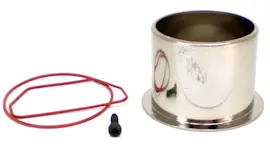
- Pump components (cylinder, piston, connecting rod, reed valves)
- Head gasket and valve plate style
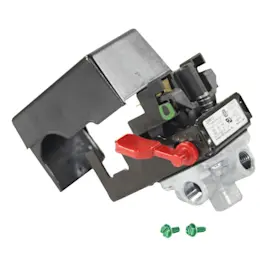
- Pressure switch cut-in and cut-out range and mounting style
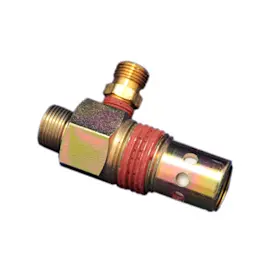
- Check valve style and tube connection sizes
- Regulator body style and gauge mounting
More likely to be interchangeable (still verify size and style):
- Quick-connect couplers and plugs (industrial, automotive, ARO styles)
- Common NPT fittings (for example 1/4-in NPT is common, but not guaranteed)
- Air hose sizes and clamps (when the connection type matches)
How we recommend matching parts for model 91915216
Because there is no manual or model-specific part list provided here, the safest approach is to match by function, mounting, and connection details.
- Identify the part’s role (pressure control, one-way flow, sealing, airflow)
- Match thread type and size (NPT is common; measure to confirm)
- Match port orientation (straight, 90-degree, inline) and clearance
- Match electrical ratings for switches (voltage, amperage) when applicable
- Match pressure range for regulators and pressure switches
Quick compatibility checklist
| Part type | What must match | What can vary a little |
|---|---|---|
| Pressure switch | Cut-in/cut-out range, port size, wiring terminals | Cover style, brand label |
| Check valve | Port sizes, tube connection type, flow direction | Body shape |
| Coupler/plug | Coupler “profile” and thread size | Brand |
| Gauge | Thread size, pressure range | Dial face style |
Why it matters
Using a “close enough” internal part can cause hard starting, constant leaking, failure to build tank pressure, or unsafe pressure control. Even with fittings, a mismatched thread or coupler profile often leads to leaks and poor tool performance.
Helpful troubleshooting and repair guides
- Use air compressor air leaks to track down leaks at fittings, the regulator, or the tank connections.
- Use air compressor won't build tank pressure if the pump runs but pressure stalls (often valves, gaskets, or check valve issues).
- Use how to replace an air compressor check valve when air bleeds back toward the pump or the unloader behavior seems wrong.
Last updated: February 2026
Is it worth it to repair a compressor?
Repairing a Craftsman air compressor model 91915216 is worth it when the problem is limited to common service parts (pressure switch, check valve, regulator, gauges, safety valve) and the tank and pump are in good shape. If the tank leaks or the pump is badly worn, replacement is the better value.
Quick decision checklist
- Repair if it still builds pressure close to normal and only has starting, leaking, or control issues
- Repair if the fix is a single component (pressure switch, check valve, regulator)
- Replace if the tank won’t hold air or you see severe corrosion at welds or fittings
- Replace if the pump has low compression (runs constantly, won’t build pressure) and needs major internal work
- Replace if it repeatedly trips breakers or overheats after basic electrical checks
Typical repair cost vs. replacement value
Costs vary by part and labor, but this table helps set expectations.
| Scenario | What it usually involves | Best choice |
|---|---|---|
| Won’t start or struggles to restart | Pressure switch, unloader, check valve, power supply checks | Repair |
| Leaks at fittings or valve area | Tightening, thread sealant, replacing a valve or gauge | Repair |
| Can’t adjust outlet pressure | Regulator issue, clogged filter, gauge problem | Repair |
| Won’t build tank pressure | Intake filter, reed valves, head gasket, worn pump | Depends |
| Tank leak or structural rust | Tank replacement is typically not cost-effective | Replace |
Why it matters
An air compressor’s tank and pump are the two big value drivers. Fixing controls (pressure switch, regulator) restores safe operation at a reasonable cost, but a leaking tank or heavily worn pump turns into a high-cost repair with lower long-term reliability.
What we recommend checking first
- Confirm the symptom: won’t start, won’t build pressure, leaks, or pressure control problem.
- Do a leak check: pressurize the tank and listen; use soapy water on fittings, drain valve, and manifold.
- Watch the gauges: does tank pressure rise steadily, stall early, or drop quickly after shutoff?
- Narrow it to a system:
- Starting circuit and controls: see air compressor won't start
- Pressure build issues: see air compressor won't build tank pressure
- Major pump wear: see how to rebuild an air compressor pump
Last updated: February 2026