 Owner’s manual
 Error Codes




What are the disadvantages of a top mount fridge?
Top-mount (top-freezer) refrigerators like the Frigidaire LFTR2045VF3 trade convenience for simplicity: you bend more to reach fresh food, typically get fewer premium features, and freezer organization can feel tighter. They also need the right room temperature and airflow to cool consistently (see the LFTR2045VF3 owner's manual).
Common disadvantages (what most owners notice)
- More bending for daily items: Fresh food is in the lower section, so you reach down often.
- Fewer built-in features: Many top-mount designs skip in-door ice and water, advanced drawers, or dual evaporators.
- Freezer access and organization: The top freezer can be narrower and less flexible for bulky frozen items.
- Wide door swing in tight kitchens: A single wide refrigerator door can be awkward near walls or islands.
- Performance in extreme locations: If installed where temps drop below 50°F or rise above 110°F, cooling can suffer.
- Airflow sensitivity: Blocking the lower front toe grille reduces airflow and can hurt cooling efficiency.
Quick comparison: top-mount vs bottom-mount
| Feature | Top-mount (top freezer) | Bottom-mount (bottom freezer) |
|---|---|---|
| Fresh food access | Lower, more bending | Eye-level, easier access |
| Typical features | Simpler, fewer add-ons | More premium options |
| Freezer usability | Upper, can be tighter | Pull-out drawers, easier sorting |
| Cost and repairs | Often lower cost | Often higher cost |
What matters most for LFTR2045VF3 installation
Even a great top-mount fridge feels “worse” if it is installed in a tough spot. We recommend these checks from the LFTR2045VF3 owner's manual:
- Keep the lower front (toe grille) clear for airflow.
- Install where ambient temperature stays 50°F to 110°F.
- Level the cabinet side-to-side and tilt it about 1/4 inch front-to-back so doors seal well.
Why it matters
Most “disadvantages” show up as daily-use frustration (bending, door swing) or as temperature complaints caused by placement, leveling, or blocked airflow. Getting those basics right helps the LFTR2045VF3 cool evenly and reduces frost and moisture issues.
Last updated: January 2026
Is LFTR2045VF3 garage ready?
The Frigidaire LFTR2045VF3 use and care information we have does not identify this model as “garage ready.” For reliable operation, we recommend placing it in a temperature-controlled space and following the location and installation guidance in the LFTR2045VF3 owner's manual.
What “garage ready” means (and why it matters)
A “garage ready” refrigerator is designed to keep cooling properly when the room temperature swings colder or hotter than a typical kitchen. In a garage, wide temperature changes can cause:
- Warm fresh food temperatures even when the control is set colder
- Poor freezer performance or thawing during hot spells
- Longer run times and higher energy use
- Frost buildup or defrost issues in some conditions
How to decide if your garage is a good location
Use these quick checks before you install or move the LFTR2045VF3:
- Measure typical garage temperatures across seasons (morning and afternoon)
- Avoid uninsulated exterior walls and direct sun exposure
- Leave airflow clearance around the cabinet so the condenser can shed heat
- Keep the unit level so doors seal and close correctly
- Confirm a dedicated outlet and avoid extension cords
What to do if cooling is weak in a garage
If the refrigerator section is warm or the freezer is inconsistent, these are the most common causes to check:
| Symptom | Most common cause | What to check first |
|---|---|---|
| Fresh food warm, freezer OK | Airflow restriction | Vents blocked by food packages |
| Frost on back wall of freezer | Defrost system issue | Heavy frost buildup, fan noise |
| Both sections warm | Heat rejection problem | Dusty condenser area, poor clearance |
| Temps swing a lot | Control/thermostat issue | Settings, door sealing, cycling |
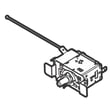
If you suspect a temperature control problem, the refrigerator temperature control thermostat 5304522330 is a model-matched part commonly involved in temperature regulation.
Why it matters
Using a non-garage-rated refrigerator in extreme ambient temperatures can lead to food-safety temperature swings and unnecessary wear on the compressor and defrost system.
Last updated: January 2026
What is the most common problem with a Frigidaire refrigerator?
Cooling performance problems are the most common issue we see with Frigidaire refrigerators like model LFTR2045VF3, including “not cold enough,” uneven temperatures, or freezer frost buildup. Many cases trace back to airflow restrictions, temperature settings, or defrost-related components; start with the checks in the LFTR2045VF3 owner's manual.
Most common symptoms (and what they usually point to)
- Fresh food section warm but freezer OK: restricted airflow, evaporator fan issue, or frost buildup
- Freezer packed with frost: defrost system problem (heater, thermostat, timer)
- Temperatures swing up and down: control setting changes, door not sealing, or airflow blocked by food
- Unit seems to run a lot: dirty condenser area, warm room, frequent door openings, or gasket leak
- No cooling at all: control set to OFF, power issue, or a sealed-system/compressor problem
Quick checks we recommend first (10 minutes)
- Confirm the refrigerator control is not set to OFF; adjust in small increments and allow 24 hours to stabilize.
- Make sure food is not blocking cold air vents; the manual notes airflow is required to maintain temperature.
- Check that both doors seal completely on all sides; poor sealing causes warm temps and frost.
- Listen for the evaporator fan running when the compressor is on (freezer area).
- Verify the refrigerator is level and slightly tilted back (about 1/4 inch) so doors close reliably.
Parts that commonly solve cooling and frost complaints on LFTR2045VF3
| Symptom | Common suspect | Example part for this model |
|---|---|---|
| Heavy frost, warm fridge | Defrost timing/control | Refrigerator defrost timer 5304526183 |
| Heavy frost, fan hitting ice | Defrost heater/thermostat | Refrigerator defrost heater and thermostat 5304522340 |
| Warm fridge, weak airflow | Evaporator fan blade damage | Refrigerator evaporator fan blade 242219302 |
| Warm temps, door sweating | Door seal leak | Refrigerator door gasket 5304528903 |
Why it matters
Cooling issues can look “minor,” but warm temperatures and frost buildup reduce food safety, increase energy use, and can lead to secondary failures (fans icing up, longer run times, and inconsistent temperatures).
Last updated: January 2026
Which is better, top mount or bottom mount refrigerator?
A top-mount refrigerator like the Frigidaire LFTR2045VF3 is usually the better pick when you want simple, reliable cooling and strong value; a bottom-mount is usually better when you want fresh-food items at eye level and easier access to the refrigerator section. The “best” choice depends on how you use your kitchen every day.
Quick comparison: top mount vs bottom mount
- Top mount (freezer on top): typically lower purchase cost and fewer complex features to maintain
- Bottom mount (freezer on bottom): typically easier access to fresh food, less bending for daily items
- Top mount: often simpler airflow and fewer moving parts (varies by model)
- Bottom mount: often better organization options in the refrigerator section
- Either style: performance depends heavily on door sealing, leveling, and airflow clearance
| Feature | Top mount | Bottom mount |
|---|---|---|
| Fresh-food access | Lower | Higher (more convenient) |
| Freezer access | Higher | Lower |
| Typical cost | Lower | Higher |
| Complexity | Lower | Higher (often) |
What we recommend for LFTR2045VF3 owners
If you already own a top-mount like LFTR2045VF3, you will get the best day-to-day results by focusing on setup and sealing basics from the LFTR2045VF3 owner's manual. The manual calls out key items such as keeping the refrigerator level (including a slight tilt so doors close properly) and maintaining proper airflow at the lower front toe grille.
Setup checks that matter most
- Keep the cabinet level side-to-side and slightly tilted back so doors self-close and seal
- Confirm both doors align and close fully on all sides
- Do not block the lower front toe grille; airflow is essential
- Avoid placing the refrigerator where temperatures drop below 50°F or rise above 110°F
- Keep it away from heat sources (range, dishwasher, direct sunlight)
Why it matters
Most “top mount vs bottom mount” complaints come down to ergonomics and organization, not cooling ability. A well-leveled refrigerator with tight door gaskets will cool more consistently, waste less energy, and reduce frost and moisture issues.
Last updated: January 2026





