Owner’s manual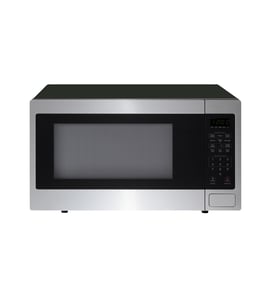




How many cubic feet is a Kenmore Model 72162463200 microwave?
The Kenmore microwave model 72162463200 has an oven cavity capacity of 2.1 cubic feet. This capacity is listed in the specifications for this countertop microwave in the owner's manual.
Where to confirm the capacity
We recommend checking the specifications section so you are matching the capacity to the exact model number.
- Look for “Capacity of oven cavity”
- Confirm the model is 72162463200
- Use capacity (cu. ft.) when comparing countertop microwave sizes
- Use cavity size (interior) instead of overall dimensions (exterior) when planning cookware fit
Capacity vs. dimensions (what each one means)
| Spec | What it tells you | Why it matters |
|---|---|---|
| Capacity (cu. ft.) | Interior volume | Helps compare microwave size and cooking space |
| Oven cavity dimensions | Interior width, height, depth | Helps predict what dishes will fit |
| Overall dimensions | Outside size of the microwave | Helps confirm it fits your countertop space |
Why it matters
A 2.1 cu. ft. cavity is considered a larger countertop microwave size; it typically fits bigger plates and taller microwave-safe containers, and it is useful when you frequently heat multiple servings.
Last updated: February 2026
What is the standard size of a countertop microwave?
There is not one single “standard” countertop microwave size, but most fall in a common range. For Kenmore model 72162463200, the overall dimensions are 23 7/8 in. wide x 13 9/16 in. high x 19 1/2 in. deep, with a 2.1 cu. ft. oven capacity (see the 72162463200 owner's manual).
Typical countertop microwave size ranges
Most countertop microwaves are designed to fit on standard kitchen counters and under many upper cabinets. Common ranges include:
- Width: about 20 to 25 inches
- Height: about 12 to 15 inches
- Depth: about 15 to 20 inches
- Capacity: about 1.0 to 2.2 cu. ft.
How 72162463200 compares
| Measurement | 72162463200 | Typical range |
|---|---|---|
| Width | 23 7/8 in. | 20 to 25 in. |
| Height | 13 9/16 in. | 12 to 15 in. |
| Depth | 19 1/2 in. | 15 to 20 in. |
| Capacity | 2.1 cu. ft. | 1.0 to 2.2 cu. ft. |
Fit and clearance tips (so it runs cool and safe)
Even when the microwave “fits,” it still needs airflow. For this model, we recommend:
- Leave at least 4 inches of space on the left, right, top, and rear for ventilation
- Set the microwave on a level, stable surface
- Keep vents open; do not block inlet or outlet openings
- Measure the space with the door closed and allow extra room for the door swing
Why it matters
Microwave size affects more than countertop footprint. Proper clearance helps prevent overheating, improves cooking performance, and reduces nuisance shutoffs from heat-related protection devices.
Last updated: February 2026
What is the wattage of a Kenmore microwave?
For the Kenmore countertop microwave model 72162463200, the microwave cooking output is 1,200 watts. This is the heating power used for cooking; the unit’s electrical power consumption is higher (rated at 1,600 watts) as listed in the owner's manual.
Wattage terms you will see (and what they mean)
Microwaves are commonly described using two different wattage numbers:
- Microwave output (cooking power): how much heating power the oven delivers to food
- Rated power consumption (input): how much electricity the microwave draws from the outlet
- Power supply: the household voltage and frequency the microwave is designed for
- Rated current: the approximate amperage draw during operation
Kenmore 72162463200 wattage and electrical specs
| Spec | What it tells you | Value for model 72162463200 |
|---|---|---|
| Microwave output | Cooking/heating power | 1,200 W |
| Rated power consumption | Electrical draw | 1,600 W |
| Power supply | Outlet requirement | 120 V AC, 60 Hz |
| Rated current | Approx. amperage draw | 13.5 A |
Why the “output” wattage matters most
The 1,200 W output is the number that best predicts cooking speed. Higher output generally means faster reheating and shorter cook times for the same food.
Tips for cooking when wattage differs from recipes
If a recipe assumes a different wattage than 1,200 W, these adjustments help:
- If your food is undercooked, increase time in 10 to 20 second steps
- Stir, rotate, or rearrange food halfway through for more even heating
- Use a lower power level for delicate foods to reduce overcooking at the edges
- Cover food (microwave-safe) to improve heating and reduce splatter
- Let food stand 1 to 2 minutes after cooking so heat finishes distributing
Last updated: February 2026
Is there a reset on a Kenmore microwave?
Yes. On many Kenmore microwaves, a basic reset is as simple as unplugging the unit (or switching off the breaker) for about 1 minute, then restoring power. For model 72162463200, use the control-panel guidance in the owner's manual for any model-specific settings resets.
Quick reset options (start here)
- Power reset: Unplug for 60 seconds, then plug back in.
- Breaker reset: Turn the microwave circuit breaker off, wait 60 seconds, then turn it on.
- Control lock check: If the keypad seems unresponsive, look for a control lock feature in the owner's manual.
- Clock re-entry: After power is restored, set the clock again (many microwaves require this).
When a reset helps (and when it will not)
A reset is most useful for a frozen display, keypad glitches, or after a power outage. It usually will not fix a heating failure or a blown internal fuse.
| Symptom | Reset likely to help? | What to check next |
|---|---|---|
| Display blank after outage | Yes | Verify outlet power; then set clock |
| Keypad not responding | Sometimes | Check control lock; inspect door closing |
| Runs but does not heat | No | Follow heating troubleshooting steps |
| Stops mid-cycle | Sometimes | Check ventilation clearance; overheating protection |
If the microwave still will not run
Door and safety circuits commonly prevent operation if the door is not fully latched.
- Confirm the door closes firmly and evenly
- Listen for a solid latch click
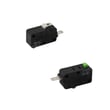
- If the door switches are failing, a common repair part is the microwave door interlock switch 3B73361E
Why it matters
Microwaves use high voltage internally. A simple power reset is safe and often restores normal control operation, but deeper “no heat” or “no start” problems typically involve safety interlocks or high-voltage components that require proper testing procedures.
Last updated: February 2026
Where is the fuse on a Kenmore microwave model 72162463200?
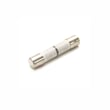
On the Kenmore 72162463200 countertop microwave, the fuse is typically mounted inside the cabinet near where the power cord enters and the noise filter/control area. Accessing it requires removing the outer cover; follow the disassembly and safety guidance in the 72162463200 owner's manual.
What to know before you look for it
Microwaves store dangerous high voltage even when unplugged, so we treat fuse access as a cabinet-off repair.
- Unplug the microwave before any inspection
- Do not remove the outer cover unless you are trained to service microwaves
- Never touch high-voltage components (capacitor, diode, magnetron area)
- If the unit is completely dead, check the outlet and breaker first
- If the fuse blows again after replacement, stop and troubleshoot the cause
Common fuse locations in this style of Kenmore countertop microwave
Once the outer cover is removed, the fuse is usually found in one of these spots:
| Likely area | What it’s near | What you’ll see |
|---|---|---|
| Power cord entry side | Line filter/noise filter | A small cylindrical fuse in a clip or holder |
| Control compartment | Control board housing | Fuse holder or inline fuse clip |
| Behind the grille area | Air ducting and wiring harness routing | Fuse mounted on a small bracket |
If the microwave is dead, what usually caused the fuse to blow
A blown fuse is often a symptom, not the root problem. Common causes include:
- Door switch problem (misaligned or shorted); see microwave door interlock switch 3B73361E
- Shorted high-voltage component (capacitor, diode, or magnetron)
- Pinched wire or damaged harness after moving the microwave
- Internal overheating event (thermostat opening repeatedly)
Why it matters
The fuse is a safety device that protects wiring and components when there’s an electrical fault. Replacing it without fixing the underlying issue can lead to repeat failures and additional damage.
Last updated: February 2026