Error Codes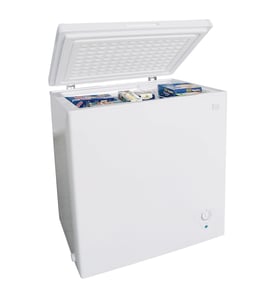




Are Hotpoint chest freezers any good?
Hotpoint chest freezers, including model HHM5SMAWW, are a solid choice when you want dependable freezing performance in a simple, no-frills design. In day-to-day use, these freezers are valued for steady temperature holding, quick pull-down after loading, and practical storage with basic serviceable parts.
What “good” means for a chest freezer
A chest freezer is “good” when it consistently stays cold, seals tightly, and runs without excessive noise or frost problems.
Key traits we look for:
- Stable temperatures for long-term food storage
- Strong lid seal to prevent warm air leaks and frost buildup
- Simple controls that are easy to set and replace
- Usable storage (baskets help reduce digging)
- Serviceability with common replacement parts
Quick pros and trade-offs
| What you get | What to plan for |
|---|---|
| Efficient cold storage and steady freezing | Manual defrost is common on many chest freezers |
| Simple temperature control | Organization takes effort without baskets |
| Fewer “extras” to break | Lid openings let in humid air, which can create frost over time |
Parts that support long-term usability
If performance is fine but the freezer is annoying to use day-to-day, small parts can make a big difference:
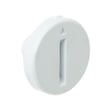
- If the dial is cracked or missing, replace the freezer temperature control knob WR01X27823 so settings stay consistent.
- If you want better organization, add or replace the refrigerator basket WR21X10208 to keep frequently used items accessible.
- If you’re defrosting and can’t reseal the drain, replace the freezer drain plug WR01X36306 to help prevent leaks during cleanup.
Why it matters
A “good” chest freezer protects food quality and reduces waste. Consistent temperatures and a tight seal help prevent freezer burn, while simple, replaceable items like a control knob, basket, or drain plug keep the freezer convenient to live with.
Last updated: February 2026
What are the common chest freezer problems?
Common problems we see on the Hotpoint HHM5SMAWW chest freezer include warm temperatures, heavy frost buildup, water leaking during defrost, and a freezer that runs constantly or won’t run at all. Most issues trace back to airflow restrictions, lid seal problems, or temperature control and drainage faults.
Most common symptoms and what they usually mean
- Freezer not cold enough: lid not sealing, overpacked cabinet blocking airflow, or a temperature control issue
- Freezer runs all the time: warm room/garage conditions, frequent lid openings, poor lid seal, or dirty condenser area
- Heavy frost on walls/lid: lid gasket leak, lid left ajar, or humid air entering repeatedly
- Water on floor during/after defrost: missing or loose drain plug, or improper draining setup
- Clicking but not running: power supply issue, start device/compressor problem, or wiring fault
- No power/no lights (if equipped): outlet, cord, or internal electrical issue
Quick checks we recommend first (fast, no parts)
- Confirm power: try a different outlet; reset the breaker.
- Set temperature correctly: start mid-range, then adjust after 24 hours.
- Check the lid seal: close a dollar bill in the lid; it should resist pulling out.
- Improve airflow: avoid packing items tight against the walls; leave space near the cold surfaces.
- Defrost safely if frost is thick: unplug, remove food, and let ice melt (do not chip ice with sharp tools).
Parts that commonly solve these problems on HHM5SMAWW
If your checks point to a control or drainage issue, these model-matched parts are common fixes:
| Problem you notice | Likely area | Model-matched part to consider |
|---|---|---|
| Temperature won’t adjust or knob is cracked/loose | Temperature control interface | Freezer temperature control knob WR01X27823 |
| Water leaks during defrost or drain won’t seal | Drain opening | Freezer drain plug WR01X36306 |
| Drain plug missing or won’t stay seated | Drain opening | Drain plug WR01X43467 |
| Poor organization, blocked airflow from piled food | Storage/air circulation | Refrigerator basket WR21X10208 |
Why it matters
Chest freezers cool by moving heat out of the cabinet; when humid air leaks in (lid seal) or airflow is blocked (overpacking), the freezer works harder, builds frost faster, and struggles to hold safe food temperatures.
Last updated: February 2026
What are the parts of a chest freezer?
A Hotpoint chest freezer like model HHM5SMAWW is built around a sealed refrigeration system (compressor, condenser, evaporator, and refrigerant tubing) plus user and safety components such as the thermostat/temperature control, lid gasket, wiring, and drain system.
Main parts you will find in most chest freezers
- Compressor: pumps refrigerant and drives the cooling cycle
- Condenser (coils and fan on some designs): releases heat to the room
- Evaporator (cold wall/coil inside cabinet): absorbs heat from inside the freezer
- Capillary tube or metering device: controls refrigerant flow into the evaporator
- Thermostat/temperature control: senses temperature and cycles the compressor
- Start components (relay/overload on many models): helps the compressor start safely
- Cabinet insulation and lid gasket: keeps cold air in and moisture out
HHM5SMAWW parts customers commonly recognize
These are common “touch points” and service items that affect daily use, organization, and defrosting:
| What it does | Example part on HHM5SMAWW | When it matters |
|---|---|---|
| Sets temperature | Freezer temperature control knob WR01X27823 | Knob is cracked, missing, or won’t turn smoothly |
| Holds food off the bottom | Refrigerator basket WR21X10208 | Basket is broken, missing, or you need more organization |
| Seals the defrost drain | Freezer drain plug WR01X36306 | Water leaks during defrost, plug is lost or damaged |
Why it matters
Knowing the major components helps you troubleshoot faster. For example, temperature swings often point to the thermostat/control area, while water on the floor during manual defrost often points to the drain plug or drain path.
Quick troubleshooting tips by “part group”
- Not cold enough: confirm the control setting, allow 24 hours after changes, avoid overloading warm food
- Runs constantly: check lid closure, gasket sealing, room temperature, and airflow around the cabinet
- Frost buildup: limit lid openings, check for a good lid seal, defrost before ice gets thick
- Water during defrost: verify the drain is open and the drain plug is installed correctly
Last updated: February 2026
What is the coldest setting on a Hotpoint chest freezer?
On the Hotpoint HHM5SMAWW chest freezer, the coldest setting is the maximum cold position on the temperature control (typically the highest number or the end of the dial toward “Colder”). We recommend starting mid-range, then adjusting in small steps based on a thermometer reading.
How to identify the coldest setting on the dial
Most chest freezers use a simple mechanical thermostat dial:
- If the dial is numbered, the highest number is the coldest.
- If the dial uses words, the position closest to “Colder” is the coldest.
- If it uses a slider or pointer, the furthest cold direction is the coldest.
- After any change, wait 24 hours before judging results.
If your knob is cracked, missing, or slipping on the shaft, replace it so your setting changes are accurate: freezer temperature control knob WR01X27823.
Recommended temperature targets (what “coldest” should achieve)
For food safety and storage quality, we aim for these temperatures:
| Use case | Target temperature | Notes |
|---|---|---|
| Long-term frozen storage | 0°F (-18°C) | Best overall target for most homes |
| Fast freeze (temporary) | Below 0°F | Use briefly; can increase frost and energy use |
| Avoid | Above 10°F (-12°C) | Higher risk of softening and freezer burn |
Why the coldest setting is not always the best setting
Running at the coldest setting all the time can create downsides:
- More frost buildup, which reduces usable space
- Higher energy use and longer run times
- Greater chance of items near the walls getting overly hard or stuck in frost
- Temperature swings if the lid is opened often
Quick checks if it is not getting cold enough
If you are already at the coldest setting and temperatures are still high:
- Confirm the lid is sealing and closing fully
- Make sure the freezer has airflow around it (not tightly boxed in)
- Let warm food cool before loading
- Check for heavy frost that suggests moisture intrusion
- Verify the control knob is turning the control shaft correctly (again, freezer temperature control knob WR01X27823 helps if the knob is worn)
Last updated: February 2026
Who makes Hotpoint chest freezers?
In the Americas (including the United States and Canada), Hotpoint chest freezers like model HHM5SMAWW are sold under the Hotpoint brand owned by GE Appliances. That means GE Appliances is the company behind Hotpoint products in this region.
What this means for parts and service
When you’re shopping for replacement parts or troubleshooting your Hotpoint chest freezer, you’ll often see GE-style part numbering and components used across related GE-family products.
Common parts customers replace on HHM5SMAWW include:
- Temperature control knob (for adjusting cold settings): freezer temperature control knob WR01X27823
- Basket (for organizing food storage): refrigerator basket WR21X10208
- Drain plug (for defrost water draining): freezer drain plug WR01X36306
- Alternate drain plug option (varies by design): drain plug WR01X43467
Quick reference: brand vs. manufacturer
| What you see | What it tells you | Why it matters |
|---|---|---|
| Hotpoint | The brand name on the freezer | Helps match the correct model line |
| GE Appliances | The brand owner/manufacturer in the Americas | Helps identify compatible parts and support channels |
| HHM5SMAWW | Your exact model number | Ensures the right parts fit your chest freezer |
Why it matters
Knowing who makes Hotpoint chest freezers helps you choose compatible replacement parts (like a temperature control knob or drain plug) and speeds up troubleshooting because many repair steps and components align with GE Appliances-built designs.
Last updated: February 2026
Why is my Hotpoint chest freezer not freezing?
If your Hotpoint HHM5SMAWW chest freezer runs but will not freeze, the most common causes are a warm temperature setting, poor lid seal, heavy frost buildup, or a cooling-system issue (start device, compressor, or sealed system). Start with airflow, frost, and control checks before testing electrical parts.
Quick checks we recommend first
- Confirm the control is set colder; if the knob is cracked or slipping, replace the freezer temperature control knob WR01X27823.
- Make sure the lid closes fully and the gasket is sealing all the way around.
- Check for heavy frost on the interior walls; frost blocks heat transfer and reduces freezing.
- Verify the freezer is not overpacked; leave space for air circulation around food.
- Confirm the freezer has proper clearance around the cabinet and is in a normal room temperature area.
What the symptoms usually mean
| What you notice | Most likely cause | What to do next |
|---|---|---|
| Runs a lot, food soft, little to no frost | Low refrigerant or weak compressor | Schedule service; sealed-system work requires specialized tools |
| Thick frost buildup, temps rising | Lid leak or frequent openings | Defrost fully; check gasket and loading habits |
| No sound or only clicks/hums | Start device or compressor problem | Unplug, then have a technician test start components and compressor |
| Water pooling during/after defrost | Missing drain plug | Check/replace the freezer drain plug WR01X36306 |
Step-by-step troubleshooting (safe DIY)
- Unplug the freezer for 5 minutes, then plug it back in.
- Defrost completely if you see heavy frost (leave the lid open; protect floors).
- Set colder and wait; allow 24 hours for temperatures to stabilize after changes.
- Listen for normal operation; a steady run with gradual cooling is normal, repeated clicking is not.
- If you have a meter, use our how to use a multimeter to test electrical parts video to check basic continuity on accessible components (power disconnected).
Why it matters
A chest freezer that is not freezing can lead to food spoilage and can overwork the compressor. Catching simple issues like a slipping control knob, airflow restriction, or frost buildup often restores normal freezing without major repair.
Last updated: February 2026