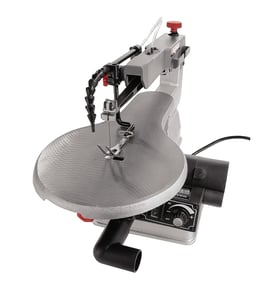

What do the numbers mean on scroll saw blades?
On a Dremel 1571 scroll saw, the numbers on scroll saw blades generally indicate blade size and aggressiveness: lower numbers are finer for thin material and tight, detailed cuts; higher numbers are coarser and remove material faster for thicker stock. For parts and accessories that fit your saw, start with the model parts list, or search by model on Sears PartsDirect.
Quick blade number guide (what to expect)
- Lower numbers (finer blades): smoother cuts, tighter turns, less tear-out
- Higher numbers (coarser blades): faster cutting, better chip clearance, rougher edge
- Thin stock and veneers: choose a finer blade to reduce splintering
- Thicker hardwoods: choose a coarser blade to prevent overheating and wandering
- Intricate fretwork: finer blades help maintain control on small radii
How to choose the right blade number for the job
Use this simple match-up to get consistent results on most scroll saw projects:
| Your goal | Typical blade number direction | What you will notice |
|---|---|---|
| Clean edge on thin wood | Lower | Slower feed rate, smoother finish |
| Fast rough cutting | Higher | Faster feed rate, more sanding needed |
| Tight inside cuts | Lower | Better turning control |
| Thick material control | Higher | Less burning, better chip removal |
Setup tips that matter as much as blade number
- Set blade tension firm enough to prevent deflection (a loose blade wanders).
- Use a steady, moderate feed rate; forcing the cut bends the blade and widens kerfs.
- Keep the hold-down/foot close to the work to reduce vibration.
- Let the blade do the work; if you see burning, switch to a coarser blade or slow down.
- For best tracking, start with a straight test cut in scrap before detailed work.
Why it matters
Blade numbering helps you balance cut quality, speed, and control. Picking a blade that matches your material thickness and detail level reduces broken blades, improves accuracy, and saves sanding time on your Dremel 1571 scroll saw.
Last updated: February 2026
Should I get pinless or pinned scroll saw blades?
For the Dremel 1571 scroll saw, we recommend pinless (plain-end) blades for most users because they handle tighter turns and detailed cuts better, and they fit through smaller starter holes for fretwork. Choose pinned blades mainly for quick, thicker, straight or gentle-curve cuts.
Quick comparison: pinless vs pinned blades
| Feature | Pinless (plain-end) blades | Pinned blades |
|---|---|---|
| Best for | Intricate work, tight curves, fretwork | Basic cuts, thicker stock, faster blade changes |
| Starter holes | Smaller holes work well | Usually needs larger holes |
| Blade variety | Widest selection of tooth patterns and sizes | More limited selection |
| Typical use case | Puzzles, ornaments, inlays | Simple shop projects, rougher cuts |
How to choose the right blade for your project
Use these practical rules when buying scroll saw blades for a Dremel scroll saw like model 1571:
- Pick pinless if you want clean, controlled cuts in thin to medium wood.
- Pick pinned if you prioritize convenience and you are cutting thicker material with simpler patterns.
- Match blade size to thickness: thinner stock generally cuts cleaner with smaller, finer blades.
- Match tooth style to material: finer teeth reduce tear-out; coarser teeth clear sawdust faster.
- Keep multiple blade types on hand; switching blades is often the fastest way to improve cut quality.
Fit and setup tips that prevent blade problems
Even the best blade choice will cut poorly if setup is off. Focus on these basics:
- Set blade tension so the blade feels firm and “rings” when plucked (not floppy).
- Track the blade straight; if it wanders, reduce feed pressure and confirm tension.
- Use steady, light feed pressure; forcing the cut bends blades and causes drift.
- Replace blades early; dull blades burn wood and pull the work off-line.
Why it matters
Pinless blades give you more control and more blade options, which is what most people need to get the best results from a scroll saw. Pinned blades still have a place, but they limit detail work and blade selection.
For replacement parts and accessories for your Dremel 1571, shop the parts listed for this model or search by model number on Sears PartsDirect.
Last updated: February 2026
Can you make straight cuts with a scroll saw?
Yes. You can make straight cuts with a Dremel 1571 scroll saw, but it takes setup and technique because scroll saw blades naturally want to wander (blade drift) and the tool is optimized for curves, not long rip-style cuts.
Best ways to get straighter cuts
- Use a sharp, correct blade for the material and thickness (dull blades drift more).
- Increase blade tension to the saw’s normal operating range; low tension lets the blade deflect.
- Feed the work slowly and steadily; forcing the cut bends the blade.
- Keep the work flat on the table and maintain even pressure against the table surface.
- Let the blade do the work; steer the wood gently to stay on your line.
- For long straight cuts, consider rough-cutting slightly outside the line, then sanding to final size.
Quick technique checklist (what we see most often)
| Symptom | Most common cause | What to do |
|---|---|---|
| Cut angles off the line | Blade drift or wrong blade type | Switch to a blade suited for straight cuts; slow feed rate |
| Cut is wavy | Pushing too fast | Reduce feed pressure; keep hands steady |
| Burning/scorching | Dull blade or too slow feed | Replace blade; keep a consistent feed |
| Blade bends in the cut | Low tension or thick stock | Increase tension; use a larger blade for thicker wood |
When a scroll saw is the right tool (and when it is not)
A scroll saw is ideal for short straight segments, inside cuts, and detailed work where control matters more than speed. For long, perfectly straight cuts, a table saw or circular saw with a guide typically produces straighter results with less effort.
Why it matters
Straight cutting on a scroll saw is mostly about controlling blade deflection. Small changes in blade choice, tension, and feed rate make a big difference in accuracy and reduce rework like sanding or recutting.
Parts and help
If you need replacement parts for your Dremel 1571 scroll saw, we recommend searching by model number to match the correct components and diagrams on Sears PartsDirect.
Last updated: February 2026
How to change scroll saw blade on Dremel?
To change the blade on your Dremel 1571 scroll saw, unplug the saw, release blade tension, loosen the upper and lower blade clamps, install the new blade with the teeth oriented for the cut you want (most cut on the downstroke), then re-tension and hand-check tracking before powering on.
Step-by-step blade change (Dremel 1571)
- Unplug the scroll saw.
- Raise the hold-down foot/guard (if equipped) to access the blade.
- Reduce blade tension using the tension knob/lever.
- Loosen the upper blade clamp screw and free the blade end.
- Loosen the lower blade clamp screw and remove the blade.
- Install the new blade into the lower clamp first, then the upper clamp.
- Tighten both clamp screws firmly, then re-apply tension.
Blade direction: standard vs reverse-tooth
Most scroll saw blades are designed to cut primarily on the downstroke, but tooth direction depends on the blade style.
| Blade type | Typical tooth direction | What it helps with |
|---|---|---|
| Standard (regular-tooth) | Teeth point down toward the table | General cutting, good control |
| Reverse-tooth | Lower section has teeth pointing up; upper section points down | Reduces tear-out on the bottom face of the workpiece |
Quick checks before you cut
- Spin the upper arm by hand (or gently move it) to confirm the blade clears the table insert and guides.
- Make sure the blade is centered in the table opening and not rubbing.
- Verify both clamps are tight; a loose clamp is the most common reason blades slip.
Why it matters
Correct blade orientation and secure clamping prevent blade pull-out, reduce tear-out, and help your Dremel 1571 track straighter in wood, plastic, and thin non-ferrous materials.
To look up replacement parts by model number and order what you need, use the parts list for Dremel 1571 or search by model on Sears PartsDirect.
Last updated: February 2026
What thickness of wood can you cut with a scroll saw?
Most scroll saw projects cut best in 1/8 to 3/4 inch wood; many scroll saws can also cut up to about 1 to 1-1/2 inches with the right blade and a slow feed. For the Dremel 1571 scroll saw, choose thickness based on the cut quality you need, not just maximum capacity.
Practical thickness guidelines (what we recommend)
Use these ranges to balance control, blade life, and edge quality:
- 1/8 to 1/2 inch: best for tight turns, fretwork, and fine detail
- 1/2 to 3/4 inch: best all-around range for patterns, puzzles, and signs
- 3/4 to 1 inch: workable for larger curves; expect slower cutting
- 1 to 1-1/2 inches: possible for simple shapes with a coarse blade and very slow feed
- Over 1-1/2 inches: usually better to rough-cut with a different saw, then refine on the scroll saw
What actually limits thickness on a scroll saw
Thickness capacity is mostly about control and heat management:
- Wood hardness: hardwoods cut slower and burn sooner than softwoods
- Blade tooth count (TPI): thicker stock needs fewer teeth per inch to clear sawdust
- Blade tension and tracking: low tension increases drift and breakage
- Feed rate: pushing too fast deflects the blade and ruins accuracy
- Dust removal: packed sawdust increases heat and wandering
Quick blade-to-thickness match
| Wood thickness | Blade choice (general) | Result you can expect |
|---|---|---|
| 1/8 to 1/2 inch | Fine TPI | Smooth edges, tight turns |
| 1/2 to 1 inch | Medium TPI | Good balance of speed and control |
| 1 to 1-1/2 inches | Coarse TPI | Slower cuts, more drift and sanding |
Why it matters
As wood gets thicker, blades run hotter and flex more; that causes burning, drift, and broken blades. Staying in the “cuts cleanly” range saves time and improves accuracy.
If you need replacement parts for your Dremel 1571 scroll saw, start with the model parts list, or search by model number on Sears PartsDirect.
Last updated: February 2026