Owner’s manual
 Error Codes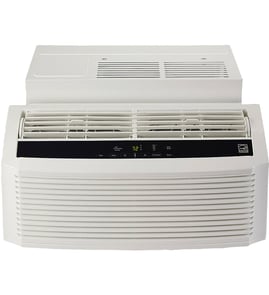




How many watts is a 6500 BTU air conditioner?
A 6,500 BTU room air conditioner typically uses about 550 to 750 watts while running, depending on efficiency and operating conditions. For your Zenith ZW6500R, the exact wattage and rated amps are listed on the unit’s data label and in the ZW6500R owner’s manual.
Typical wattage range (what to expect)
Most 6,500 BTU window or room air conditioners fall into these real-world ranges:
- Running watts: ~550 to 750 W
- Startup surge: often higher than running watts for a brief moment when the compressor starts
- Higher watts when outdoor temps are high, the filter is dirty, or the thermostat is set very low
- Lower watts when the compressor cycles off and only the fan runs
Quick reference table
| What you’re measuring | Typical for 6,500 BTU units | What changes it most |
|---|---|---|
| Running power | 550 to 750 W | Efficiency (EER/CEER), heat load |
| Fan-only power | Lower than cooling mode | Fan speed, motor condition |
| Startup surge | Higher than running watts | Compressor start, line voltage |
How to calculate watts from the nameplate
If the Zenith ZW6500R label lists amps (A) and volts (V), we use this rule:
- Watts = Volts × Amps
Examples (typical for many room air conditioners):
- 115 V × 5.5 A ≈ 633 W
- 115 V × 6.5 A ≈ 748 W
Why it matters
Knowing watts helps us choose the right dedicated circuit, avoid nuisance breaker trips, and size a generator or inverter correctly. The manual also emphasizes using a dedicated circuit and plugging the power cord in properly for safe operation. See the ZW6500R owner’s manual.
If the wattage seems unusually high
Check these common causes first:
- Air filter clogged (reduced airflow makes the system work harder)
- Evaporator or condenser coils dirty
- Unit not level or installed incorrectly (can affect drainage and performance)
- Thermostat set extremely low or room has heavy heat load
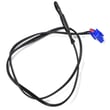
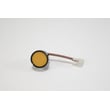
- Sensor issue (ambient thermistor problems can cause odd cycling); see thermistor 6323A20003S and how to replace a window air conditioner ambient thermistor
Last updated: January 2026
What are the most common issues with ZW6500R?
The most common issues we see with the Zenith ZW6500R room air conditioner are weak cooling from restricted airflow, the unit not powering on due to cord or control problems, temperature sensing problems, and fan noise or vibration. Use the troubleshooting section in the ZW6500R owner's manual to match symptoms to checks.
Common problems and what they usually point to
- Not cooling well: dirty filter/coils, blocked vents, incorrect mode, or a temperature sensor issue
- Won’t turn on: outlet or breaker issue, damaged cord, or control/remote problem
- Fan runs but little air: fan wheel issue, loose hardware, or airflow blockage
- Noisy or vibrating: loose fan blade, worn mounts, or cabinet not seated squarely in the window
- Short cycling (turns on and off quickly): thermistor sensing issue, airflow restriction, or incorrect temperature setting
Quick checks we recommend first
- Confirm mode is Cool and setpoint is at least 5 degrees below room temperature.
- Clean the air filter and make sure front intake and rear exhaust are not blocked.
- Verify the unit is firmly installed and level; vibration often comes from a loose fit.
- Try the unit with the remote and the control panel; if one works and the other does not, focus there.
- If you have a meter, test power safely before replacing parts.
Parts that commonly relate to these symptoms
| Symptom | Likely area | Example part for ZW6500R |
|---|---|---|
| Temperature swings, short cycling | Temperature sensor circuit | Thermistor 6323A20003S |
| Dead unit or intermittent power | Power supply path | Power cord 6411A20056A |
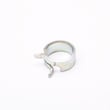
| Rattling, scraping, vibration | Fan hardware | Room air conditioner fan blade clamp 3H02932B |
| Fan noise or poor airflow | Blower wheel | Turbo fan 5900A10005B |
Why it matters
Airflow and temperature sensing drive both comfort and compressor run time. Fixing a clogged filter, a loose fan component, or a failing thermistor can restore cooling performance and reduce wear on the compressor.
Last updated: March 2026
What size window air conditioner for a 12X12 room?
For a 12x12 room (about 144 sq ft), we recommend a window (room) air conditioner in the 5,000 to 8,000 BTU range for efficient cooling without short-cycling. Your Zenith ZW6500R is typically sized for a small room; confirm the exact BTU rating and operating details in the ZW6500R owner's manual.
Quick sizing guide (12x12 room)
Use these BTU ranges as a practical target, then adjust for real-world conditions:
- 5,000 to 6,000 BTU: shaded room, good insulation, low ceiling height
- 6,000 to 8,000 BTU: average sun exposure and typical insulation
- 8,000 to 10,000 BTU: strong sun, poor insulation, lots of electronics
- Add capacity if 2+ people are in the room often or the room has large west-facing windows
- Reduce capacity if the room is heavily shaded or stays cool naturally
What happens if the size is wrong?
Choosing the right BTU size affects comfort, humidity control, and energy use.
- Too small: runs constantly, struggles on hot days, higher wear on the compressor
- Too large: cools fast but does not dehumidify well, can feel clammy, cycles on and off frequently
- Right size: steadier temperature, better moisture removal, quieter operation
Practical checklist before you buy or swap units
- Measure the room: 12 x 12 = 144 sq ft
- Note sun exposure: north/shaded vs. west/afternoon sun
- Check insulation and air leaks around windows and doors
- Confirm electrical needs and avoid unsafe power setups (the manual discourages extension cords)
- Verify your window opening fits the unit; the ZW6500R installation guidance calls for standard double-hung windows (typical opening width range is listed in the manual)
Typical BTU recommendations at a glance
| Room size | Typical BTU range | Best fit |
|---|---|---|
| 100 to 150 sq ft | 5,000 to 8,000 | Most 12x12 rooms |
| 150 to 250 sq ft | 6,000 to 10,000 | Hotter, sunnier spaces |
| 250 to 350 sq ft | 8,000 to 12,000 | Larger bedrooms |
Why it matters
A correctly sized room air conditioner removes heat and humidity at the right pace. That means fewer temperature swings, less compressor stress, and lower operating cost over the season.
Last updated: January 2026