Owner’s manual
 View engine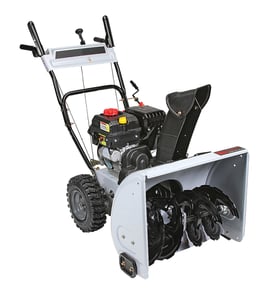


What is the typical lifespan of a gas snowblower?
A gas snowblower like the Poulan 96192000300 typically lasts 10 to 15 years with normal residential use and routine maintenance; with consistent end-of-season storage steps, clean fuel practices, and timely wear-part replacement, it commonly reaches 15 to 20 years.
What most affects lifespan
- Fuel care and storage: stale fuel and moisture shorten engine life.
- Cleaning habits: keeping the housing clear of dirt and debris helps prevent corrosion.
- Maintenance schedule: oil changes, lubrication, and inspections reduce wear.
- Operating conditions: heavy, wet snow and gravel driveways increase stress.
- Wear parts: scraper bar, bearings, belts, and fasteners wear faster than the engine.
Maintenance checklist that extends service life
Use the maintenance and storage guidance in the owner's manual as your baseline.
- Use fresh unleaded regular gasoline; avoid storing old gas season to season.
- Use the correct oil viscosity for temperature (commonly SAE 5W-30 or 10W-30 above 0°F; SAE 0W-30 below 0°F).
- Clean the unit after each use; avoid spraying water into the engine area.
- Before off-season storage, clean thoroughly, lubricate, and inspect for worn or damaged moving parts.
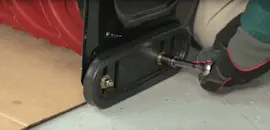
- Keep hardware tight; replacing missing or damaged fasteners prevents vibration-related damage.
Typical lifespan by usage pattern
| Usage pattern | Typical lifespan | What to expect |
|---|---|---|
| Light (few storms per year) | 15 to 20 years | Mostly routine maintenance and occasional wear parts |
| Moderate (regular winter use) | 10 to 15 years | Periodic belts, scraper bar, bearings, and tune-ups |
| Heavy (long driveway, wet snow, frequent use) | 8 to 12 years | Faster wear on drive and auger components |
Why it matters
A snowblower usually fails early from preventable issues like water intrusion during cleaning, loose hardware, or fuel system varnish during storage. Following the manual’s cleaning and storage steps protects the engine and reduces costly repairs.
Last updated: January 2026
Should I use 87 or 91 for snowblower?
For the Poulan 96192000300 gas snow blower, we recommend unleaded regular gasoline; 87 octane is the right choice. Using 91 octane does not improve power or reliability for this engine, so it typically just adds cost.
What the fuel spec means for this model
The product specifications call for unleaded regular only and list a 4.0-quart fuel capacity. Use clean, fresh fuel and keep the cap sealed to reduce moisture and contamination. See the owner's manual for the exact fuel and maintenance specifications.
Best practices for fuel quality and storage
- Buy fuel you will use within 30 days.
- Use a fuel stabilizer if the snowblower may sit more than a few weeks.
- Store gasoline in an approved container, tightly closed.
- Keep fuel away from heat sources; the muffler and engine parts get extremely hot.
- Before any service or adjustments, disconnect the spark plug wire to prevent accidental starting.
When higher octane can help (and when it will not)
Higher octane only helps if an engine is designed for it or is experiencing knock under load. Most walk-behind snow thrower engines designed for regular fuel run best on 87.
| Fuel choice | What you get | Our recommendation |
|---|---|---|
| 87 octane (regular) | Correct combustion for regular-fuel engines | Use this |
| 91 octane (premium) | Higher knock resistance | Use only if your manual specifically calls for it |
| Old/stale fuel | Hard starting, surging, varnish in carburetor | Avoid |
Why it matters
Correct fuel helps prevent hard starting, rough running, and carburetor gumming, especially after storage. Using the recommended gasoline and following seasonal maintenance keeps your Poulan snowblower dependable when you need it most.
Last updated: January 2026
What are common gas snow blower problems?
Common problems on the Poulan 96192000300 gas snow blower include no-start conditions (fuel shut-off closed, missing safety key, out of fuel), rough running from fuel system gum deposits, loss of snow discharge from a clogged chute, and vibration from loose hardware. Use the owner's manual troubleshooting table to match symptoms to fixes.
Most common symptoms and what usually causes them
- Engine will not start: fuel shut-off valve OFF, safety ignition key not inserted, empty fuel tank
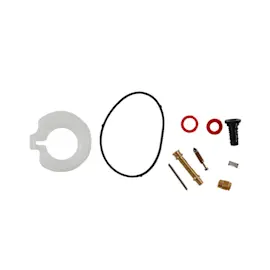
- Engine idles or runs roughly: stale fuel, varnish or gum deposits in the fuel system, dirty spark plug
- Loss of power: restricted fuel flow, old fuel, belt or drive issues under load
- Loss of snow discharge: clogged discharge chute, impeller not clearing snow efficiently
- Excessive vibration: loose nuts, bolts, screws, or worn moving parts
Quick checks we recommend first (fast, no parts guessing)
- Turn the fuel shut-off valve to OPEN (if equipped).
- Confirm the safety ignition key is fully inserted.
- Verify fresh fuel; do not store gasoline from one season to another.
- If the chute clogs: shut the engine off, wait 10 seconds, then clear with a clean-out tool (never your hand).
- Inspect and tighten hardware; the manual recommends checking shear bolts and other bolts frequently.
Problem-to-fix guide
| Problem | What to check first | Typical fix |
|---|---|---|
| Won’t start | Fuel valve, safety key, fuel level | Open valve, insert key, add fresh fuel |
| Runs rough | Fuel quality, spark plug | Drain old fuel, service plug, clean fuel system |
| Poor discharge | Chute blockage | Safe clean-out procedure, inspect impeller area |
| Vibration | Loose fasteners | Tighten hardware; replace worn parts as needed |
Why it matters
Most gas snow blower failures trace back to fuel quality, safe operating practices, and basic maintenance. Following the storage steps (cleaning, belt inspection, lubrication, and fuel system care) prevents hard-starting and mid-storm breakdowns.
Last updated: January 2026
Is a 2 stage or 3 stage snowblower better?
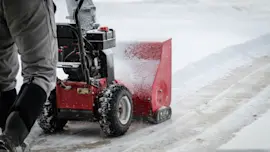
For most owners of the Poulan 96192000300 gas snow blower, a 2-stage snowblower is the better choice because it handles typical driveway snow well with fewer moving parts and lower cost; a 3-stage is better only when you regularly face deep, heavy, plowed-in, or icy snow and want faster intake.
Quick comparison: 2-stage vs 3-stage
| Feature | 2-stage snowblower | 3-stage snowblower |
|---|---|---|
| Snow intake system | Auger feeds snow to an impeller | Adds an accelerator (front intake) plus auger and impeller |
| Best for | Most driveways, moderate to heavy snow | Deep, dense, plowed-in snow and end-of-driveway piles |
| Clearing speed | Strong | Typically faster in extreme conditions |
| Complexity | Lower | Higher |
| Cost and maintenance | Usually lower | Usually higher |
How to choose the right stage for your conditions
- Choose 2-stage if you get regular snowfalls and want a proven, durable design for a typical driveway.
- Choose 3-stage if you frequently deal with wet, heavy snow, hard-packed snow, or plow berms and want faster intake.
- If storage space matters, 2-stage models are often easier to store and maneuver.
- If you prefer simpler upkeep, fewer moving parts usually means easier seasonal maintenance.
- If you already own a 2-stage and it struggles, improving technique and setup (skid height, speed, overlap) often fixes performance issues.
Setup and operating tips that matter more than “stages”
Even a powerful machine performs poorly if it is operated or adjusted incorrectly. Our Poulan guidance for this type of snow thrower includes:
- Run the engine at full throttle for best throwing performance.
- Use the drive speed control (not the throttle) to slow down in deep or wet snow.
- Overlap passes and reduce the clearing width in extremely heavy snow.
- Throw snow downwind when possible.
- Adjust skid plates for the surface and snow conditions (see the 96192000300 owner's manual).
Why it matters
A 3-stage snowblower can be a great upgrade in extreme conditions, but for most homeowners a 2-stage delivers the best balance of performance, cost, and reliability. Correct operation and seasonal maintenance often make a bigger difference than adding a third stage.
Last updated: January 2026