
Which mitre saw is the most accurate?
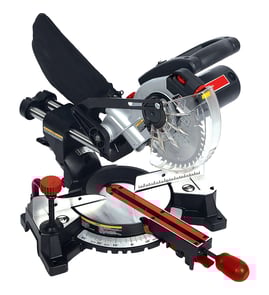
The most accurate miter saw is the one that holds its settings and cuts square repeatedly after you tune it. For a Craftsman miter saw like model 137285850, accuracy comes primarily from a rigid fence, a flat table, minimal arm and arbor play, and a properly aligned blade, not just the brand name.
Accuracy is usually about repeatability and calibration, not maximum power.
- Square crosscuts at 90 degrees (no gap when you flip a board end-for-end)
- True miters (45 degrees that closes tightly on both inside and outside corners)
- Stable bevel stops (bevel returns to 0 and 45 without drifting)
- Low deflection (head does not flex when you lower it)
- Clean blade tracking (no wobble, vibration, or burning)
These factors decide whether any miter saw is “dead-on”:
| Accuracy factor | What you look for | Why it matters |
|---|---|---|
| Fence straightness | Fence halves align and stay aligned | Prevents twisted cuts |
| Table flatness | No rocking, no dips near the throat | Keeps work supported |
| Detent quality | Positive, consistent detents | Improves repeatability |
| Slide/hinge play | Minimal side-to-side movement | Reduces out-of-square cuts |
| Blade quality | Sharp, correct tooth count for trim | Reduces wandering and tearout |
If your Craftsman 137285850 is close but not perfect, these steps typically deliver the biggest gains:
- Clean pitch and dust from the fence, table, and bevel pivot points
- Verify the fence is coplanar; shim if needed
- Set 90 degrees miter and bevel using a reliable square, then lock stops
- Replace a dull or warped blade; use a fine-finish blade for trim work
- Check for bearing or pivot looseness; tighten fasteners to remove play
A “more accurate” saw saves time and material because you stop compensating with extra sanding, recuts, or forcing joints closed. For trim, cabinetry, and picture-frame miters, repeatability is the difference between tight seams and visible gaps.
For repair and maintenance skills that help with accuracy checks (like testing switches, cords, and connections safely), we recommend how to use a multimeter to test electrical parts video.
Last updated: February 2026
Why is 31.6 on a miter saw?
The 31.6° mark on a miter saw (including many Craftsman saws like model 137285850) is there to make crown molding cuts easier and repeatable. It is a common preset miter setting used when cutting crown molding “flat” with a matching bevel setting (often 33.9°) to create a 45° corner.
On most compound miter saws, 31.6° miter pairs with a 33.9° bevel to cut crown molding for standard 90° room corners when the molding is laid flat on the saw table.
Common uses:
- Inside corner crown molding cuts
- Outside corner crown molding cuts (with the opposite miter direction)
- Fast setup when you do not want to “nest” crown against the fence
- Repeatable cuts using detents (positive stops)
These are the typical quick-set angles many saws label on the scale.
| Crown spring angle | Typical miter | Typical bevel |
|---|---|---|
| 38° (common) | 31.6° | 33.9° |
| 45° (common) | 35.3° | 30.0° |
To get clean, accurate joints, we focus on consistency and test cuts.
- Confirm your crown “spring angle” (commonly 38° or 45°)
- Set the miter to 31.6° and the bevel to the matching value for your spring angle
- Cut scrap first and label each piece (inside left, inside right, outside left, outside right)
- Keep the molding tight to the table and fence; clamp when possible
- Fine-tune with small miter tweaks if your walls are not a perfect 90°
Crown molding angles are compound cuts; the 31.6° mark is a shortcut that reduces math and setup time, helping you get tighter corners with fewer trial-and-error cuts.
For more DIY technique and safe electrical testing practices when troubleshooting a power tool, we recommend how to use a multimeter to test electrical parts video.
Last updated: February 2026
What should you never cut with a miter saw?
You should never cut anything you cannot hold and control safely on your Craftsman miter saw model 137285850, especially tiny offcuts, loose stacks, or warped stock that will not sit flat against the fence and table. You also should not cut metal or masonry unless the saw and blade are specifically rated for it.
- Very small pieces that cannot be clamped or held with a safe hand distance from the blade
- Freehand cuts where the workpiece is not tight to the fence and fully supported on the table
- Warped, bowed, twisted, or round stock that rocks, rolls, or lifts during the cut
- Multiple pieces at once unless they are clamped as a single bundle and fully supported
- Metal, tile, brick, or concrete unless you are using the correct rated blade and setup for that material
- Anything with hidden fasteners (nails, screws, staples) in the cut path
- Keep the workpiece flat on the table and tight to the fence before starting the motor.
- Use a clamp or auxiliary fence for short stock; keep hands out of the “no-hands” zone.
- Let the blade reach full speed, then lower the blade smoothly; do not force the cut.
- Wait for the blade to stop completely before lifting the saw head or removing cutoffs.
- Keep guards in place and working; never tie back or disable the blade guard.
| Situation | Use the miter saw? | Better approach |
|---|---|---|
| Short piece you cannot clamp | No | Clamp it, use a longer sacrificial backer, or use a different tool |
| Warped board that will not sit flat | No | Joint/straighten first or choose straighter stock |
| Aluminum/steel with a wood blade | No | Use a blade and setup rated for that metal |
| Lumber with possible nails | No | Inspect and remove fasteners first |
Most miter saw injuries and damaged parts happen when the blade binds or the workpiece shifts. Keeping stock flat, supported, and secured reduces kickback risk and helps protect components like the blade guard, fence, and switch.
For more DIY safety mindset before repairs and troubleshooting, see are diy appliance repairs safe.
Last updated: February 2026
How to unlock a 10 inch miter saw?
To unlock a 10-inch miter saw like the Craftsman 137285850, you typically release the miter lock (for left-right angle changes) and the bevel lock (for tilt changes), then re-tighten both locks once you reach the angle you want.
On most 10-inch miter saws, you will deal with these controls:
- Miter lock knob or handle: unlocks the turntable so you can rotate left or right
- Miter detent release (lever/button): lets you move off common “click-stop” angles (often 0°, 15°, 22.5°, 31.6°, 45°)
- Bevel lock knob/lever: unlocks the saw head so it can tilt for bevel cuts
- Head lock pin (transport lock): releases the saw head so it can raise up for cutting
- Unplug the saw before adjusting.
- Unlock the head (if needed): press the saw head down slightly, then pull the head lock pin out so the head can rise.
- Loosen the miter lock: turn the miter lock knob or lift the lock handle to free the turntable.
- Use detent release if it feels “stuck”: hold the detent release while rotating to a non-detent angle.
- Set your angle, then tighten the miter lock firmly.
- Loosen the bevel lock.
- Tilt the saw head to the desired bevel angle.
- Tighten the bevel lock firmly before cutting.
- Sawdust packed in the detent plate: brush or vacuum the base and detent area
- Lock knob not fully released: back it off another turn
- Bent fence or base damage: verify the turntable can rotate freely with the saw unplugged
- Rust or pitch buildup: clean and lightly protect metal surfaces (avoid getting lubricant on the blade)
| Control | What it unlocks | What to do after adjusting |
|---|---|---|
| Miter lock | Left-right rotation | Tighten before cutting |
| Detent release | Movement off “click” angles | Release once positioned |
| Bevel lock | Tilt (bevel) | Tighten before cutting |
| Head lock pin | Head up/down movement | Re-lock for transport |
Locking the miter and bevel adjustments prevents the saw from shifting during a cut, which protects cut accuracy and reduces kickback risk.
For general DIY safety practices while working on tools and electrical components, we recommend reviewing are diy appliance repairs safe.
Last updated: February 2026