View engine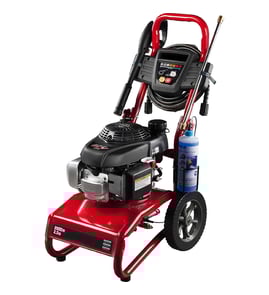





What are the most common issues with CMXGWAS021027?
The most common issues we see with the Craftsman CMXGWAS021027 gas power washer are no or low pressure, surging pressure, detergent not siphoning, water leaks at connections, and hard starting. Most problems trace back to water supply restrictions, nozzle/clog issues, air leaks on the inlet side, or basic engine maintenance.
Common symptoms and what usually causes them
- No/low pressure: clogged spray tip, worn/dirty pump inlet screen, air in the hose, insufficient garden-hose flow
- Pressure surges (pulsing): partially clogged nozzle, air leak at inlet fittings, unloader valve sticking (often from debris)
- Detergent not drawing: wrong nozzle (needs low-pressure soap tip), clogged chemical pickup, air leak in chemical line
- Water leaking: loose quick-connects, worn O-rings, cracked hose or fitting
- Won’t start or runs rough: old fuel, dirty air filter, fouled spark plug, low/dirty oil
Quick checks we recommend (in order)
- Verify strong water supply; most gas pressure washers need a steady garden-hose feed and full-open spigot.
- Remove the spray tip and flush it; try a different tip to rule out a clog.
- Purge air: connect water, squeeze the trigger until flow is steady, then start the engine.
- Inspect quick-connects and inlet fittings for leaks that can pull air.
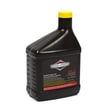
- Confirm oil level and condition; use the correct small-engine oil such as briggs & statton lawn & garden equipment 4-cycle engine oil, sae30, 18-oz 100005.
Symptom-to-fix guide
| Symptom | Most likely fix | What to look for |
|---|---|---|
| Low pressure | Clean/replace nozzle; improve water flow | Weak hose flow, clogged tip |
| Pulsing | Clear nozzle; reseal inlet | Bubbles in inlet hose, dripping fittings |
| No soap draw | Use soap nozzle; clear pickup | Detergent line not submerged, clogged injector |
| Leaks at wand/hose | Reseat quick-connect; replace O-ring | Drips at coupler when pressurized |
Why it matters
Running the CMXGWAS021027 with restricted water flow or air leaks can cause pressure fluctuations and can overheat the pump. Keeping connections sealed and engine oil fresh improves performance and helps prevent repeat failures.
Last updated: March 2026
What is a good PSI for a gas pressure washer?
For a Craftsman gas power washer like model CMXGWAS021027, a good PSI depends on what you’re cleaning: 2,000 to 3,000 PSI handles most home jobs well, while 3,100 to 4,000+ PSI is better for heavy-duty cleaning where you need more cutting power.
Recommended PSI by job type
- 1,500 to 2,000 PSI: cars, patio furniture, grills (lower risk of surface damage)
- 2,000 to 3,000 PSI: decks, fences, siding, most driveways
- 3,100 to 4,000+ PSI: tough concrete stains, heavy mildew, paint prep (use extra care)
- Any PSI range: use the widest spray tip first, then increase intensity as needed
PSI vs. GPM (what matters most)
PSI is the “force”; GPM (gallons per minute) is the “rinse power.” For faster cleaning, higher GPM often matters as much as PSI.
| Rating | What it affects most | What you’ll notice |
|---|---|---|
| PSI | How aggressively it strips grime | More bite, more risk of etching/damage |
| GPM | How quickly you flush dirt away | Faster cleaning and rinsing |
How to choose the right PSI without damaging surfaces
- Start with a 25° or 40° spray pattern (wider fan)
- Keep the nozzle 12 to 24 inches from the surface and adjust gradually
- Avoid holding a tight spray in one spot; keep the wand moving
- Use detergent only when the job calls for it; rinse thoroughly
Why it matters
Using too much PSI can etch concrete, shred wood fibers on decks, and force water behind siding. Matching PSI to the surface gives you better results with less rework and fewer repairs.
Parts that help with control and storage
If you’re setting up or maintaining your unit, these model-related items can help keep the washer stable and organized:
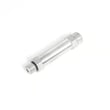
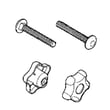
- Briggs & stratton pressure washer handle attachment kit 84001720
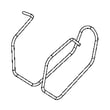
- Briggs & statton pressure washer hose hanger 84001723
For additional parts and accessories for CMXGWAS021027, you can also search by model number on Sears PartsDirect.
Last updated: February 2026
What kind of gas goes in a Craftsman 3000 PSI pressure washer?
For a Craftsman CMXGWAS021027 gas power washer (3000 PSI class), we use clean, fresh unleaded gasoline with a minimum 87 octane (87 AKI). Avoid old fuel and never use diesel or mixed 2-cycle fuel; this model uses a 4-cycle engine.
Fuel tips that prevent hard starting and surging
- Buy fresh fuel in small amounts (enough for 30 days of use).
- Use a fuel stabilizer if the washer will sit more than a couple of weeks.
- Keep the gas can sealed; water contamination causes rough running.
- Fill the tank outdoors with the engine off and cooled down.
- Wipe up spills before starting.
What to use vs. what to avoid
| Fuel type | Use it? | Why |
|---|---|---|
| Unleaded gasoline, 87 AKI or higher | Yes | Correct fuel for most 4-cycle pressure washer engines |
| Premium (91-93 AKI) | OK | Not required; can help if regular fuel is poor quality |
| E15/E85 (high-ethanol) | No | Ethanol attracts moisture and can damage fuel system parts |
| 2-cycle premix | No | Wrong oil-to-fuel mix for a 4-cycle engine |
| Diesel/kerosene | No | Won’t run correctly and can cause damage |
Why it matters
Using the right gasoline helps your pressure washer start easily, maintain steady pressure, and reduces carburetor varnish that leads to no-start problems.
Parts that commonly come up when fuel issues lead to handling or storage changes
If you are reorganizing how you store the hose and unit while you address fuel quality, these model-matched parts are commonly used:
- Briggs & statton pressure washer hose hanger 84001723 (helps keep the hose off the ground)
- Briggs & stratton pressure washer handle attachment kit 84001720 (helps secure the handle assembly)
You can order replacement parts for your Craftsman CMXGWAS021027 from the parts list for this model, or search by model number on Sears PartsDirect.
Last updated: February 2026