Owner’s manual
 View engine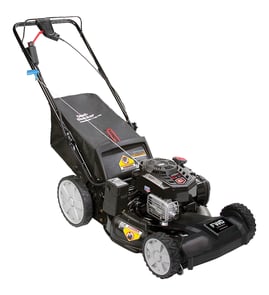



How to find Craftsman model number?
For Craftsman walk-behind mower model 917388360, the model number is typically printed on the mower’s ID label on the rear of the deck, usually between the lower handle mounts. Use that exact model number when ordering parts or checking diagrams in the 917388360 owner's manual.
Where to look on the mower
Check these common label locations first (starting with the most likely):
- Back of the mower deck (rear-facing side)
- Between the lower handle mounting points on the deck
- Near the rear discharge area or mulcher door opening
- On the deck surface near the engine mounting area (less common)
- On a label plate or sticker that also lists the serial number
What the label usually shows
Most Craftsman mower ID labels include more than one identifier. Use the model number for parts lookup.
| Label item | What it’s used for | Example format |
|---|---|---|
| Model number | Parts diagrams, part compatibility | 917.388360 or 917388360 |
| Serial number | Manufacturing tracking | Varies |
| Engine model | Engine-specific parts (carburetor, recoil starter) | 143.006200 |
Tips to make sure you read it correctly
- Wipe the label area clean; grass and oil film can hide digits.
- Write the number down exactly as shown; a single digit change can point to a different deck or handle setup.
- If the label is damaged, use the parts list and diagrams in the 917388360 owner's manual to match major assemblies (deck, handle, discharge guard).
Why it matters
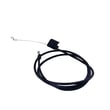
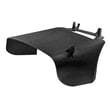
Craftsman walk-behind mowers often share similar-looking decks and handles across multiple model numbers. Using the correct model number helps ensure you get the right fit for parts like the control cable 532168552 or mulcher door 596210401.
Last updated: January 2026
Should I use 87 or 91 gas for lawn mower?
For the Craftsman 917388360 21-inch 6-hp walk-behind mower, use regular 87-octane unleaded gasoline; higher octane (like 91) does not add power or improve mowing performance in this type of small engine. Follow the fuel and safety handling steps in the owner's manual.
What octane means for this mower
Octane is mainly about preventing knock in high-compression engines. Most walk-behind mower engines are designed to run correctly on regular fuel.
- 87 octane: Best everyday choice for normal mowing
- 91 octane: Not needed for performance; typically offers no benefit
- Fresh fuel matters more than octane: Old fuel is a common no-start cause
- Avoid contamination: Dirt, rust, or water in fuel can create starting and running problems
Fuel tips that prevent hard starting
The manual’s troubleshooting guidance points to stale fuel and water in fuel as common causes of a mower that will not start.
- Buy fuel in small amounts so it stays fresh
- Use a clean gas can; replace it if it starts to rust
- If the mower sits for a while, drain old fuel and refill with fresh fuel
- Wipe up spilled gasoline before starting the engine
- Let the engine cool before refueling
Quick comparison
| Fuel choice | When to use it | What to expect |
|---|---|---|
| 87 octane (regular) | Routine mowing | Normal starting and power |
| 91 octane (premium) | Only if it is the only fresh fuel available | Usually no performance change |
| Old/stale fuel (any octane) | Never | Hard starting, rough running, no-start |
Why it matters
Using the right fuel helps your Craftsman 917388360 start reliably and reduces downtime. In real-world mower problems, fuel freshness and cleanliness affect performance far more than stepping up from 87 to 91 octane.
Last updated: January 2026
What is the average lifespan of 917388360?
A Craftsman walk-behind mower like model 917388360 typically lasts 8 to 12 years with normal residential use and routine maintenance. Lifespan depends most on oil changes, blade care, clean airflow (deck and engine), and avoiding impacts that bend the blade or crankshaft.
What most affects lifespan on the 917388360
- Oil type and change frequency: use the correct oil for temperature (SAE 30 above 32°F; SAE 5W-30 below 32°F).
- Keeping the blade sharp and balanced: reduces engine load and vibration.
- Proper blade bolt torque: the manual lists 35 to 40 ft-lbs.
- Clean deck and discharge area: prevents corrosion and improves cut quality.
- Correct lubrication: lubricate specified points, but do not oil plastic wheel bearings.
Maintenance timeline that matches real-world mower life
| Interval | What to do | Why it matters |
|---|---|---|
| Every mow | Clear grass buildup, check blade condition | Prevents rust, reduces strain |
| Seasonally | Change oil, inspect cables and controls | Protects engine, keeps safety controls responsive |
| As needed | Replace worn controls or hardware | Restores safe operation and fit |
Parts that commonly wear before the mower is “worn out”
These are normal wear items; replacing them often extends the mower’s usable life.
- Control cable 532168552 (engine zone control cable function)
- Lawn mower blade adapter 581547901 (helps the blade mount and drive correctly)
- Lawn mower control bar 532131696 (operator presence control)
- Grass bag 532410666 (collection performance)
Why it matters
Most “mower end of life” problems are really maintenance or wear-part issues. Keeping oil correct, the blade system tight and true, and controls working smoothly is what gets you from a few seasons to a full decade of service.
For model-specific specs like oil capacity, spark plug type, and lubrication points, use the 917388360 owner's manual.
Last updated: March 2026