Installation guide
 Owner’s manual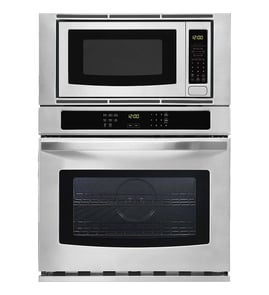





How to know if the KitchenAid wall oven thermostat is bad?
If your KitchenAid KOCE507ESS02 wall oven consistently overbakes, underbakes, or swings temperature widely after you adjust oven calibration, the temperature-control system is failing. Start by confirming the calibration range and bake settings in the KOCE507ESS02 owner's manual before replacing parts.
Signs the temperature control is failing
- Food burns outside or stays undercooked at normal bake settings
- Oven temperature is off by about 25°F to 30°F when checked with an oven thermometer
- Large temperature swings after preheat (too hot, then too cool)
- Preheat takes much longer than normal or never seems to stabilize
- Bake results are inconsistent even though broil seems normal
Quick checks before replacing parts
- Confirm calibration: This model allows temperature adjustment up to about ±30°F; set it back to 0 and retest.
- Measure correctly: Place an oven thermometer in the center; after preheat, let the oven cycle 20 to 30 minutes and average several readings.
- Power reset: Turn the breaker off for 1 minute, restore power, then retest.
- Check for weak heat: A damaged bake element can mimic a “bad thermostat.”
What “thermostat” usually means on KOCE507ESS02
Most modern KitchenAid wall ovens regulate temperature using an oven temperature sensor and an electronic control board rather than a mechanical thermostat.
| What you observe | Most likely issue | Next step |
|---|---|---|
| Runs too hot | Sensor/control not cycling heat correctly | Recheck calibration; inspect wiring connections |
| Runs too cool | Weak bake heat or sensor/control issue | Inspect bake element; verify power supply |
| Swings widely | Sensor circuit or control cycling problem | Check harness connections; look for error codes |
Parts often involved
- Range bake element W11545804 (weak or uneven bake heat)
- Copernicus a W11179310 (control board can affect heat cycling)
- Main harness W10632455 (loose or damaged wiring can skew readings)
Why it matters
Accurate oven temperature prevents burned food, undercooked meals, and unnecessary stress on components like the bake element and control board.
You can order KOCE507ESS02 replacement parts from the parts list for this model, or search by model number on Sears PartsDirect.
Last updated: February 2026
Is there a fuse in a KitchenAid microwave?
Yes. The microwave section in your KitchenAid KOCE507ESS02 wall oven/microwave combo uses an internal line fuse to protect the unit during an electrical fault. If the microwave is completely dead (no display, no interior light), the fuse is one of the first items to check.
Where the fuse is and what it does
The fuse is inside the microwave cabinet (not behind the everyday keypad). It opens when current is too high, helping protect components such as the control board, inverter, and magnetron. Use the KOCE507ESS02 owner's manual for safety notes and access guidance for your specific installation.
Signs the fuse may be blown
- No display and no interior light
- Unit stopped during cooking and will not restart
- Outlet has power and the house breaker is not tripped
- Door closes normally but nothing powers up
Safe, practical next steps
Disconnect power at the breaker before inspecting anything; microwaves contain high-voltage components.
- Confirm the outlet has power (test with a small appliance)
- Reset the breaker fully (OFF, then ON)
- Inspect the fuse and the fuse holder for heat damage or loose connections
- Replace only with the same type and rating fuse
- If the replacement fuse blows again, stop and diagnose the underlying cause
Common related parts to check on KOCE507ESS02
If the fuse keeps blowing, these are frequent contributors:
| When it happens | What to suspect | Example part for this model |
|---|---|---|
| Blows when opening or closing the door | Door interlock switch problem | Microwave door switch W10211972 |
| Dead or intermittent power | Loose or burned wiring connections | Harness and terminals (inspect) |
| Blows shortly after pressing Start | High-voltage load issue | Inverter or magnetron circuit |
For fuse replacement, the listed part for this model is fuse mda 20a W11188752.
Why it matters
A fuse is a safety device, not the root cause. Replacing it restores power only when the original failure was a one-time event; repeat failures point to a door switch, wiring damage, or a high-voltage component problem.
You can order KOCE507ESS02 replacement parts from the parts list for this model, or search by model number on Sears PartsDirect.
Last updated: February 2026
What is the life expectancy of a KitchenAid oven?
A KitchenAid wall oven typically lasts 10 to 15 years with normal household use and basic care. For your KitchenAid KOCE507ESS02 wall oven/microwave combo, lifespan is most affected by heat exposure, cleaning habits, and the condition of key electrical parts (see the KOCE507ESS02 owner's manual).
Typical life expectancy
| Component in a combo unit | Typical life expectancy | What usually fails first |
|---|---|---|
| Built-in electric wall oven | 10 to 15 years | Bake element, control board, thermal protection |
| Built-in microwave | 7 to 10 years | Door switches, inverter/magnetron, fuses |
What shortens life fastest
- Frequent self-clean cycles (extreme heat stresses wiring and controls)
- Restricted airflow around the cabinet (overheats the control area)
- Door slams or misalignment (stresses hinges and microwave interlocks)
- Power surges or repeated breaker trips (hard on electronic boards)
- Spills left to bake on repeatedly (creates hot spots and odor issues)
Parts that commonly impact longevity on KOCE507ESS02
Replacing a failed component often restores normal operation and extends service life.
- Oven heats poorly or unevenly: range bake element W11545804
- Oven overheats or shuts down: range high-limit thermostat WP4449751
- Microwave will not start or cuts out when the door moves: microwave door switch W10211972
- Unit goes dead or loses power intermittently: fuse mda 20a W11188752
Why it matters
If your KOCE507ESS02 is under about 10 years old, repairing a single failed part is usually the best value. Near 15 years, multiple electronic failures can make replacement more practical.
Last updated: February 2026