Owner’s manual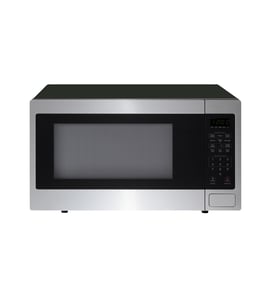



Do all GE over-the-range microwaves mount the same?
No. GE over-the-range microwaves do not all mount the same; the wall bracket and top-cabinet bolt pattern can vary by model. For safe support and proper vent alignment, we always recommend installing the new unit using the bracket and hardware designed for that exact microwave (see your JE1540WW02 owner's manual for GE mounting and safety guidance).
What typically differs between GE OTR microwave mounts
Even within the same brand, these items commonly change from model to model:
- Wall mounting bracket shape and hole locations
- Top cabinet bolt spacing and bolt length requirements
- Exhaust outlet position (top vent vs. rear vent) and damper style
- Required clearances to cabinets and cooktop
- Cord routing and where the outlet needs to be located
Best practice when replacing an over-the-range microwave
Use the mounting bracket that comes with the replacement microwave and follow that model’s installation instructions.
- Remove the old bracket and template (do not reuse them)
- Confirm the cabinet opening and bottom cabinet thickness match the new requirements
- Verify the venting direction you plan to use (top, rear, or recirculating) matches the new unit
- Use the correct fasteners for your wall type (studs, masonry, etc.)
- Level the bracket and microwave before tightening all hardware
Quick comparison: “same brand” vs. “same mount”
| Situation | What to expect | What we recommend |
|---|---|---|
| Same brand (GE to GE) | Mounting points can still differ | Use the new bracket and template |
| Same size class | Exterior size can match but holes may not | Measure and follow the new instructions |
| Reusing old bracket | Higher risk of misalignment or poor support | Replace bracket and hardware |
Why it matters
The bracket and bolt pattern carry the microwave’s weight and keep it stable. Using the correct bracket also helps the door close properly, keeps the unit level, and prevents vent leaks or vibration.
Last updated: February 2026
Can an over-the-range microwave be used on the countertop?
No. Over-the-range microwaves are built to be mounted to a cabinet and wall (often with a venting setup) and are not intended to sit loose on a countertop like a GE JE1540WW02 countertop microwave. For safe operation, use a countertop-rated model and follow the clearances in the owner's manual.
Why over-the-range models should not be used on a countertop
Over-the-range units rely on their mounting hardware and installation clearances to manage weight, airflow, and stability. Setting one on a counter can create tipping risk, blocked ventilation, and unsafe heat buildup.
- They are designed to be supported by a wall bracket and upper cabinet bolts
- Air intake and exhaust paths can be blocked when placed on a counter
- The door and control panel can be stressed if the unit is not properly supported
- Cord routing and grounding can be compromised if the unit is positioned incorrectly
- Required clearances above, behind, and to the sides are different than countertop models
What to do instead (safe options)
If you need a microwave on the counter, we recommend sticking with a countertop model like GE JE1540WW02 and using the placement rules in the manual.
- Place the microwave on a level, sturdy surface
- Keep vents clear on all sides (do not push it tight to a wall or cabinet)
- Avoid using extension cords; plug directly into a properly grounded outlet
- Do not operate the unit inside a closed cabinet unless the manual explicitly allows it
Quick comparison
| Feature | Countertop microwave (like JE1540WW02) | Over-the-range microwave |
|---|---|---|
| Intended support | Counter surface | Wall bracket plus upper cabinet |
| Venting design | Room ventilation around the cabinet | Integrated venting for range area |
| Typical placement | Open counter with clearance | Above cooktop with specified mounting height |
Why it matters
Microwaves generate heat and need predictable airflow. Using the wrong installation type can lead to overheating, nuisance shutdowns, damage to internal components, and unsafe operation.
Last updated: February 2026
Are GE countertop microwaves good?
GE countertop microwaves are a solid, dependable choice for everyday reheating and simple cooking; for the GE JE1540WW02 specifically, most owners value straightforward controls, practical size, and consistent performance when the door switches, fuse, and turntable system are in good working order.
What “good” means for a countertop microwave
A “good” microwave typically delivers reliable heating, safe door operation, and easy day-to-day use. For the JE1540WW02, that comes down to a few core systems working together.
Key qualities to look for:
- Even heating and repeatable cook results
- Quiet, smooth turntable rotation
- Door that closes firmly and starts every time
- Simple keypad response (no missed button presses)
- Easy-to-clean cavity and door surfaces
Common issues that affect performance (and the parts that fix them)
If a microwave seems “not good,” it is often a specific, fixable part problem rather than the whole unit.
- Won’t start or stops when the door moves: door interlock switches such as the switch-micro WB24X829 and monitor switch WB24X830
- Dead, no display, or intermittent power: a blown line fuse such as the fuse WB27X10928
- Runs but does not heat: high-voltage components (diagnosis required); see why is my microwave not heating
- Turntable not rotating or tray damage: replace the glass tray WB49X690
Quick “good vs. needs attention” checklist
| Symptom | What it usually indicates | What to check first |
|---|---|---|
| Heats normally | Operating as designed | Basic cleaning and ventilation |
| Starts inconsistently | Door interlock issue | Door latch alignment, switches |
| No power | Electrical protection opened | Fuse, cord, outlet |
| Runs but no heat | High-voltage circuit problem | Diode/capacitor/transformer testing |
Why it matters
Microwave “goodness” is mostly about safety and consistency. A weak door interlock, failing fuse, or heating-circuit problem can turn a normally reliable GE countertop microwave into one that feels unpredictable.
For model-specific operating tips and care guidance, use the JE1540WW02 manual.
Last updated: February 2026
What are common problems with GE JE1540WW02 microwaves?
Common problems on the GE JE1540WW02 countertop microwave include not heating, not powering on, door not latching or starting, sparking/arcing, a dead display or unresponsive keypad, and turntable issues. Many symptoms trace back to door interlock switches, a blown fuse, or high-voltage components.
Most common symptoms and what they usually point to
- Runs but does not heat: high-voltage diode, high-voltage capacitor, or high-voltage transformer issues
- Completely dead (no lights, no display): blown fuse, power cord problem, or door switch circuit not closing
- Starts then stops, or blows the breaker: door interlock switch/monitor switch problems or a shorted high-voltage part
- Buttons do not respond: worn or failed keypad membrane
- Sparking/arcing inside: food splatter, metal in the cavity, or damaged interior surfaces
For model-specific operating and safety basics (including what to do after a power interruption), use the owner's manual.
Quick checks we recommend before replacing parts
- Unplug the microwave for 2 minutes, then plug it back in (simple control reset).
- Confirm the outlet works by testing with another small appliance.
- Inspect the door fit: the door should close firmly with no wobble.
- Check for arcing causes: remove any metal rack/foil, clean splatter, and stop using chipped cookware.
- Listen for clues:
- Normal fan and turntable sound but no heat often points to the high-voltage circuit.
- Clicking near the latch area often points to door switch alignment or failure.
Parts commonly involved on this model
| Symptom | Common part involved | Example part on this model |
|---|---|---|
| Dead or intermittent power | Fuse | Fuse WB27X10928 |
| Won’t start when door closes | Door interlock switch | Switch-micro WB24X829 |
| Starts then stops or blows fuse | Monitor switch | Monitor switch WB24X830 |
| No heat | High-voltage diode | Microwave high-voltage diode WB27X1160 |
| Keypad not responding | Key panel | Key panel WB27X1165 |
Why it matters
Microwave “no heat” and “dead” complaints can look similar, but they come from different circuits. Door interlock problems can prevent operation for safety, while high-voltage component failures can leave the microwave running with no heating. Correct diagnosis helps you avoid replacing the wrong part.
If you want step-by-step troubleshooting for heating failures, we recommend why is my microwave not heating.
Last updated: February 2026
What's the average lifespan of a GE microwave?
Most GE microwaves average about 7 to 10 years of service life with normal household use. For your GE JE1540WW02 countertop microwave, lifespan depends most on daily run time, ventilation, and keeping the door and cavity clean; heavy use can shorten that range.
Typical lifespan and what changes it
A microwave’s “life” is usually limited by wear on the door-interlock system, the control panel, or high-voltage heating components.
- Light use (reheating only, a few minutes/day): often closer to 10 years
- Moderate use (multiple cycles/day): often 7 to 10 years
- Heavy use (long cook times daily): often 5 to 7 years
- Poor airflow, grease buildup, or frequent slamming of the door: shortens lifespan
- Power surges and repeated blown fuses: can indicate an underlying electrical issue
For model-specific care and operating guidance, follow the JE1540WW02 owner's manual.
Signs it’s nearing end-of-life (or needs a repair)
If you see these symptoms, a repair may restore normal operation, but repeated failures usually mean the unit is nearing the end of its practical lifespan.
- Runs but does not heat
- Intermittent power or goes dead mid-cycle
- Door won’t latch, or you must hold the door to run
- Keypad buttons don’t respond consistently
- Loud buzzing/humming that is new or worsening
Common repairs vs replacement (quick comparison)
| Symptom | Common area involved | Example part on this model page |
|---|---|---|
| Dead/no power | Line fuse or power cord | Fuse WB27X10928, power cord WB18X10004 |
| Stops when door moves | Door interlock switches | Monitor switch WB24X830, switch-micro WB24X829 |
| Runs but no heat | High-voltage circuit | Microwave high-voltage diode WB27X1160 |
Why it matters
Knowing the typical 7 to 10 year lifespan helps you decide whether to troubleshoot a single failure (like a door switch or fuse) or plan for replacement if multiple major components are failing.
Last updated: February 2026