Owner’s manual
 Error Codes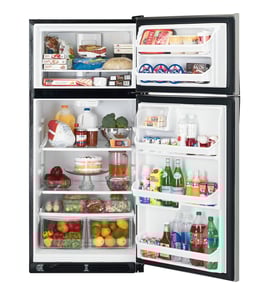

Which is better, top mount or bottom mount refrigerator?
A top-mount refrigerator like the LG LTCS24223D puts the freezer on top and typically costs less and uses slightly less energy, while a bottom-mount puts fresh food at eye level for easier daily access. “Better” depends on how you shop, cook, and use the freezer; check the LTCS24223D owner's manual for your model’s features and storage layout.
| Feature | Top-mount (freezer on top) | Bottom-mount (freezer on bottom) |
|---|---|---|
| Everyday access | Freezer is easiest to reach | Fresh food is easiest to reach |
| Typical cost | Lower | Higher |
| Energy use | Often slightly lower | Often slightly higher |
| Organization | Simpler layout | Often more drawers/bins |
| Best for | Frequent freezer use, value | Frequent fresh-food use, less bending |
- Choose top-mount if you use frozen foods often, want a simpler design, or want strong value.
- Choose bottom-mount if you cook with fresh ingredients daily and want less bending for fridge items.
- Measure your space and door swing; top-mount doors can need more overhead clearance.
- Think about household habits: kids may reach fresh food more easily in a bottom-mount.
- Consider maintenance and parts availability; common wear items like door storage and seals are replaceable.
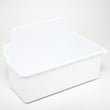
Your refrigerator’s layout affects daily comfort, food visibility (which reduces waste), and how evenly you load shelves and door bins. For example, if door storage gets overloaded or cracked, replacing a bin such as the LG refrigerator door bin MAN62570801 helps keep items secure and the door closing properly.
- Keep the refrigerator at about 37°F and the freezer at about 0°F for safe storage.
- Avoid overpacking; good airflow helps consistent temperatures.
- If the door doesn’t seal well, address it quickly to prevent frost and temperature swings.
Last updated: January 2026
What are the disadvantages of a top mount fridge?
Top-mount refrigerators like the LG LTCS24223D put the freezer on top and the fresh-food section below; the main disadvantages are less convenient access to everyday items, fewer premium convenience features, and less flexible organization compared with many bottom-freezer designs.
- More bending for fresh food: the refrigerator compartment sits lower, so you reach down more often for produce, drinks, and leftovers.
- Less “eye-level” organization: shelves and drawers can feel less accessible, especially when the fridge is full.
- Fewer built-in features on many models: top-mounts are less likely to include external water and ice dispensing.
- Freezer space can be less ergonomic: stacked items can be harder to see and sort.
- Door storage limits: heavy or overfilled bins can sag or crack over time (replacement options exist, such as the LG refrigerator door bin MAN62570801).
| Feature | Top-mount refrigerator | Bottom-freezer refrigerator |
|---|---|---|
| Fresh-food access | Lower, more bending | Higher, easier access |
| Freezer access | Eye level | Lower drawer/basket style |
| Typical features | More basic | More “feature-rich” |
| Organization | Simpler layouts | Often more flexible |
Most households open the fresh-food door far more than the freezer. If you want the most-used items at a comfortable height, a bottom-freezer layout usually feels easier. If you want a simpler design and straightforward storage, a top-mount can still be a great fit.
- Keep everyday items on the upper refrigerator shelves to reduce bending.
- Use clear bins to group snacks, deli items, or breakfast foods.
- Avoid overloading door bins; distribute heavy bottles across multiple bins.
- Check door alignment and gasket sealing if doors feel “off” (see the LTCS24223D manual for adjustment and care guidance).
Last updated: January 2026
How wide is a 24.5 cu ft refrigerator?
A 24.5 cu. ft. refrigerator is typically 33 to 36 inches wide, depending on the style. For the LG LTCS24223D top-mount refrigerator, plan on a 33-inch class opening; confirm the exact cabinet and hinge width in the LTCS24223D owner's manual.
Capacity alone does not set the width; door style and depth do.
- Top-mount (like LG LTCS24223D): commonly 29 to 33 inches
- French door (standard-depth): commonly 35 to 36 inches
- French door (space-efficient designs): commonly about 33 inches
- Side-by-side: commonly 33 to 36 inches
Measure both the refrigerator and the space so you avoid hinge and door-swing surprises.
- Measure the opening width at the front and back (walls can be out of square)
- Measure the refrigerator cabinet width and the overall width including hinges
- Allow room for door swing so drawers and door bins clear nearby walls
- Leave ventilation clearance (use the manual’s guidance for sides, top, and rear)
| What you need | Typical for 24.5 cu. ft. | Best for |
|---|---|---|
| 33-inch class width | About 33 inches | Many top-mount and some French door models |
| 36-inch class width | About 35 to 36 inches | Many standard-depth French door models |
A refrigerator can be marketed as “33-inch” or “36-inch” class, but hinges, door swing, and ventilation clearances determine whether it installs cleanly and the doors open fully.
Last updated: January 2026