 Owner’s manual
 Error Codes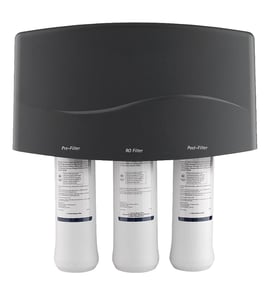




What are the negatives of reverse osmosis water?
Reverse osmosis (RO) water from the Kenmore Elite 625385560 system can have downsides: it sends concentrated minerals and impurities to the drain as waste water, it produces treated water slowly, and it requires ongoing filter and membrane maintenance to keep taste and performance consistent (see the 625385560 owner's manual).
Common negatives to know
- Waste water: RO works by routing “reject” water (with dissolved solids) to the drain while keeping product water for drinking.
- Slower production: RO membranes typically make water gradually; this model’s manual describes product water output at about one ounce per minute under stated test conditions.
- Maintenance costs and effort: You will periodically replace the prefilter, postfilter, and RO membrane; neglected filters can lead to taste/odor issues.
- Space and installation complexity: Most RO systems sit under the sink and use a storage tank, tubing, and a dedicated faucet.
- Not a “make unsafe water safe” device: RO is intended for potable supplies; it is not meant to turn non-potable sources into safe drinking water.
What’s happening inside the system (and why it matters)
RO uses household water pressure to push water through a semi-permeable membrane. Clean water goes to the faucet or storage tank; concentrated dissolved solids go to the drain. This is why RO can improve taste and reduce total dissolved solids (TDS), but also why it creates waste water.
Quick trade-off table
| Topic | What you may notice | What usually helps |
|---|---|---|
| Waste water | More drain flow during production | Normal operation; verify drain routing and flow control if performance seems off |
| Slow fill | Tank refills gradually | Let the tank refill fully; check feed pressure and filter condition |
| Taste/odor | Off taste when filters are spent | Replace pre/post filters; sanitize if the tank is contaminated |
| Upkeep | Regular cartridge changes | Follow the replacement schedule in the manual |
When a “negative” points to a fix
If you’re seeing poor taste/odor or suspect contamination in the storage tank, sanitizing the system is a standard corrective step. Using the correct kit helps ensure you sanitize safely and thoroughly: reverse osmosis system sanitation kit 7301203.
Why it matters: RO performance (quality water production and waste water amount) varies with feed pressure, temperature, and TDS; keeping filters current helps the system maintain expected water quality.
Last updated: January 2026
How much does it cost to install a whole house reverse osmosis system?
A whole-house reverse osmosis (RO) installation typically costs $1,000 to $4,000 for many homes, with higher-end or complex installs reaching $8,000 to $15,000+. Your Kenmore Elite 625385560 is a point-of-use drinking water RO system (commonly installed under a sink or in a remote utility area), so whole-house pricing is usually for a different, larger system type; see the owner's manual for installation planning details.
What drives the total installed price
Whole-house RO costs vary mainly due to water conditions, system size, and plumbing scope.
- System capacity (GPD) and required flow rate for the whole home
- Incoming water quality (high TDS, iron, sediment, chlorine, well water)
- Pre-treatment needs (sediment filtration, carbon filtration, water softener, UV)
- Plumbing and drain complexity (space, routing, drain connection, permits)
- Labor rates in your area and whether electrical work is needed
Typical cost breakdown (whole-house RO)
| Cost item | Typical range | Notes |
|---|---|---|
| Equipment (system + tanks) | $600 to $8,000+ | Larger systems and storage increase cost |
| Pre-treatment equipment | $200 to $5,000+ | Often required for well water or hard water |
| Professional installation labor | $400 to $3,000+ | More if rerouting plumbing or adding drains |
| Ongoing filters/membranes | $150 to $800 per year | Depends on usage and water quality |
How this relates to Kenmore Elite 625385560
This Kenmore Elite RO system is designed for drinking water and is commonly installed under a sink or in a remote location with a nearby water source and drain. It also has operating limits that matter for performance, including 40 to 100 psi supply pressure and 40°F to 100°F water temperature.
- If your goal is whole-house treatment, plan for a different RO design (higher flow, larger storage, more pre-treatment)
- If your goal is better drinking water, a point-of-use RO like this model is usually the right approach
- For maintenance and sanitation steps that affect performance and taste, use a reverse osmosis system sanitation kit 7301203
Why it matters
Whole-house RO is a major plumbing project; sizing and pre-treatment determine whether you get good pressure, acceptable waste-water management, and reasonable filter life. Matching the system to your water conditions prevents frequent membrane replacement and poor output.
Last updated: January 2026
Why am I thirsty after drinking reverse osmosis water?
Reverse osmosis water from your Kenmore Elite 625385560 can leave you feeling thirsty because the RO membrane removes many dissolved solids (TDS), including minerals that contribute to taste and electrolyte intake. If you are otherwise healthy, this is usually a hydration and preference issue, not a problem with the RO system.
What’s happening with RO water
Your 625385560 uses household water pressure to push water through filters and a semi-permeable RO membrane; minerals and impurities are sent to the drain while product water goes to the faucet or storage tank. Details on the filtration stages and system operation are in the owner's manual.
Common reasons RO water feels less “thirst-quenching”:
- Lower mineral content can make water taste “flat,” so you may drink less overall.
- Electrolyte intake may be lower if most of your fluids come from RO water.
- Very cold, very pure water can feel less satisfying to some people.
- High activity or heat increases fluid and electrolyte needs beyond water alone.
Quick checks to make sure the system is producing normal RO water
These steps help confirm the RO system is operating as designed.
- Make sure the storage tank is filling and flow at the faucet is steady (RO is naturally slower than tap water).
- If the system is new or recently serviced, complete the purge period described in the owner's manual.
- Replace filters on schedule; the manual notes filter replacement around 6 months or 650 gallons (indicator light behavior may vary by setup).
- If you notice unusual taste or odor, consider sanitizing the system using the reverse osmosis system sanitation kit 7301203.
What to do if you want RO water to feel more hydrating
These options address the “thirsty after drinking” complaint without changing the RO system’s core function.
| Option | What it changes | Best for |
|---|---|---|
| Add electrolytes (drops or powder) | Increases sodium, potassium, magnesium | Heavy sweating, workouts |
| Get minerals from food | Restores mineral intake naturally | Everyday hydration |
| Mix RO with tap water (if acceptable) | Raises mineral content and taste | Taste preference |
Why it matters
RO systems are designed to reduce dissolved solids and improve taste and clarity. That same low-TDS result can make the water feel less satisfying, even when the system is filtering correctly.
Last updated: January 2026
Is a whole house reverse osmosis system worth it?
A whole-house reverse osmosis (RO) system is worth it when your water has serious dissolved solids or contaminant concerns and you want RO-quality water at multiple fixtures. For many homes, a point-of-use RO like Kenmore model 625385560 delivers excellent drinking and cooking water with less cost and maintenance; see the 625385560 owner's manual for operating limits.
When whole-house RO is the right investment
- Your water has high total dissolved solids (TDS) and taste issues throughout the home
- You need treatment at more than one location (kitchen plus other sinks)
- You have space for equipment, storage, and a drain connection
- You accept higher water use because RO sends concentrate (waste water) to the drain
- You are comfortable with regular filter, membrane, and sanitizing service
When an under-sink RO is the better value
Kenmore Elite 625385560 is a drinking-water RO system that uses household pressure to push water through filters and an RO membrane; purified water goes to a dedicated faucet and storage tank.
- You mainly want better water for drinking and cooking
- You want simpler installation under a sink or in a nearby remote location
- You prefer lower ongoing maintenance than a whole-house setup
Practical checks before you buy
| Check | Typical target | Why it matters |
|---|---|---|
| Water pressure | 40 to 100 psi | RO production and rejection depend on pressure |
| Water temperature | 40°F to 100°F (cold water only) | Hot water can damage RO components |
| Nitrate/nitrite use | 40 psig or greater | Low pressure reduces treatment effectiveness |
Maintenance parts that often come up
- Reverse osmosis system sanitation kit 7301203 for periodic sanitizing during service
- Kenmore reverse osmosis system automatic shut-off kit 7333145 if the system will not shut off when the tank is full
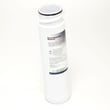
- Reverse osmosis membrane 3857705 when production drops or TDS rejection declines
Why it matters
Whole-house RO improves water quality at every tap, but it adds complexity, space needs, and water usage. A point-of-use RO targets the water you consume most, which often delivers the best cost-to-benefit.
Last updated: January 2026