


What is the 20 rule for air conditioners?
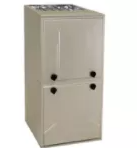
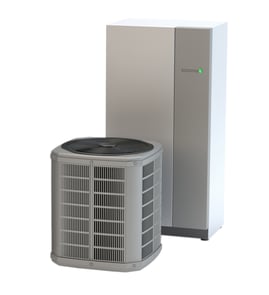
The “20-degree rule” for air conditioners is a rule of thumb: most central AC systems can typically cool indoor air about 15 to 20°F below the outdoor temperature under normal conditions. On your York D7CG060N09906 heating and cooling combined unit, trying to force a bigger drop often means longer run times, higher energy use, and more wear.
What the rule really means (and what it does not)
- It describes a typical capability, not a hard physical limit.
- It assumes the system is properly sized, charged, and airflow is correct.
- It is about real-world performance on hot days, not the thermostat’s minimum setting.
- A well-performing system can still struggle if the home has high heat gain (sun, poor insulation, air leaks).
Quick examples
| Outdoor temp | Typical achievable indoor temp | What you may see if you set much lower |
|---|---|---|
| 95°F | 75 to 80°F | Unit runs nearly nonstop, comfort still lags |
| 85°F | 65 to 70°F | Often achievable if the home is tight and shaded |
| 100°F | 80 to 85°F | Longer cycles, higher bills, more stress |
If you cannot maintain a 15 to 20°F difference
Check these common causes first:
- Dirty air filter or blocked return vents (low airflow)
- Outdoor coil or indoor coil dirty (poor heat transfer)
- Supply registers closed or ducts leaking
- Thermostat location in direct sun or near heat sources
- Weak start/run components such as a failing run capacitor
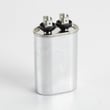
If you suspect a capacitor issue (hard starting, humming, fan not spinning up), match the replacement to your unit using the parts list for this model, such as the capacitor 12910.
Why it matters
Using the 20-degree rule helps set realistic expectations on extreme-heat days and can point you toward airflow, coil-cleaning, or electrical-part problems when comfort drops and run time climbs.
Last updated: February 2026
How much is a combined heating and cooling system?
A combined heating and cooling system (like a packaged rooftop unit similar to York model D7CG060N09906) typically costs about $10,000 to $20,000 installed, with many homeowners landing near the mid-range when ductwork and electrical are in good shape. Your final price depends most on capacity, efficiency, and installation complexity.
What drives the installed price
- System type: packaged unit vs. split system (AC plus furnace or heat pump)
- Size (tonnage/BTU): larger homes and higher loads cost more
- Efficiency ratings: higher efficiency usually increases equipment cost
- Installation scope: curb adapter, crane lift, gas line work, electrical upgrades
- Ductwork condition: repairs, sealing, or resizing can add significant cost
- Permits and labor rates: vary by location and job requirements
Typical cost ranges (quick guide)
| Scenario | Typical installed range | Notes |
|---|---|---|
| Like-for-like replacement (existing ductwork and utilities OK) | $10,000 to $15,000 | Most straightforward swap |
| Replacement plus moderate duct/electrical work | $13,000 to $18,000 | Common when updating older systems |
| Higher-efficiency equipment and complex install | $16,000 to $20,000+ | More labor and higher equipment cost |
Why it matters
Sizing and installation quality affect comfort, humidity control, energy use, and equipment life. Paying for correct load sizing and clean electrical connections often prevents repeat service calls.
Parts vs. full system replacement
If you are troubleshooting a no-start or hard-start issue on your existing unit, a failed run capacitor is a common, lower-cost repair item. For this model, we list the capacitor 12910 as an available replacement part.
Last updated: February 2026
What is the most expensive part to replace on an AC unit?
On a York heating and cooling combined unit like model D7CG060N09906, the compressor is typically the most expensive AC-related part to replace because it is the sealed, refrigerant-moving “heart” of the system and often requires significant labor plus refrigerant handling.
What usually costs the most (and why)
In most residential and light commercial AC systems, these are the top high-cost repairs:
- Compressor: highest part cost and highest labor complexity
- Outdoor condenser fan motor: moderate-to-high cost; can fail from heat or worn bearings
- Control board or defrost board (heat pump models): can be expensive on some designs
- Coil replacement (evaporator or condenser): can be costly due to labor and refrigerant work
- Heat exchanger (gas heat section on packaged units): can be a major repair on combination units
Quick cost comparison (typical ranges)
Actual pricing varies by capacity, efficiency level, and labor rates, but this shows the usual “most expensive” ranking.
| Component | Typical cost driver | Usual cost level |
|---|---|---|
| Compressor | Sealed system labor, refrigerant work, high part cost | Highest |
| Coil (evaporator/condenser) | Labor plus refrigerant work | High |
| Heat exchanger (if equipped) | Major disassembly and safety checks | High |
| Control board | Electronics cost | Medium to high |
| Capacitor | Low part cost, quick swap | Low |
Where a capacitor fits in
A failed capacitor can mimic bigger problems (hard starting, humming, fan not spinning). It is usually one of the least expensive fixes, and it is a common wear item on HVAC equipment.
- If the unit struggles to start, a capacitor is a smart early check
- For this model, we list a capacitor as an available replacement part: capacitor 12910
- Always match the electrical ratings printed on the old capacitor (microfarads and voltage)
Why it matters
If the compressor is truly failed, repair decisions often come down to total repair cost versus the age and overall condition of the unit. Checking simpler electrical parts first (like a capacitor) helps avoid replacing major components unnecessarily.
Last updated: February 2026
Is it cheaper to repair or replace HVAC parts?
For a York D7CG060N09906 heating and cooling combined unit, it’s usually cheaper to repair when the problem is isolated (like a failed electrical component) and the system has been reliable; replacement becomes the better value when repair costs stack up, breakdowns are frequent, or efficiency losses drive higher utility bills.
A practical way to decide
Use these checkpoints to choose the lower-cost path over the next few years:
- System age: If the unit is 10 to 15 years old or more, replacement often wins on long-term cost.
- Repair size: If a single repair is around 50% or more of the cost of a comparable new unit, replacement is typically the better investment.
- Repeat failures: Two or more significant repairs in a short period usually points to replacement.
- Comfort and performance: Uneven cooling/heating, long run times, or weak airflow can signal bigger issues.
- Energy costs: Rising bills with no usage change often means declining efficiency.
Common repair example: capacitor vs. major component
A failed run capacitor is a common, relatively low-cost repair compared with compressor or heat exchanger issues.
| Scenario | Typical cost impact | Usual best choice |
|---|---|---|
| Outdoor fan or compressor struggles to start; capacitor tests bad | Lower | Repair (replace capacitor) |
| Compressor failure, major refrigerant leak, or multiple electrical failures | Higher | Consider replacement |
| Frequent service calls plus higher energy bills | Higher over time | Consider replacement |
If your symptoms match a start or run issue, checking the capacitor 12910 is a reasonable first step before assuming you need a full system replacement.
Why it matters
Choosing repair vs. replacement is really about total cost of ownership: parts and labor today, the likelihood of another breakdown next season, and what you pay every month to heat and cool your home.
If you decide to repair
- Shut off power at the disconnect and breaker before opening panels.
- Confirm the failure with proper electrical testing.
- Replace only with a capacitor that matches the required ratings.
- Inspect wiring and terminals for heat damage.
- Restore panels and verify safe operation after the repair.
For electrical checks, our how to use a multimeter to test electrical parts video is a solid walkthrough.
Last updated: February 2026
What are common problems with York units?
Common problems on York heating and cooling combined units like model D7CG060N09906 include airflow restrictions (dirty filters or coils), condensate drainage issues, electrical failures (capacitor/contactor/wiring), and refrigerant-related cooling problems. Many “no cool” or “no heat” calls trace back to basic maintenance or a single failed electrical part.
Most common symptoms and what they usually point to
- Unit will not start: tripped breaker, blown fuse, failed capacitor, failed contactor, loose wiring
- Outdoor fan or blower runs but poor cooling: dirty condenser/evaporator coil, clogged filter, low refrigerant, iced coil
- Short cycling (starts and stops often): dirty coil, airflow restriction, thermostat/control issue, weak capacitor
- Water around the unit: clogged condensate drain, cracked/rusted drain pan, improper drain slope
- No heat (gas/electric heat sections vary): ignition/heating control issue, limit switch trip from low airflow
Quick checks we recommend before replacing parts
- Set thermostat to Cool (or Heat) and lower/raise setpoint by 3 to 5 degrees.
- Check and replace the air filter if it is dirty.
- Inspect the outdoor coil for debris; gently clean if blocked.
- Look for standing water and clear the condensate drain line.
- If the unit hums but the fan will not spin, stop and inspect the run capacitor.
Electrical parts that commonly fail
On package units, electrical issues are frequent because the components live outdoors.
| Symptom | Common culprit | Typical clue |
|---|---|---|
| Hums, hard start, or fan will not keep spinning | Run capacitor | Bulged/leaking capacitor, weak microfarads reading |
| No response when calling for cooling/heating | Contactor or control circuit | No “pull-in” at contactor, no 24V control |
| Intermittent shutdowns | Loose/burned wiring connection | Heat discoloration at terminals |
If you suspect a weak run capacitor, match it by ratings and application for your unit; the parts list for this model includes the capacitor 12910.
Why it matters
Airflow and electrical health drive both comfort and compressor life. A clogged filter or weak capacitor can make the system run hotter, cycle more, and fail sooner.
For safe electrical testing, we use a meter and follow a step-by-step process like how to use a multimeter to test electrical parts video.
Last updated: February 2026