Owner’s manual
 Error Codes


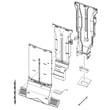
How to put bottom drawer in Samsung refrigerator?
To put the bottom freezer drawer back in on your Samsung RF28T5001SG, reinstall the drawer and baskets in the reverse order of removal: seat the lower basket on the rear of the rail assembly first, then align and slide the upper basket back into place. For the exact basket and rail steps, use the RF28T5001SG user manual.
Steps to reinstall the bottom freezer drawer and baskets
- Fully extend both slide rails.
- If the freezer drawer front was removed, slide the drawer front back onto the rail assembly until it seats.
- Reinstall the rail assembly hooks (press down until they lock in place).
- Set the lower basket onto the rail assembly rear side first, then lower the front into position.
- Align the upper basket front wheels with the end of the lower basket track, then slide the upper basket forward into place.
- Open and close the freezer drawer a few times to confirm smooth travel and a full seal.
Quick fit check (what “right” looks like)
| Check | What you should see | What it prevents |
|---|---|---|
| Drawer closes flush | No gap at the top or sides | Frost buildup and warm temps |
| Baskets sit level | No rocking or rubbing | Rail damage and sticking |
| Upper basket tracks correctly | Wheels stay in the lower basket track | Basket jumping off the rails |
Common mistakes that cause sticking or frost
- Lower basket installed front-first instead of rear-first
- Upper basket wheels not aligned with the lower basket track
- Overloading the freezer drawer so it cannot close fully
- Rail assembly not locked (hooks not fully engaged)
Why it matters
When the freezer drawer or baskets are mounted in the wrong position, the door may not open or close properly. That can lead to frost buildup, harder drawer movement, and inconsistent freezer temperatures.
Last updated: February 2026
What is the life expectancy of a Samsung refrigerator?
A Samsung refrigerator typically lasts 10 to 15 years in normal household use. For the Samsung RF28T5001SG, consistent maintenance (good airflow, clean coils, correct temperatures, and on-time filter changes) is what most often determines whether it lands closer to 10 years or closer to 15.
Typical lifespan and what affects it most
Most refrigerator failures that shorten lifespan come from heat buildup, airflow restrictions, and delayed repairs.
- Keep interior air vents clear so cold air can circulate properly.
- Avoid overpacking; blocked vents can cause long cooling cycles and extra wear.
- Clean condenser coils regularly (dust and pet hair make the compressor work harder).
- Keep door gaskets sealing tightly to prevent warm air leaks.
- Address unusual noises, warming, or frost buildup early.
Maintenance schedule we recommend
| Task | How often | Why it matters |
|---|---|---|
| Check temps (fresh food and freezer) | Monthly | Prevents food spoilage and reduces compressor run time |
| Clean condenser area | Every 6 to 12 months | Lowers heat load and extends compressor life |
| Inspect door seals and alignment | Every 6 months | Stops moisture intrusion and frost issues |
| Replace water filter (if equipped) | About every 6 months | Protects water system flow and reduces leak risk |
What “good care” looks like for this model
Samsung’s usage cautions for this refrigerator emphasize performance basics like not blocking vents and storing food in sealed containers. Those habits reduce long run times and help the sealed system (compressor, condenser, evaporator) last longer. See the RF28T5001SG owner's manual for the specific care and operating guidance for your unit.
Warranty context (helps set expectations)
Warranty coverage is not the same as life expectancy, but it shows which systems are designed for long service. For this model family, the manual lists longer coverage on the sealed refrigeration system and the digital inverter compressor.
Why it matters
A refrigerator that runs longer than necessary uses more energy, struggles to hold safe temperatures, and wears out key components sooner. Simple airflow and cleaning habits are the most cost-effective way to extend service life.
Last updated: February 2026
What is the most common problem with Samsung refrigerators?
The most common problems we see with Samsung refrigerators (including the Samsung RF28T5001SG) are cooling complaints (warm fridge or freezer), ice maker issues, and water leaks. These often trace back to restricted airflow from frost or blocked vents, or a failed cooling component such as a fan motor, defrost heater, or temperature sensor.
Most common symptoms and what they usually point to
- Fridge warm, freezer OK (or vice versa): airflow restriction, iced-over evaporator area, or a fan not running
- Noisy humming, rattling, or grinding: evaporator fan or condenser fan issues
- Water under the fridge or inside the fresh food section: drain system restriction or defrost water not routing correctly
- Ice maker slow or not making ice: water supply restriction, frozen fill tube, or ice maker fill problem
- Temps swing up and down: sensor, airflow, or defrost performance problems
Quick checks you can do first (no tools)
- Make sure interior air vents are not blocked by food packages (blocked vents can cause overcooling or poor cooling). See the vent and airflow guidance in the RF28T5001SG manual.
- Confirm doors close and seal fully; a poor seal drives frost buildup and temperature instability.
- If you recently unplugged the refrigerator, wait at least 5 minutes before plugging it back in (helps protect the compressor and controls).
- Listen for fans: you should typically hear airflow when the unit is running.
- If you smell burning or see smoke, unplug the refrigerator and contact service immediately (safety guidance is in the manual).
Common “problem to part” mapping for this model
| Problem you notice | Common cause | Example part on this model page |
|---|---|---|
| Warm temps, frost buildup | Defrost system not clearing frost | Refrigerator defrost heater (DA47-00526B) |
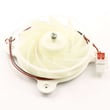
| Warm temps, poor airflow, noise | Evaporator fan not running | Refrigerator evaporator fan motor (DA31-00287B) |
| Temps inaccurate or unstable | Sensor reading wrong | Refrigerator temperature sensor (DA32-10104V) |
| Ice maker not filling, frozen tube | Frozen fill tube or heater issue | Samsung refrigerator ice maker fill tube and heater (DA97-00209Z) |
Why it matters
Cooling and airflow problems can quickly lead to food spoilage, heavy frost that blocks vents, and extra strain on the compressor. Catching the early signs (noise, temp swings, small leaks) helps prevent bigger repairs.
Last updated: February 2026