Owner’s manual
 Error Codes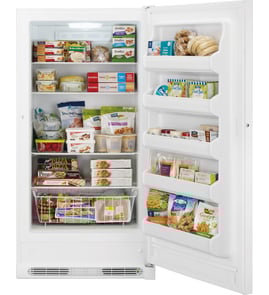

How big is a 17 cubic foot upright freezer?
A 17 cubic foot upright freezer is typically a full-size unit that stands about 60 to 67 inches tall, about 28 to 33 inches wide, and about 28 to 32 inches deep. For your Wc F17NAD, confirm the exact cabinet dimensions in the owner's manual.
Most 17 cu. ft. uprights fall into these common ranges (dimensions vary by brand and door style):
- Height: 60 to 67 in.
- Width: 28 to 33 in.
- Depth: 28 to 32 in. (often deeper with the handle)
- Weight (empty): commonly 150 to 220 lb.
- Door swing: plan extra clearance on the hinge side for wider opening
Even if the cabinet fits, the freezer needs breathing room. Our Wc F17NAD manual calls for these minimum clearances:
- Top: at least 3 in.
- Back: at least 1 in.
- Each side: 3 in.
- Hinge side: add extra space if it sits against a wall so the door can open wider
| What you are measuring | What to include | Why it matters |
|---|---|---|
| Cabinet width | Case only | Ensures it fits the opening |
| Overall depth | Door plus handle | Prevents sticking out past cabinets |
| Door swing clearance | Space in front and hinge side | Lets baskets and shelves slide out |
| Vent clearance | Top, back, sides | Helps the compressor run normally |
A 17 cu. ft. upright freezer like the Wc F17NAD can physically fit in many laundry rooms, garages, and basements, but tight installs restrict airflow. That can increase run time and make the cabinet feel warm on the outside, which is normal during heat removal.
Last updated: February 2026
What's the average lifespan of an upright freezer?
Most upright freezers last 10 to 15 years. With good care and a stable indoor environment, it’s common to reach 15 to 20 years of service. For model F17NAD, following the placement, electrical, and cleaning guidance in the owner's manual helps maximize lifespan.
A freezer’s compressor and sealed system last longer when the unit runs efficiently and stays clean.
- Location and temperature: Indoor, temperature-controlled spaces reduce strain (hot garages shorten life).
- Airflow clearance: Keep recommended space around the cabinet for heat to escape.
- Electrical supply: Use a properly grounded outlet on a dedicated circuit; avoid extension cords.
- Door gasket condition: A tight seal prevents long run times and frost issues.
- Cleaning and upkeep: Regularly clean the interior, door liner, and gasket with mild detergent.
The manual’s installation basics are designed to prevent overheating and electrical problems.
| Item to check | Good target | Why it matters |
|---|---|---|
| Top clearance | About 3 in. | Helps heat dissipate |
| Back clearance | About 1 in. | Prevents hot spots behind cabinet |
| Side clearance | About 3 in. each side | Improves airflow and service access |
| Power | 115V, 60 Hz, 15 or 20A grounded | Protects compressor and controls |
These symptoms usually mean the freezer is working harder than it should.
- Runs almost constantly and struggles to hold near 0°F
- Food softening or temperature swings after normal door openings
- Excessive heat on the cabinet sides combined with poor cooling
- Repeated tripped breaker or blown fuse (after outlet and cord checks)
- Persistent frost buildup (on non no-frost models) or moisture issues around the door
A freezer that’s near the end of its lifespan often uses more electricity and puts food quality at risk. Keeping proper clearances, using the correct electrical supply, and maintaining a good door seal are the simplest ways to extend service life.
Last updated: February 2026
Why is the upright freezer not freezing?
If your Wc F17NAD upright freezer is running but not freezing, the most common causes are an incorrect temperature control setting, warm room conditions, poor airflow from overpacking, or a door that is not sealing. Use the checks below, then confirm the correct control positions in the owner's manual.
- Make sure the temperature control is set colder; higher numbers make the freezer colder.
- Give it time after startup; initial pull-down can take 6 to 8 hours or longer, depending on room temperature and door openings.
- Verify the room temperature is in the efficient operating range: 40°F to 90°F.
- Avoid overpacking; leave space so cold air can circulate around shelves and baskets.
- Check the door closes fully and the gasket seals all the way around (no gaps, no torn sections).
- If your model has a power light, remember it only indicates power, not proper freezing temperature.
Your freezer may have features that change how long it runs:
| Setting/feature | What it does | When to use it |
|---|---|---|
| Temperature control (higher number) | Colder cabinet temperature | When foods are soft or temps are too warm |
| Fast Freeze (coldest setting, some models) | Runs continuously for maximum cooling | Before adding a large load of unfrozen food (return to normal after 24 to 48 hours) |
| Temperature monitor alarm (some models) | Sounds if freezer rises above about 10°F | Helpful after loading food or after a power interruption |
A freezer that is not freezing is usually a heat-load or airflow problem first (warm room, frequent openings, overloading). Correct settings and good circulation let the refrigeration system remove heat efficiently and protect food quality.
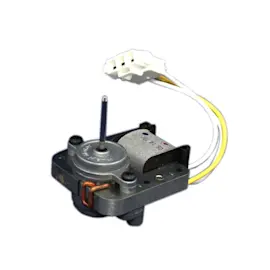
If the control is set colder, the door seals, and the freezer has had enough time to cool, the issue is typically in the sealed system airflow or a failed electrical component (for example, a fan motor, thermostat/control, or wiring). For safe troubleshooting, unplug the freezer before inspecting any wiring and use the diagnostic guidance in the owner's manual.
Last updated: February 2026
What is the disadvantage of an upright freezer?
The main disadvantage of an upright freezer (including the Wc F17NAD) is that it loses cold air faster when the door opens, so it typically uses more energy and can be less forgiving during frequent access than a chest freezer. Uprights also store bulky items less efficiently because of shelves and compartments.
- Higher energy use with frequent door openings: cold air spills out when you open the door.
- Less usable space for bulky foods: shelves, bins, and door storage can limit tall or awkward items.
- More temperature swings: frequent access can warm the cabinet faster than a chest design.
- More sensitive to placement: heat sources and tight clearances can hurt performance.
- Organization can reduce flexibility: great for sorting, but not always ideal for large roasts, turkeys, or big boxes.
We recommend these setup and use habits (all consistent with the owner's manual):
- Place the freezer indoors, away from ovens, radiators, and other heat sources.
- Keep room temperature in the efficient operating range of 40°F to 90°F.
- Maintain airflow clearances: 3 in. top, 1 in. back, 3 in. each side.
- Level it so the door closes reliably; the manual notes the door should swing shut from about 10 inches open when adjusted properly.
- Avoid loading it with unfrozen food until it has time to get properly cold.
| Feature | Upright freezer | Chest freezer |
|---|---|---|
| Door-open cold loss | Higher | Lower |
| Organization | Better (shelves/bins) | Harder (stacking) |
| Bulky item storage | Often harder | Often easier |
| Footprint | Taller, smaller floor space | Wider, more floor space |
If you open the freezer often, an upright’s convenience can come with higher operating cost and more temperature fluctuation. Good placement, clearances, and leveling help your F17NAD run more efficiently and protect food quality.
Last updated: February 2026
What is the most reliable brand of upright freezer?
The most reliable upright freezer brand is the one that matches your environment and is installed and used correctly. For your Wc F17NAD upright freezer, long-term reliability depends most on proper leveling, stable room temperature, good airflow, and correct use of features and alarms described in the F17NAD owner's manual.
When you compare brands, focus on design basics and serviceability more than marketing claims.
- Frost-free system quality (defrost heater, timer/control, drain design)
- Temperature stability after door openings
- Door gasket seal and hinge alignment over time
- Availability of replacement parts and clear documentation
- Fit for your location (kitchen vs garage or basement)
Your manual calls out the operating conditions that protect the compressor and cooling system.
- Install it level on a floor that supports the weight
- Use a properly grounded electrical circuit
- Keep it away from ovens, radiators, and other heat sources
- Run it where ambient temperature is typically 40°F to 90°F
- Let it get fully cold before loading it with food
- Use Fast Freeze only before adding a large amount of unfrozen food; return to normal after 24 to 48 hours
| Factor | What you control | What the brand controls |
|---|---|---|
| Heat stress | Room temp, placement, airflow | Condenser and compressor sizing |
| Frost-free performance | Door openings, loading warm food | Defrost design and controls |
| Food safety | Alarm response, organization | Alarm features and insulation |
| Longevity | Cleaning, leveling, power quality | Component quality and build |
Most upright freezer failures start with heat stress, poor airflow, unstable power, or heavy warm-food loading. Getting the setup right reduces compressor run time, prevents temperature swings, and protects frozen food quality.
Last updated: February 2026