 Owner’s manual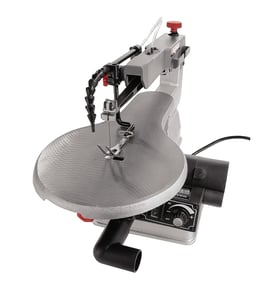
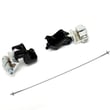

How do I know which scroll saw blade to use?
For your Craftsman 137216020 scroll saw, pick the blade based on your material thickness, the tightness of the curves you need, and the cut quality you want. In most projects, a finer blade gives cleaner cuts, while a coarser blade cuts faster but leaves a rougher edge; confirm any blade-mounting details in the 137216020 owner's manual.
- Thin wood and delicate fretwork: use a fine-tooth blade for smoother edges.
- Thicker wood and faster cutting: use a coarser-tooth blade to clear sawdust better.
- Tight inside cuts and small radiuses: choose a narrower blade (it turns tighter).
- Cleaner bottom surface (less tear-out): use a reverse-tooth blade.
- Beginner-friendly general cutting: a skip-tooth blade clears dust well and tracks predictably.
- Hardwoods or plastics: slow the feed rate; use a blade intended for the material to reduce burning or melting.
| What you are cutting/doing | Blade feature to look for | What you will notice |
|---|---|---|
| Tight curves, intricate patterns | Narrow blade, fine teeth | Better turning, less overcut |
| Straight cuts in thicker stock | Wider blade, coarser teeth | Faster cutting, more control |
| Cleanest finish on soft wood | Fine teeth | Less sanding needed |
| Prevent tear-out on the bottom | Reverse-tooth section | Cleaner underside |
- Install the blade in the correct direction (teeth typically point down so the work stays on the table).
- Set proper tension; too loose wanders, too tight snaps.
- Use a steady, light feed; forcing the cut overheats and breaks blades.
- Keep the workpiece flat on the table and let the blade do the cutting.
Using the right scroll saw blade improves accuracy, reduces burning and tear-out, and helps your Craftsman 137216020 run smoother with fewer broken blades and less sanding.
Last updated: February 2026
Should I get pinless or pinned scroll saw blades?
For the Craftsman scroll saw model 137216020, we recommend pinless (plain-end) blades for most projects because they cut tighter curves, handle fine detail, and make inside cuts through small starter holes easier. Choose pinned blades mainly for quick, basic cuts where convenience matters most.
| Feature | Pinless (plain-end) blades | Pinned blades |
|---|---|---|
| Best for | Fretwork, lettering, puzzles, tight curves | Basic cutting, thicker stock, practice cuts |
| Inside cuts | Excellent (small pilot holes) | Limited (needs larger entry holes) |
| Blade variety | Widest selection (standard, skip, reverse-tooth, spiral) | Fewer options |
| Mounting | Uses clamps (may use an adapter depending on saw) | Hooks on pins; fast install |
- Pick pinless for intricate patterns, tight radii, and frequent inside cuts.
- Pick pinned when you want faster blade changes and you are cutting simpler shapes.
- For cut quality, focus on blade type and tooth pattern (standard, skip-tooth, double-tooth, reverse-tooth, spiral), not blade “size.”
- Match tooth pitch (TPI) to the material: higher TPI for thinner stock and finer cuts; lower TPI for thicker stock and faster cutting.
- If you see burning or wandering, switch to a fresh blade and slow your feed rate.
Use the 137216020 owner's manual to confirm the exact blade mounting method for your saw (pinless clamping and whether an adapter is required).
- Unplug the saw before changing blades.
- Install the blade with teeth pointing down toward the table for normal cutting.
- Set proper tension; too loose causes drift, too tight snaps blades.
- Recheck tension after a short test cut because new blades can settle.
Blade end style determines how easily you can do inside cuts and fine detail. Blade type and TPI determine how cleanly and quickly the saw cuts different materials.
Last updated: February 2026
What are some common scroll saw mistakes?
Common mistakes on the Craftsman 137216020 scroll saw are incorrect blade tension, forcing the workpiece, using the wrong blade for the cut, and poor setup (vibration, dust buildup, or weak hold-down). Fixing these basics improves cut accuracy, reduces blade breakage, and makes the saw safer to use.
- Overtightening or undertensioning the blade: Tension until the blade feels firm and produces a clear, high “ping” when plucked.
- Pushing the wood too fast: Use a steady, light feed rate; let the blade do the cutting.
- Using the wrong blade type/size: Match blade width and tooth pattern to material thickness and curve tightness.
- Cutting with a dull blade: Replace blades early; dull blades wander, burn wood, and break more often.
- Not supporting the work: Keep the work flat on the table and use consistent downward pressure.
- Ignoring vibration: Bolt the saw to a stable bench to reduce chatter and improve control.
- Poor dust control: Clear sawdust often so your line stays visible and the work stays flat.
| Symptom | Most likely mistake | Best first fix |
|---|---|---|
| Blade breaks often | Too much feed pressure or wrong blade | Slow feed; switch to the correct blade |
| Cuts drift or bevel | Blade tension off or dull blade | Re-tension; install a fresh blade |
| Wood “jumps” on the table | Forcing the cut or vibration | Lighten feed; secure saw to bench |
| Burn marks | Dull blade or too slow feed | Replace blade; keep a smooth feed |
- Verify the blade is installed correctly and centered.
- Confirm blade tension and tracking before starting a detailed cut.
- Check the table is square to the blade for straight, non-beveled cuts.
- Tighten mounting hardware; reduce vibration at the bench.
- Wear eye protection; use hearing protection and a dust mask when cutting dusty woods.
Most “scroll saw problems” are technique and setup issues, not a failed motor or switch. Correct tension, the right blade choice, and a controlled feed rate prevent wasted material and help you get clean, accurate cuts.
For model-specific setup and adjustments, follow the owner's manual.
Last updated: February 2026
Where can I buy Craftsman replacement parts?
You can buy replacement parts for your Craftsman scroll saw model 137216020 directly through Sears PartsDirect by searching the model number and matching the part to the correct diagram and description. This is the most reliable way to get the right fit for an older tool.
- Use the model number 137216020 exactly as shown on the tool’s data label.
- Open the parts diagrams and identify the assembly (blade clamps, table, drive, switch, etc.).
- Match the part by description and reference number, not by appearance alone.
- Compare any measurements you can safely take (for example, screw length or belt width) before ordering.
- Keep your serial number handy; some revisions use different hardware.
| What to verify | Why it matters | Where to find it |
|---|---|---|
| Model number | Ensures diagram accuracy | Tool label and owner's manual |
| Part reference number | Prevents ordering a similar looking part | Parts diagram for 137216020 |
| Electrical rating (switch, cord) | Avoids mismatch and nuisance failures | Part listing details |
| Mounting style and dimensions | Ensures proper fit | Your old part and diagram |
Scroll saw parts like blade holders, switches, and drive components can look interchangeable across Craftsman models, but small differences in mounting holes, shaft sizes, or electrical ratings can stop the saw from running correctly or safely.
Last updated: February 2026