 Installation guide
 Owner’s manual
 Error Codes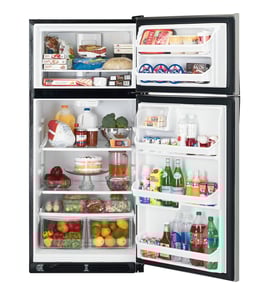


What are the disadvantages of a top mount fridge?
A top-mount refrigerator like the Frigidaire FFTR1835VS2 puts the freezer on top and the fresh-food section below, so the biggest disadvantages are more bending to reach everyday items, fewer premium organization features, and fewer built-in dispenser options compared with many bottom-freezer designs.
Common disadvantages (what most owners notice)
- Less convenient fresh-food access: you reach down more often for produce, drinks, and leftovers.
- Fewer organization upgrades: many top-mounts have simpler bins, drawers, and adjustability than higher-end layouts.
- Limited dispenser features: many top-mount models do not include an external water/ice dispenser.
- More temperature swings with frequent freezer use: opening the top freezer can disturb airflow, especially if the doors are opened often.
- Door seal sensitivity: if the cabinet is not level or the doors are misaligned, sealing issues show up quickly (warm spots, frost, sweating).
What to check on FFTR1835VS2 to reduce the downsides
We see performance complaints on top-mount refrigerators come down to setup and sealing. Use the FFTR1835VS2 installation guide to confirm the cabinet is solid on all corners, level side-to-side, and tilted about 1/4 inch (6 mm) front-to-back so the doors close and seal consistently.
- Verify the refrigerator is level and slightly tilted back
- Confirm door seals completely on all sides
- Keep airflow clearances around the cabinet (sides/top and rear)
- Set fresh-food and freezer controls to the recommended starting point
- Recheck for any water leaks (if an ice maker is installed) after 24 hours
Quick comparison: top-mount vs bottom-freezer
| Feature | Top-mount (like FFTR1835VS2) | Bottom-freezer (typical) |
|---|---|---|
| Fresh-food access | Lower, more bending | Eye-level, easier access |
| Organization | Often simpler | Often more flexible |
| Price/complexity | Usually lower/simpler | Often higher/more features |
| Dispensers | Less common | More common |
Why it matters
If your household uses the refrigerator section far more than the freezer, the top-mount layout can feel less ergonomic day-to-day. Proper leveling and good door sealing help prevent the secondary issues people blame on “design,” such as frost, warm temps, and moisture.
Last updated: January 2026
Are top mount or bottom mount fridges better?
Top-mount and bottom-mount refrigerators are both good; the better choice depends on how you use your Frigidaire FFTR1835VS2 and what matters most (ergonomics, energy use, and price). Top-mount models are typically more energy-efficient and often cost less, while bottom-mount models usually put fresh food at eye level.
Quick comparison
| Feature | Top-mount (freezer on top) | Bottom-mount (freezer on bottom) |
|---|---|---|
| Fresh food access | Lower, more bending | Higher, less bending |
| Freezer access | Easy, at chest/eye level | More bending for freezer |
| Typical energy use | Often lower | Often higher |
| Typical purchase price | Often lower | Often higher |
When a top-mount is the better fit
A top-mount refrigerator is usually the better pick when you want simple, efficient cooling and you use the freezer often.
- You want strong value and straightforward controls
- You use the freezer daily and want it higher up
- You prefer a design that often uses less electricity
- You want fewer “extras” to maintain over time
When a bottom-mount is the better fit
A bottom-mount refrigerator is usually the better pick when you access fresh food more than frozen food and want less bending for everyday items.
- You cook often and want fresh food at eye level
- You store lots of produce and refrigerated items
- You do not mind bending to reach freezer drawers
- You prioritize convenience over lowest energy use
Why it matters
Refrigerator layout affects comfort and operating cost. For example, your installation setup and door sealing also impact performance; our installation guide highlights checks like proper leveling and making sure door seals close completely.
Tips to get the best performance from either style
- Keep the refrigerator level and slightly tilted back so doors close fully
- Leave proper airflow clearance around the cabinet
- Avoid placing the refrigerator near heat sources or in extreme room temperatures
- Set temperatures and wait 24 hours before making more adjustments (common guidance for this style)
Last updated: January 2026
What is the most common problem with a Frigidaire refrigerator?
Cooling problems are the most common issue we see with Frigidaire refrigerators like model FFTR1835VS2, usually showing up as warm fresh-food temps, soft ice, or heavy frost. The fastest wins are airflow and temperature-setting checks, then moving to fan, defrost, and door-seal causes using the FFTR1835VS2 owner's manual.
Most common causes (in order)
- Blocked air vents from overpacked shelves; cold air cannot circulate
- Temperature controls set too warm or changed too quickly (needs time to stabilize)
- Dirty condenser coils (forces longer run times and weak cooling)
- Door not sealing (warm air leaks in, moisture creates frost)
- Evaporator fan or defrost system trouble (frost buildup, poor airflow)
Quick checks you can do first
- Set temps gradually; make small changes and allow about 24 hours to stabilize.
- Make sure food is not blocking interior vents.
- Confirm doors close fully and sit level; a slight forward tilt helps doors self-close.
- Listen for the evaporator fan running when the unit is cooling.
Parts that commonly relate to cooling symptoms
| Symptom | What it often points to | Example part for FFTR1835VS2 |
|---|---|---|
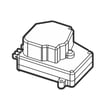
| Frost on back wall, weak airflow | Defrost system issue | Refrigerator defrost timer 5304526183 |
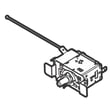
| Temps swing warm/cold | Control issue | Refrigerator temperature control thermostat 5304522330 |
| Warm fridge, freezer OK, noisy or no airflow | Fan/blade issue | Refrigerator evaporator fan blade 242219302 |
Why it matters
Cooling issues can look “minor” at first, but poor airflow and warm temperatures can lead to food spoilage, excess frost, and longer compressor run times. Getting the settings, seals, and airflow right prevents repeat problems.
Helpful DIY reference
- Use our Frigidaire refrigerator error codes guide if your display shows an error or the unit behaves like it is in a fault mode.
Last updated: January 2026
Is FFTR1835VS2 garage ready?
Yes. The Frigidaire FFTR1835VS2 is designed as a garage-ready top-freezer refrigerator, meaning it is intended to keep food at safe temperatures in a wider range of ambient conditions than standard indoor-only models. For operating limits and setup details, use the FFTR1835VS2 owner’s manual.
What “garage ready” means in real use
A garage-ready refrigerator is built to handle cooler or warmer surrounding air better than many standard units. To get reliable cooling performance:
- Place the refrigerator where air can circulate around the cabinet (do not block vents).
- Keep the doors closing and sealing fully to prevent temperature swings.
- Let the unit stabilize after moving it; cooling performance improves after it reaches normal operating temperature.
- Avoid frequent door openings in very hot or very cold conditions.
- Follow the temperature setting guidance in the FFTR1835VS2 owner’s manual.
Quick checks if cooling seems inconsistent in the garage
If the fresh food section warms up or the freezer temperature drifts, these are the most common causes to rule out first:
- Door not sealing (gasket not fully contacting the cabinet)
- Temperature control set too warm
- Overpacked compartments blocking airflow
- Dirty condenser area reducing heat removal
- Frost buildup affecting airflow (defrost issue)
If you suspect a defrost problem (heavy frost on the freezer back wall), a common related component is the refrigerator defrost timer 5304526183.
Typical expectations (garage vs. kitchen)
| Location | What you may notice | What to do |
|---|---|---|
| Hot garage | Longer run times | Keep vents clear; minimize door openings |
| Cool garage | Temperature swings if doors are opened often | Confirm settings; check door seal |
| Humid garage | More moisture, possible frost | Keep doors closed; avoid warm air intrusion |
Why it matters
Using a refrigerator in a garage can stress cooling performance because ambient temperatures change more dramatically. A garage-ready design helps protect food safety and reduces nuisance issues like warming, frosting, and inconsistent temperatures.
Last updated: January 2026





