Owner’s manual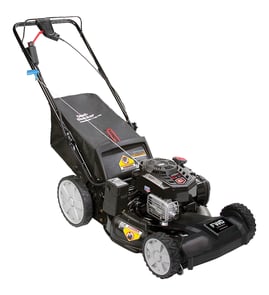



What kind of engine is in the Husqvarna HU700H-96145002302?
The Husqvarna HU700H-96145002302 is typically equipped with a Honda GCV-series 4-cycle residential walk-behind mower engine (commonly a GCV160-class engine). For the exact engine model and spec label location for your mower, use the HU700H-96145002302 owner's manual.
We recommend verifying the engine model directly on the engine shroud or ID label because engine variants can differ by production run.
- Look for an engine ID sticker on the recoil starter housing or valve cover area
- Record the engine model family (example: GCV) and the displacement class (example: 160)
- Note the engine type code and serial number (useful for ordering engine-specific parts)
- Compare what you wrote down to the engine section in the manual
- If the label is dirty, wipe it gently; avoid spraying water directly at the label
These are common traits of Honda GCV residential mower engines used on many Husqvarna walk-behind mowers.
| Feature | What you can expect | Why it matters |
|---|---|---|
| Engine type | 4-cycle (gas) | No oil mixed in the fuel |
| Starting | Recoil pull start | Starter rope and recoil condition matter |
| Maintenance items | Air filter, spark plug, oil | Regular service prevents hard starting |
Knowing the exact engine model helps us match tune-up parts (spark plug, air filter), troubleshoot “won’t start” symptoms, and avoid ordering the wrong engine-specific components.
If you are also diagnosing a starting issue, follow lawn mower wont start troubleshooting video spark plug and ignition for a fast check of ignition and basic tune-up items.
Last updated: January 2026
What kind of gas does a Husqvarna HU700H-96145002302 take?
The Husqvarna HU700H-96145002302 uses regular unleaded gasoline; we recommend fuel with no more than 10% ethanol (E10). Using gasoline with more than 10% ethanol can cause running problems and can void warranty coverage, so it is best to stick with E10 or ethanol-free fuel when available. See the HU700H-96145002302 owner's manual for the exact fuel guidance for your mower.
- Use fresh, clean regular unleaded gasoline
- Use fuel with up to 10% ethanol (E10)
- Avoid E15, E20, E85, or any fuel labeled “flex fuel”
- Avoid old gas (more than 30 days without stabilizer)
- Do not mix oil into the gas (this is a 4-cycle mower)
| Item | What we recommend | Why it matters |
|---|---|---|
| Octane | Regular unleaded (typical 87 AKI) | Starts and runs normally for most walk-behind mowers |
| Ethanol content | Up to 10% (E10) | Higher ethanol can damage fuel system parts |
| Fuel freshness | Fresh, recently purchased | Old fuel causes hard starting and surging |
| Storage | Use stabilizer for storage | Helps prevent varnish and clogged carburetor |
Higher-ethanol gasoline attracts moisture and can degrade rubber and plastic fuel system components over time. That leads to common symptoms like hard starting, surging, stalling, and poor power, especially after storage.
If you are dealing with starting or running issues after fueling, we recommend reviewing these DIY resources:
- How to keep lawn mower gas from going bad
- Lawn mower wont start troubleshooting video fuel ignition and compression
Last updated: January 2026
What kind of oil does a Husqvarna HU700H-96145002302 take?
For the Husqvarna HU700H-96145002302 gas walk-behind mower, we use SAE 30 for warm-weather mowing and 5W-30 (including synthetic 5W-30) for cooler temperatures or wide temperature swings. Always confirm the exact oil grade and crankcase fill level in the HU700H-96145002302 owner's manual.
- Above 40°F: SAE 30 is a common choice for steady warm conditions.
- Below 40°F or variable temps: 5W-30 flows better for easier starting and faster lubrication.
- Synthetic 5W-30: Works well across most climates and typical mowing seasons.
- Avoid overfilling: Too much oil can cause smoking, hard starting, or fouled plugs.
| Outdoor temperature | Oil type we use most often | Why it helps |
|---|---|---|
| Mostly warm (summer) | SAE 30 | Stable viscosity in heat |
| Cool mornings, spring/fall | 5W-30 | Better cold-flow and starting |
| Mixed conditions | Synthetic 5W-30 | Broad temperature performance |
- Park on a level surface and let the engine cool.
- Check the dipstick (or fill plug) and top off only to the full mark.
- Change oil at the start of the season and then on a regular interval based on hours of use.
- Clean grass buildup around the deck and engine area so the mower runs cooler.
If you are already doing seasonal maintenance, our how to tune up a lawn mower video pairs well with an oil change.
Correct oil viscosity protects the crankshaft and bearings, reduces wear during cold starts, and helps the engine run at the right temperature under load. Using the right oil is one of the simplest ways to extend mower life.
Last updated: January 2026