Owner’s manual
 Error Codes


What is the advantage of a bottom mount fridge?
A bottom-mount refrigerator like the LG LMXC23796S puts the fresh-food compartment at eye level, so you reach everyday items with less bending. The freezer stays in the lower drawer, which is convenient when you use refrigerated foods more often than frozen foods.
Key advantages in daily use
- Fresh foods are easier to see and grab because shelves sit higher.
- Less bending for produce, drinks, and leftovers (the most-used items).
- Freezer drawer can hold bulky frozen items and slides out for access.
- Better organization for fresh foods, which helps reduce forgotten items.
- Door openings tend to be quicker when you can spot items fast, helping temperature stability.
How this layout fits the LG LMXC23796S
The LMXC23796S is a French door, bottom-freezer design. For planning space and access, we use the model’s listed dimensions from the LMXC23796S owner's manual.
| What you use most | Best layout match | Why |
|---|---|---|
| Fresh foods (daily) | Bottom-mount | Fresh section is higher and easier to reach |
| Frozen foods (less often) | Bottom-mount | Freezer stays lower, accessed by a pull-out drawer |
| Bulk frozen storage | Bottom-mount | Drawer format fits larger packages well |
Why it matters
Most households open the refrigerator section far more than the freezer. Keeping fresh food at a comfortable height reduces strain and makes it easier to keep food organized, which can also help the refrigerator run more efficiently when doors are opened for shorter periods.
Last updated: February 2026
What is the most common problem with LG refrigerators?
Cooling problems are the most common issue we see with LG refrigerators like model LMXC23796S, and they usually show up as the fresh food section or freezer not cooling, running longer than normal, or unusual compressor-related noises. Many “no cool” complaints also trace back to airflow blockages, dirty condenser areas, or normal defrost-cycle temperature swings described in the LMXC23796S owner's manual.
Most common symptoms customers notice
- Refrigerator and freezer sections not cooling or not cooling evenly
- Refrigerator section too warm after frequent door openings
- High-pitched or pulsating sound while running (often normal operation)
- Ice maker or water dispenser performance issues (slow, intermittent, or no output)
- Frost buildup that restricts airflow
Quick checks that solve many “not cooling” calls
Start with these basics before replacing parts:
- Give it time after install or moving: cooling can take up to 24 hours to stabilize.
- Check airflow: keep vents clear; rearrange food so air can circulate.
- Reduce door-open time: frequent or long openings raise temps quickly.
- Clean the condenser cover and vents: use a vacuum attachment; do not remove the condenser area panel.
- Confirm it is not in defrost: temps can rise slightly during defrost; recheck after about 30 minutes.
Common causes and what they point to
| What you observe | Most likely category | What to do next |
|---|---|---|
| Both sections warm | Cooling system or airflow | Clean vents, check door sealing, then move to diagnostics |
| Fresh food warm, freezer OK | Airflow/evaporator area | Check for blocked vents or frost restricting airflow |
| Runs a lot, temps drift up | Dirty condenser or door sealing | Clean condenser area; inspect gasket contact |
| Clicking/buzzing with no cooling | Compressor/start issue | Schedule service-level diagnosis |
Parts that are often involved (when a repair is needed)
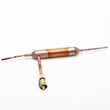
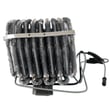
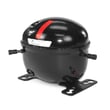
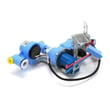
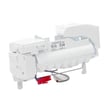
If troubleshooting points to a sealed-system or cooling failure, these model-matched parts are commonly involved in professional repairs:
Why it matters
A refrigerator that is running warm can spoil food quickly, and restricted airflow or a clogged condenser can make the unit run longer and less efficiently. Catching the cause early helps prevent bigger cooling-system damage.
Last updated: February 2026
How to reset LG lower ice maker?
To reset the lower ice maker on your LG LMXC23796S, turn the ice maker OFF, empty and reinstall the ice bin correctly, then turn the ice maker back ON and allow it to reach 15°F (–9°C) or colder before it starts cycling and making ice again (see the LMXC23796S user manual).
Quick reset steps (safe and effective)
- Set the ice maker power switch to OFF (O).
- Remove the ice bin; keep hands away from the ice maker tray area.
- Empty the bin and shake/level the ice so it is not piled unevenly.
- Reinstall the bin carefully, slightly slanting it to avoid contacting the ice maker.
- Make sure the ice compartment door closes tightly.
- Set the ice maker power switch to ON (I).
- Wait for the unit to cool; the ice maker starts once it is at 15°F (–9°C) or below.
What to check if it still will not make ice
Common causes
| What you notice | Most likely cause | What to do |
|---|---|---|
| No ice after reset | Freezer not cold enough | Confirm freezer is at or below 15°F (–9°C) and allow time to stabilize |
| Ice stops early | Ice-detecting sensor blocked or frosted | Clear the sensor area and keep the bin seated properly |
| Small cubes or slow production | Water supply or filter restriction | Flush air from the line and replace the filter if needed |
Water and filter tips
- If the refrigerator was recently installed, flush about 2.5 gallons of water in short cycles (30 seconds on, 60 seconds off).
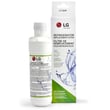
- If cubes are getting smaller or water flow is weaker, replace the LG lt1000p refrigerator water filter AGF80300704.
Why it matters
A proper reset clears bin alignment and sensor issues that can pause ice production. It also ensures the ice maker can cycle normally once the freezer reaches the correct temperature.
Related help: how to replace the water filter in an LG refrigerator.
Last updated: February 2026
Are LG water filters worth it?
Yes, LG water filters are worth it for most LMXC23796S owners because they help protect water taste, dispenser flow, and ice quality when replaced on schedule and used within the specified water pressure and temperature range. For best results, follow the replacement and flushing steps in the LMXC23796S owner's manual.
What you get (and what to watch for)
A genuine, correctly installed filter typically delivers consistent flow and cleaner-tasting water; most problems come from overdue replacement, trapped air, or water pressure issues.
Benefits
- Better-tasting drinking water and clearer ice
- Helps reduce sediment-related clogs in the dispenser line
- More consistent dispenser performance when replaced on time
- Simple maintenance item that supports overall refrigerator efficiency
Common downsides
- Higher ongoing cost than many generic filters
- Leaks can happen if the filter is not fully seated or the O-rings are damaged
- Flow can drop if the filter is overdue or your water supply has heavy sediment
LG LMXC23796S filter specs that matter
Your manual lists operating limits and a normal replacement interval. Staying inside these ranges is what makes the filter “worth it” long-term.
| Item | Typical spec for this model’s filter system |
|---|---|
| Replacement interval | Every 6 months (or sooner if flow drops) |
| Rated capacity | 200 gallons |
| Water pressure | 20 to 120 psi |
| Water temperature | 33°F to 100°F |
How to avoid leaks and low flow
Use this checklist after installing a new filter (or if you notice dripping at the filter head).
- Turn the filter until it is fully seated and locked (do not cross-thread)
- Dispense and discard several minutes of water to purge air
- Check for drips for the next 5 to 10 minutes of dispensing
- If flow is weak, confirm your home water pressure is within range
- Replace the filter early if you have noticeable flow reduction
For step-by-step help, use how to replace the water filter in an LG refrigerator.
Why it matters
A clogged or poorly seated filter can cause slow dispensing, odd taste, and intermittent ice maker performance. Replacing the filter on schedule also helps you spot water supply issues (pressure, sediment) before they create bigger dispenser or ice maker problems.
Last updated: February 2026