Owner’s manual
 View engine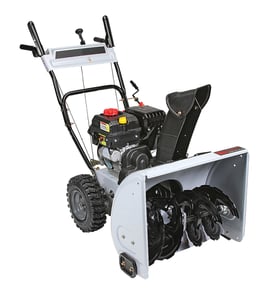


Where is the model number on a snowblower?
On the Craftsman snow thrower model 944527700, the model and serial numbers are printed on a decal attached to the rear of the snow thrower housing. We recommend recording both numbers and the purchase date for parts lookup and future service; see the owner's manual.
Where to look on the machine
Check these common spots first (starting with the most likely for this model):
- Rear of the snow thrower housing (between and above the wheels area)
- Back panel near the frame rails
- Rear handle support area (near the lower handle mounts)
- Inside the rear cover area if your unit has a protective shroud
What the label typically includes
The decal usually lists more than just the model number. Look for:
- MODEL or MODEL NUMBER (for example, 944527700)
- SERIAL or SERIAL NUMBER
- Sometimes the date of purchase is written by the owner, not printed
| Label item | What it’s used for | When you need it |
|---|---|---|
| Model number | Identifies the exact snowblower version | Ordering belts, bearings, skid shoes, cables |
| Serial number | Identifies production run details | Matching certain assemblies and hardware |
| Purchase date | Maintenance and recordkeeping | Seasonal service planning and documentation |
Why it matters for parts and repairs
Using the correct model number helps us match the right diagrams and parts for your exact Craftsman configuration. That matters for fit and performance on items like belts, chute controls, and drivetrain components.
Quick tip if the decal is dirty or hard to read
- Wipe the area with a damp rag and mild soap
- Use a flashlight at an angle to make faded text stand out
- Take a close-up photo and zoom in to read the characters
Last updated: February 2026
Should I spray my snowblower with WD-40?
Yes, you can lightly spray a water-displacing product on the snow-contact surfaces of your Craftsman 944527700 snow thrower to help reduce chute clogging and wet-snow sticking; keep it off belts, friction-drive parts, and hot engine or muffler areas. For model-specific safety and maintenance steps, follow the owner's manual.
Where it helps (and where it causes problems)
Use a light coating only on surfaces that touch snow, not on drive components.
- Good places: inside the discharge chute, chute deflector, auger housing surfaces
- Avoid: auger drive belt area, traction drive belt area, friction disc and drive plate, pulleys
- Never spray: hot muffler, hot engine surfaces, carburetor area
- Keep away from: electrical connections and the headlight area
- Wipe overspray: to reduce dirt buildup and slippery handles
Safer routine for clog prevention
A slick chute helps, but good operating habits prevent most clogs.
- Shut the engine off before any clearing.
- Wait at least 10 seconds for the impeller to stop.
- Clear packed snow using a tool, not your hands.
If you need a dedicated tool, the snowblower clean-out tool 532192199 is a good match for this model.
Quick comparison: spray options
| Option | Best use | Watch-outs |
|---|---|---|
| Water-displacing spray | Short-term slicking of chute surfaces | Can attract grime; overspray can contaminate belts/friction drive |
| Silicone spray | Longer-lasting slick surface on chute | Still avoid belts and friction drive |
| Dry PTFE spray | Low-residue slick coating | Apply lightly; keep off rubber parts |
Why it matters
On the 944527700, belt and friction-drive traction parts rely on controlled friction. Any oily film can cause slipping, loss of traction, or poor auger engagement, even if the chute sheds snow better.
Last updated: February 2026
How to tell year of Craftsman snowblower by serial number?
On a Craftsman snow thrower like model 944527700, the year is typically encoded in the serial number on the decal attached to the rear of the snowblower housing. Once you locate that serial number, you can decode the date portion to identify the manufacturing year (and often the month and day). For the exact decal location and recording details, use the owner's manual.
Where to find the serial number on model 944527700
We look for the model and serial number decal in this spot:
- Rear of the snow thrower housing
- On a decal (label), not stamped into the metal
- Near where the handles and chassis meet the housing on many units
- Best read after wiping off snow, salt, and grime
How Craftsman serial numbers commonly encode the year
Craftsman snowblower serial formats vary by manufacturer and era, but these patterns are common:
- 5th-character year code: A character in the serial indicates the year within a decade
- Month and day codes: Earlier characters can represent month and day
- MTD-style date block (common on some Craftsman units): A letter can represent the month (A = Jan through L = Dec), followed by digits for day and year-in-decade
Quick decode guide (common patterns)
| Serial pattern you see | What it usually means | What you get |
|---|---|---|
| 5th character is a single digit | Year within a decade | Year ending in that digit (example: “1” = a year ending in 1) |
| Month letter A to L | Month code | Month of manufacture |
| Next digits after month letter | Day and year-in-decade | Day of month and year ending digit |
Why it matters
Knowing the build year helps us match the correct parts and diagrams for wear items like belts, bearings, and hardware. For example, this model’s parts list includes items such as the snowblower auger drive belt 532408007 and snowblower traction drive belt 532192383, which are often selected by exact model and production variation.
Tips to avoid misreading the year
- Write down the full serial number exactly as shown (include letters)
- If the decal is faded, use a flashlight at an angle to improve contrast
- Record the purchase date separately; it is not the same as the build date
Last updated: February 2026
What is the typical lifespan of a gas snowblower?
A typical gas snowblower like the Craftsman 944527700 lasts 10 to 15 years with normal residential use and consistent maintenance. Keeping up with oil changes, belt condition, and seasonal storage steps is what most often determines whether you reach the high end of that range.
What affects lifespan the most
- Maintenance schedule: regular checks and tune-ups prevent small issues from becoming major repairs.
- Fuel and oil habits: correct oil type and clean fuel reduce engine wear.
- Belt and wear-item replacement: belts, spark plugs, and shear pins are designed to wear out.
- Cleaning after use: keeping the housing clear of packed snow, salt, and grime helps prevent corrosion.
- Storage practices: proper end-of-season storage protects the engine and controls.
For model-specific maintenance intervals and procedures, follow the Craftsman owner's manual.
Typical lifespan by usage pattern
| Usage pattern | Typical lifespan | What usually ends it first |
|---|---|---|
| Light residential (small driveway, occasional storms) | 12 to 15 years | Corrosion, neglected storage |
| Average residential (regular winter use) | 10 to 12 years | Belts, friction drive wear, carburetor issues |
| Heavy use (long driveway, frequent deep snow) | 8 to 10 years | Auger/impeller wear, drivetrain wear |
Maintenance habits that add years
- Change oil on schedule; use the oil viscosity listed in the manual for your temperature range.
- Replace the spark plug at the start of each season or about every 100 hours.
- Inspect and replace worn belts; a slipping belt reduces throwing power and increases heat.
- Lubricate moving points and keep fasteners tight.
- Store it clean and dry; address belt wear before storage so you start the next season ready.
If you are already seeing symptoms like weak auger engagement or poor throwing distance, a common first step is inspecting the snowblower auger drive belt 532408007.
Why it matters
A snowblower that is maintained to spec typically costs less over time because it avoids preventable engine wear and reduces mid-storm breakdowns. It also performs more consistently, especially in wet, heavy snow.
Last updated: February 2026
Is it worth fixing a snowblower?
Yes, it’s usually worth fixing a Craftsman snow thrower model 944527700 when the repair is a normal wear item (belt, skid shoes, bearings) and the total cost stays well below the cost of replacing the machine. If the repair involves major drivetrain damage and approaches about half the price of a comparable new unit, replacement is typically the better value.
Quick way to decide (cost vs. condition)
Use these checks before you buy parts:
- Add up parts cost plus any shop labor.
- Check safety and reliability: abnormal vibration is a warning sign; stop and inspect before continuing to run it.
- Look for “wear-item” failures first (belts, skid shoes, springs, bearings).
- Confirm maintenance history: yearly spark plug replacement and belt inspection are recommended.
- Consider storage and fuel habits: poor off-season storage and old fuel often create repeat problems.
Common “worth fixing” repairs on this model
These are typical repairs that often restore performance at a reasonable cost:
- Replace a worn auger belt: snowblower auger drive belt 532408007
- Replace a worn traction belt: snowblower traction drive belt 532192383
- Replace a worn skid shoe: snowblower skid shoe, left 532174762
- Address chute issues (binding or weak tension): husqvarna snowblower chute deflector tension spring 532184505
- Fix driveline wear before it escalates (bearing noise, wobble): snowblower auger bearing 532420478
When replacement is usually the smarter move
Major mechanical damage can push costs up quickly:
| What you’re seeing | What it often points to | Typical direction |
|---|---|---|
| Loud grinding from auger/impeller area | Gearcase or shaft damage | Repair only if parts and labor stay low |
| Persistent abnormal vibration | Bent auger/impeller, damaged bearings, loose fasteners | Diagnose first; repair if localized |
| Multiple systems failing at once | Deferred maintenance, corrosion, fuel issues | Compare total repair cost to replacement |
Why it matters
A snowblower that vibrates abnormally or has damaged rotating parts can become unsafe fast. The manual also stresses shutting the engine off and disconnecting the spark plug wire before unclogging, inspecting, or repairing.
Tips to keep repair costs down next season
- Follow the maintenance schedule in the owner's manual.
- Run the machine a few minutes after throwing snow to help prevent freeze-up.
- Check and tighten fasteners regularly.
- Inspect belts at least once a year and replace when worn.
Last updated: February 2026