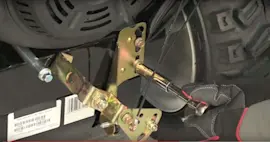
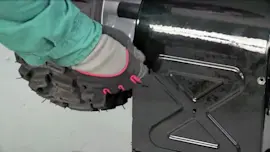
Owner’s manual
 View engine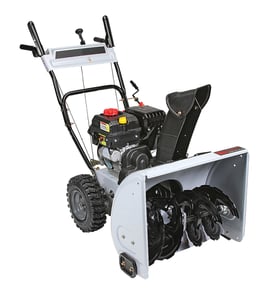



How do I tell how old my snowblower is?
To tell how old your Craftsman snow thrower model 536885410 is, we use the serial number from the decal on the rear of the snow thrower housing and decode it to identify the build date. Your purchase date (if recorded) also helps confirm the unit’s age; see the owner's manual.
Where to find the model and serial number
On model 536885410, the manual specifies that the model and serial numbers are on a decal attached to the rear of the snow thrower housing.
- Look on the rear of the housing (back of the machine body)
- Wipe off snow, dirt, and oil film so the decal is readable
- Record the full serial number exactly as shown
- If the decal is damaged, check for any secondary ID labels on the frame
- Keep the number with your maintenance records for parts lookups
How to decode the age (what to do next)
Craftsman snowblower serial formats vary by production run, so the most reliable method is to match your serial number pattern to the decoding method used for that style of tag.
- Write down the full serial number and any letters in it
- Look for a date-style pattern (often year plus day-of-year, or a year code)
- If your unit has an engine ID plate, record the engine model/type code too (engine date codes can narrow the timeframe)
- Compare the decoded build date to your recorded purchase date (if you have it)
Quick guide: what each date tells you
| Date you find | What it means | Best use |
|---|---|---|
| Serial-number build date | When the snowblower was manufactured | Best for determining age |
| Purchase date | When it was bought | Helps confirm timeline |
| Engine build date | When the engine was made | Helps validate the era |
Why it matters
Knowing the manufacture year helps us match the correct parts and service procedures for your Craftsman 536885410, especially for wear items like the belt 313821MA and drive components that can change across production runs.
Last updated: February 2026
What is the typical lifespan of a gas snowblower?
A gas snowblower typically lasts 10 to 20 years with normal homeowner use and consistent maintenance. For your Craftsman 536885410 snow thrower, lifespan is driven most by seasonal tune-ups, clean fuel practices, and keeping wear items (like belts) adjusted and replaced on schedule (see the owner's manual).
Typical lifespan ranges (what to expect)
- Light use (a few storms per year): 15 to 20 years
- Moderate use (regular winter use): 10 to 15 years
- Heavy use (long driveways, wet snow, frequent storms): 8 to 12 years
What shortens lifespan fastest
- Running old fuel or storing with fuel in the tank
- Skipping lubrication of chains, sprockets, and auger shaft
- Operating at too fast a ground speed (overloading the machine)
- Continuing to run with excessive vibration or loose hardware
- Letting drive and auger belts run loose until they slip
Maintenance that adds years (high-impact items)
We see the biggest lifespan gains when you stay on top of these basics:
- Change engine oil on schedule and keep the oil level correct
- Use fresh, clean gasoline; drain fuel for off-season storage when recommended
- Lubricate pivot points, chains, sprockets, and the auger shaft as outlined in the manual
- Check and adjust belts early in the season and again mid-season
- Keep fasteners tight and inspect for vibration-causing looseness
Common wear items vs. long-life components
| Item | Normal expectation | What it affects |
|---|---|---|
| Drive/auger belt | Wears over time | Propulsion and snow discharge |
| Idler pulley | Wears with belt use | Belt tension and engagement |
| Gear case | Long-life unless damaged/leaking | Drive power transfer |
If you are seeing slipping or weak drive, replacing the belt 313821MA and inspecting the idler pulley 1502120MA is a practical first step.
Why it matters
A snowblower that is maintained, lubricated, and stored safely runs at proper load and temperature, which reduces belt slip, vibration, and drivetrain wear. That is what pushes a gas snowblower toward the 15 to 20 year range instead of an early replacement.
Last updated: February 2026
Is it worth fixing a snowblower?
Yes, it’s worth fixing a Craftsman snow thrower like model 536885410 when the machine is structurally sound and the repair is a normal wear item (belt, cable, pulley, fasteners) that restores safe operation for far less than replacing the unit. If the snowblower has repeated major failures or unsafe vibration after repairs, replacement makes more sense.
Quick decision checklist
- The engine starts and runs consistently after basic tune-up items (fresh fuel, oil, spark plug check).
- The auger and drive systems engage without slipping or abnormal noise.
- The unit does not vibrate abnormally (vibration is a warning sign that needs immediate inspection).
- The repair is a common wear part (belt, idler pulley, cable) rather than a major drivetrain rebuild.
- The frame, auger housing, and chute area are not cracked, bent, or heavily corroded.
Repairs that are usually worth it on this model
These are common, cost-effective fixes that often bring performance back quickly:
- Replace a worn drive/auger belt: belt 313821MA
- Fix belt tension or engagement issues: idler pulley 1502120MA
- Restore control feel and engagement: cable 1580MA
- Replace damaged chute components if the machine still runs strong: chute deflector 762222MA
When replacement is the better call
Use this as a practical guide for deciding where to put your money and time.
| Situation | What it usually means | Best next step |
|---|---|---|
| Abnormal vibration continues | Hidden damage or imbalance | Inspect before operating; repair only if the root cause is clear |
| Frequent major breakdowns | Reliability is declining | Consider replacement |
| Damage after striking an object | Possible auger/impeller or housing damage | Stop, disconnect spark plug wire, inspect and repair before restarting |
| Hard to move when engine is off | Normal for track drive models | Use proper handling; pull backward when repositioning |
Why it matters (safety and longevity)
We base the decision on safety and total cost of ownership. The owner's manual calls out key safety steps: stop the engine, disconnect the spark plug wire before clearing clogs or making repairs, and inspect for damage after hitting a foreign object. It also notes that abnormal vibration is a warning sign that should be checked immediately.
Last updated: February 2026
Should I spray my snowblower with WD-40?
Yes, you can spray a light coat of WD-40 on your Craftsman snow thrower model 536885410 to help prevent rust and reduce snow sticking on bare metal areas like the auger housing, auger, and impeller; keep it off belts, friction-drive surfaces, and hot engine or exhaust parts. For model-specific maintenance and storage steps, follow the owner's manual.
Where WD-40 helps (and where it causes problems)
Use it as a protectant on exposed metal, not as a general-purpose “spray everything” solution.
Good places to spray (light coat, then wipe):
- Inside the discharge chute and chute opening (helps reduce sticking)
- Auger housing interior (after cleaning and drying)
- Auger and impeller bare metal for off-season rust prevention
- Lightly on external fasteners and linkages (then wipe excess)
Avoid spraying:
- Drive belt and pulleys (slip and loss of drive)
- Friction disc and drive plate area (slip and poor traction)
- Rubber tires and skid shoes contact areas (reduced grip)
- Hot engine, muffler, or near fuel fill (fire risk)
What the manual recommends for this model
Our manual guidance for the 536885410 focuses on cleaning after use and rust prevention for storage:
- After blowing snow, let the engine idle a few minutes to melt snow and ice off the engine.
- Clean the snow thrower thoroughly after each use; remove ice, snow, and debris.
- For storage, cover bare metal parts of the auger housing, auger, and impeller with a rust preventative (a sprayable lubricant works well).
For the full procedure and safety steps (including clearing clogs safely), use the owner's manual.
Quick do and do not checklist
- Do clean and dry the chute and auger housing before spraying.
- Do apply a thin coat and wipe off puddles or drips.
- Do reapply occasionally during wet, salty conditions.
- Do not spray near the friction drive system or belt path.
- Do not spray while the engine or exhaust is warm.
Common alternatives (when you want less mess)
| Option | Best use | Notes |
|---|---|---|
| Silicone spray | Chute and housing non-stick | Stays slick in cold; less oily residue |
| Dedicated non-stick snow spray | Chute and impeller area | Designed for snow contact surfaces |
| Rust preventative spray | Off-season storage | Best after cleaning and drying |
Why it matters
Overspray onto the drive system is the main reason a snowblower suddenly “won’t move” or loses throwing performance after spraying. Keeping lubricants on the correct metal surfaces protects against corrosion without creating belt or friction-disc slip.
Last updated: February 2026