Error Codes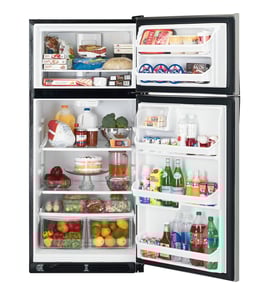




Are top mount or bottom mount fridges better?
Top-mount refrigerators like Whirlpool WRT318FZDW11 are usually the better choice if you want lower purchase cost, simpler design, and strong energy efficiency; bottom-mount models are often better for everyday ergonomics because the fresh-food section sits at eye level.
Quick comparison: top mount vs bottom mount
| Feature | Top mount (freezer on top) | Bottom mount (freezer on bottom) |
|---|---|---|
| Fresh-food access | Lower, more bending | Higher, less bending |
| Energy use (typical) | Often lower | Often higher |
| Upfront cost (typical) | Often lower | Often higher |
| Freezer access | Easy, at chest height | More bending |
| Repair complexity | Often simpler | Often more complex |
When a top-mount fridge is the better pick
- You want a straightforward Whirlpool refrigerator with fewer “extras” to maintain.
- You prefer strong efficiency and steady cooling performance.
- You do not mind bending to reach the crisper drawers and lower shelves.
- You want easier access to frozen foods.
- You want a layout that is typically easier to service.
When a bottom-mount fridge is the better pick
- You use the refrigerator section far more than the freezer.
- You want less bending for daily items like milk, produce, and leftovers.
- You are willing to trade some efficiency and cost for convenience.
Why it matters
Choosing the right layout affects daily comfort, energy use, and long-term maintenance. For example, if your priority is efficiency and simpler repairs, a top-mount design like WRT318FZDW11 is often a practical fit.
Related DIY help
If you are comparing designs because of cooling performance concerns, we recommend starting with troubleshooting a refrigerator not cooling video.
Last updated: January 2026
What are the disadvantages of a top mount fridge?
Top-mount refrigerators like the Whirlpool WRT318FZDW11 typically trade convenience for simplicity: the fresh-food section sits lower (more bending), freezer space can be less organized, and many models skip in-door water and ice features. For a quick overview of common layouts and tradeoffs, see what are the main parts of a refrigerator.
Common disadvantages you may notice
- More bending for daily use: fresh food is below eye level, so you reach down more often.
- Freezer organization can be basic: fewer bins and dividers than many bottom-freezer designs.
- Fewer premium features: in-door ice and water dispensers are less common on top-mount units.
- Narrower shelf access: the upper freezer can make tall-item loading in the refrigerator feel tighter.
- Temperature swings with frequent freezer use: opening the top freezer often can affect overall airflow.
What this means for the Whirlpool WRT318FZDW11
We cannot confirm which convenience features (like an in-door dispenser or factory ice maker) are included on the WRT318FZDW11 based on the model-specific information available here; Whirlpool often uses the same base model number across multiple feature packages. If you are comparing options, focus on how you use the refrigerator daily (fresh-food access vs. freezer access).
Quick comparison: top mount vs. bottom freezer
| Feature | Top mount (like WRT318FZDW11) | Bottom freezer |
|---|---|---|
| Fresh-food access | Lower, more bending | Higher, more convenient |
| Freezer access | Eye-level | Lower drawer |
| Typical organization | Simpler | Often more flexible |
| Dispenser/ice options | Less common | More common |
Why it matters
Most households open the refrigerator section far more than the freezer. If you want less bending and easier access to fresh foods, a bottom-freezer style can feel more comfortable day to day. If you want a simpler design with fewer add-ons to maintain, a top-mount can be a solid fit.
Last updated: January 2026
Are there any drawbacks to convertible fridges?
Convertible refrigerator features are not something we can confirm for Whirlpool model WRT318FZDW11 based on model-identifying information alone; many refrigerators are fixed fridge/freezer designs. That said, when a refrigerator does have convertible zones, the main drawbacks are usually user-setting mistakes, temperature stability tradeoffs, and added complexity.
Common drawbacks of convertible refrigerators
- Higher chance of user error: a zone set too warm can spoil food; too cold can cause freezer burn.
- More controls and sensors: more components can mean more troubleshooting if temperatures drift.
- Temperature recovery can be slower: frequent switching between modes can take time to stabilize.
- Space tradeoffs: convertible compartments sometimes reduce usable shelf layout compared to a dedicated freezer.
- Noise changes: fans may run differently as the unit tries to hit a new setpoint.
What to watch for on a top-mount like WRT318FZDW11
Even without a convertible zone, the same “temperature management” issues show up if airflow is restricted or a sensor is off.
If you notice warm refrigerator temps or uneven cooling, these model-relevant checks help:
- Make sure vents are not blocked by food packages.
- Confirm doors seal tightly and close on their own.
- Listen for the evaporator fan running when cooling is needed.
- Check for frost buildup that could restrict airflow.
Parts that often relate to temperature and airflow
If cooling performance is inconsistent, these are common components involved on many Whirlpool top-mount designs:
| Symptom | Often-related component | Example for this model |
|---|---|---|
| Fridge warm, freezer cold | Airflow/fan issue | Refrigerator evaporator fan motor WP2315539 |
| Temps swing up and down | Temperature sensing issue | Thermistor, refrigerator W11438736 |
| Frost or moisture at door | Door seal issue | Refrigerator door gasket (white) W10861499 |
Why it matters
Convertible features can be convenient, but they only protect food when the compartment is set correctly and holds temperature consistently. Whether your refrigerator is convertible or not, stable airflow, accurate sensing, and good door sealing are what keep food safe and fresh.
Last updated: January 2026
What is the most common problem with whirlpool refrigerators?
For the Whirlpool WRT318FZDW11 top-mount refrigerator, the most common day-to-day problem we see is reduced cooling from restricted airflow or poor heat removal. That often traces back to dirty condenser coils, blocked air vents between compartments, or a fan issue that prevents proper air circulation.
Quick checks that solve many “not cold enough” complaints
- Unplug the refrigerator; vacuum dust and pet hair from the condenser area.
- Make sure packages are not blocking the air return and supply vents.
- Listen for the evaporator fan in the freezer when the compressor is running.
- Check that doors close fully and the gasket seals all the way around.
- Set temperatures to common targets: 0°F freezer and 37°F fresh food.
Model-compatible parts that often relate to cooling complaints
If cleaning and airflow checks do not help, these WRT318FZDW11 parts are common suspects:
- Refrigerator evaporator fan motor WP2315539
- Thermistor, refrigerator W11438736
- Refrigerator air diffuser W10861170
Symptom-to-area guide (fast triage)
| What you notice | Most likely area | Example compatible part |
|---|---|---|
| Freezer cold, fridge warm | Airflow from freezer to fridge | W10861170 |
| No airflow sound from freezer | Evaporator fan system | WP2315539 |
| Temps swing up and down | Temperature sensing | W11438736 |
| Frost buildup, weak airflow | Defrost or airflow restriction | (inspect vents and evaporator area) |
Why it matters
Airflow and heat-transfer problems make the compressor run longer, temperatures drift, and food spoils faster. Addressing coil cleaning and fan-related issues early helps restore stable temperatures and reduces wear.
Helpful DIY troubleshooting
- Troubleshooting a refrigerator not cooling video
- Diagnosing refrigerator evaporator fan problems video
- How to clean refrigerator condenser coils
Last updated: January 2026