View engine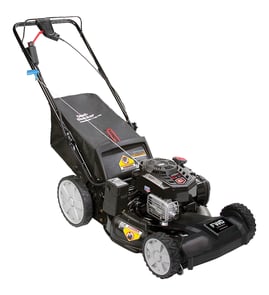



Are gas lawn mowers being phased out?
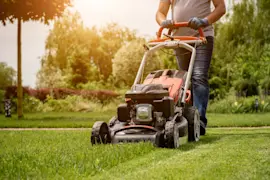
Gas walk-behind mowers like the Craftsman 917383270 are not being phased out everywhere at once; instead, sales are shifting gradually as some states and local areas restrict new gas-powered outdoor equipment, while many homeowners move to battery models for lower noise and simpler maintenance.
What “phased out” usually means
Most changes focus on new equipment sales, not on taking existing mowers out of service.
- Existing gas mowers can typically still be used and maintained
- Restrictions (when they exist) are usually state or local, not nationwide
- Commercial and heavy-duty use often transitions more slowly than residential use
- Parts support often continues for years because so many gas mowers remain in service
What to do if you plan to keep your Craftsman 917383270 running
Keeping a gas mower reliable is mostly about blade condition, clean airflow, and tight hardware.
- Keep the blade sharp and balanced; a dull blade strains the engine
- Inspect the blade mounting area for wear and wobble
- Re-tighten fasteners after blade service and after the first mow of the season
- Clean grass buildup under the deck to prevent corrosion and poor cut quality
- Use fresh fuel and store fuel properly during the off-season
Helpful DIY reading: how to winterize a lawn mower
Parts that commonly matter for cut quality and blade mounting
If you notice vibration, uneven cutting, or the blade loosening, these are common wear items to check.
| Symptom | Common area to inspect | Example part for this model |
|---|---|---|
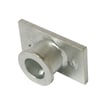
| Vibration after hitting debris | Blade adapter and blade | Lawn mower blade adapter 581547901 |
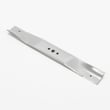
| Ragged cut, tearing grass | Blade edge and balance | Lawn mower blade, 20-in 532145106 |
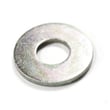
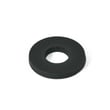
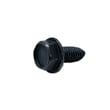
| Blade hardware won’t stay tight | Fasteners and washers | Lawn & garden equipment screw 532851084 |
Why it matters
Regulations and retailer trends can change what is easiest to buy new, but maintenance keeps your current mower safe, smooth, and effective. A solid blade mount and a sharp blade also reduce engine load and improve cut quality.
Last updated: January 2026
How to find Craftsman model number?
For Craftsman walk-behind mower model 917383270, the model number is typically printed on a product ID sticker on the mower deck. On most Craftsman walk-behind mowers, that sticker is on the rear of the deck, near the lower handle mounting points.
Where to look on the mower
Check these common ID-tag locations first:
- Back of the deck, between the lower handle mounts
- Rear deck lip, just above the discharge opening area
- Side of the deck near a rear wheel height adjuster
- Under the rear flap (if equipped), on the deck surface
- On the engine shroud (engine model, not the mower model)
What numbers you should write down
You will usually see more than one identifier. Use this quick guide:
| What you see | What it’s used for | Example format |
|---|---|---|
| Mower model number | Finding Craftsman 917383270 parts diagrams and parts | 917.XXXXXX or 917XXXXXX |
| Serial number | Identifying production run and correct revisions | Letters and numbers |
| Engine model/type/code | Getting engine-specific parts (carburetor, ignition, recoil) | Varies by engine brand |
Why it matters
The mower model number (like 917383270) points to the correct deck, drive, and handle parts. The engine numbers point to engine parts. Using the wrong number is the most common reason customers order the wrong blade, blade adapter, or hardware.
If the sticker is missing or unreadable
Use these practical workarounds:
- Clean the deck area with mild soap and water; dried grass can hide the label
- Shine a flashlight across the sticker at a low angle to make faded print readable
- Take a close-up photo and zoom in to read the digits
- Match key wear items by diagram and measurements; for example, compare your blade and adapter to the lawn mower blade, 20-in 532145106 and the lawn mower blade adapter 581547901
Last updated: January 2026
Should I use 87 or 91 gas for lawn mower?
For the Craftsman walk-behind mower model 917383270, use 87-octane (regular) unleaded gasoline for normal operation. Higher octane like 91 does not add power or “clean” the engine; it is mainly for high-compression engines and usually provides no benefit in a typical mower.
What to use (and what to avoid)
- Use fresh 87-octane unleaded from a busy station.
- Use ethanol-free fuel when available; it stores better and reduces carburetor issues.
- If you must use E10 (10% ethanol), buy only what you will use in 30 days.
- Avoid E15/E85; higher ethanol blends can cause hard starting and fuel-system damage.
- Do not mix octane grades to “tune” performance; the engine timing and compression are fixed.
Quick comparison
| Fuel choice | Works in most mowers | Best for | Notes |
|---|---|---|---|
| 87 octane (regular) | Yes | Everyday mowing | Recommended for typical walk-behind engines |
| 91 octane (premium) | Yes | High-compression engines | Usually no performance gain in mowers |
| Ethanol-free (often 87-90) | Yes | Storage, fewer carb issues | Often costs more but reduces varnish and phase separation |
| E15/E85 | No | Not for mowers | Can damage fuel system and cause running problems |
Why it matters
Using the right fuel helps your 917383270 start easier, run smoother, and reduces common problems like gummed-up carburetor jets, surging, and stalling after storage.
Helpful maintenance tip while you are there
If you are servicing the deck or blade area, inspect the blade mounting hardware and replace worn fasteners so the blade stays secure and aligned. A common related part is the lawn mower blade adapter 581547901.
Last updated: January 2026