Owner’s manual
 Error Codes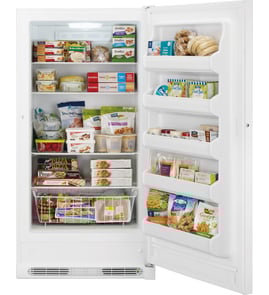


How many cubic feet is Kenmore freezer Model 25324752103?
The exact cubic-foot capacity for Kenmore upright freezer model 25324752103 is listed in the product specifications section of the 25324752103 owner's manual. If you need a quick planning estimate, most Kenmore upright freezers in this style are commonly in the 15 to 18 cu. ft. range.
How to find the exact capacity for model 25324752103
Check these spots in the documentation and on the appliance:
- Look for a “Product features” or “Specifications” section in the 25324752103 owner's manual
- Check the model/serial plate inside the cabinet (often on the upper left interior wall on upright models)
- If the manual lists multiple similar models, match the capacity to 25324752103 exactly
- If you are measuring for storage planning, use shelf and basket layout as a practical guide
Quick capacity guide (what the numbers mean)
Capacity is the internal storage volume; usable space depends on shelves, baskets, and airflow clearance.
| Capacity (cu. ft.) | Typical use case | What you can expect |
|---|---|---|
| 12 to 14 | Small household overflow | Limited bulk storage |
| 15 to 18 | Most common upright size | Good mix of shelves and bulk items |
| 19+ | Large family or bulk buying | More room, often wider/taller cabinet |
Why it matters
Knowing the cubic feet helps you plan food storage, compare energy use, and confirm you are ordering the right accessories and internal storage parts for the correct Kenmore model.
Last updated: January 2026
Is there a reset button on a Kenmore upright freezer?
Kenmore upright freezers like model 25324752103 typically do not have a single dedicated “reset” button; most “resets” are done by cycling power or using the control features provided on your model. For the correct reset method and control locations, follow the steps in the 25324752103 owner's manual.
How to reset a Kenmore upright freezer (most common methods)
- Power reset: Unplug the freezer (or switch off the breaker) for 5 minutes, then restore power.
- Control reset (if equipped): Some models reset by turning the temperature control to OFF, then back to a cooling setting.
- After defrost reset (if equipped): If your freezer has a “Flash Defrost” feature, you restart it by pushing the defrost plunger back in after defrosting.
- Stabilize temperatures: After any reset, allow several hours for temperatures to stabilize before making more adjustments.
What to check if it still will not cool after a reset
If the freezer runs but does not get cold, we focus on airflow and defrost issues first.
- Make sure the temperature control is not set to OFF
- Confirm the door closes and seals fully (warm air leaks cause frost and poor cooling)
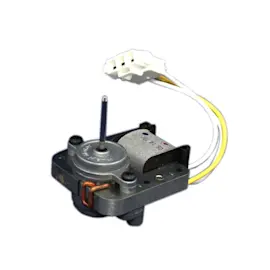
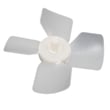
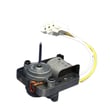
- Listen for the evaporator fan; no airflow often points to a fan problem
- Check for heavy frost on the back interior panel (common sign of a defrost system issue)
- Verify the freezer is level so the door seals correctly
Quick symptom guide
| Symptom | Most likely area to check | Common next step |
|---|---|---|
| Runs constantly, warm inside | Door seal, airflow | Inspect gasket, clear vents |
| Thick frost buildup | Defrost system | Test defrost heater/thermostat |
| No fan sound, warm temps | Evaporator fan | Inspect fan motor and blade |
Parts that commonly relate to “won’t cool” or “frosting up”
These are model-matched examples for Kenmore 25324752103:
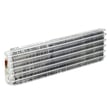
- Freezer defrost heater 216730700 (helps melt frost off the evaporator)
- Thermostat 297216600 (defrost bi-metal thermostat used in the defrost circuit)
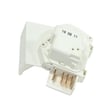
- Defrost timer 5304518034 (controls defrost cycles on timer-based models)
Why it matters
A proper reset can clear a temporary control glitch, but cooling problems usually come from airflow restrictions, a door that is not sealing, or a defrost system issue. Resetting without addressing the root cause often leads to repeat frosting and temperature swings.
Last updated: January 2026
Which upright freezers are garage ready?
A “garage-ready” upright freezer is specifically designed to keep safe temperatures in unheated or hot garages where ambient temps swing widely. For your Kenmore 25324752103, we recommend following the placement and airflow guidance in the 25324752103 owner’s manual and choosing a freezer that explicitly states “garage ready” on its rating label and product specs.
What “garage ready” means (what to look for)
Garage environments can run far colder or hotter than a kitchen; a garage-ready model is built to maintain stable freezing performance across a wider ambient range.
Key features to prioritize:
- Wide ambient operating range (the product listing states the range)
- Temperature stability and fast recovery after door openings
- High-temp alarm or temperature alert
- Strong door seal and adjustable leveling feet for proper closing
- Adequate airflow clearance around the cabinet (critical in hot climates)
Quick checklist before you buy
Use this checklist when comparing Kenmore, GE, Frigidaire, Hisense, Insignia, and other upright freezers:
- The listing explicitly says “garage ready” (not just “works in a garage”)
- Ambient range is published and fits your garage conditions
- Alarm features match your needs (audible, visual, memory)
- Frost management fits your preference (manual defrost vs frost-free)
- Interior layout works for your storage style (shelves, bins, baskets)
Garage-ready vs standard upright freezer (comparison)
| Feature | Garage-ready upright freezer | Standard upright freezer |
|---|---|---|
| Ambient temperature tolerance | Wider range | Narrower range |
| Temperature stability in extremes | Higher | Lower |
| Best location | Garage, basement, utility room | Climate-controlled indoor space |
Why it matters
In a garage, heat buildup and poor airflow can raise cabinet temperatures and reduce performance. Our Kenmore freezer manual emphasizes allowing enough space for air circulation and keeping the unit level so the door seals correctly; both directly affect cooling, frost, and moisture control. Use the 25324752103 owner’s manual to confirm clearance, leveling, and temperature control basics before installing any freezer in a garage.
Last updated: January 2026