Owner’s manual
 Error Codes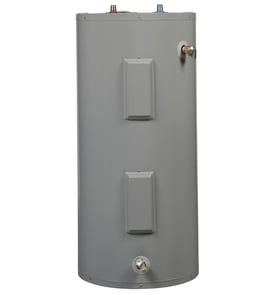




What is the lifespan of a 50 gallon electric water heater?
A 50-gallon electric water heater typically lasts 10 to 15 years. For your American E1F50RD045, regular maintenance (especially inspecting the anode rod and flushing sediment) is what most often determines whether you land closer to 10 years or closer to 15.
Typical lifespan and what changes it
Most electric tank water heaters fail from internal tank corrosion or heavy sediment buildup. These factors have the biggest impact:
- Water quality: hard water increases scale and sediment
- Anode rod condition: a depleted anode lets the tank corrode faster
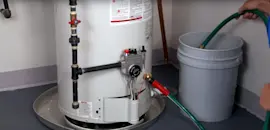
- Maintenance habits: periodic draining and flushing reduces sediment
- Water temperature setting: higher temps can increase stress and scale
- Usage level: heavy daily demand increases heating cycles
Maintenance schedule we recommend for E1F50RD045
Your owner's manual calls out anode-rod inspection and explains why sediment matters. A simple schedule keeps the tank protected and helps the heating elements and thermostats work correctly.
| Maintenance item | Best practice | Why it helps |
|---|---|---|
| Inspect anode rod | Every 3 years; replace if more than 50% depleted | Slows tank corrosion |
| Drain and flush tank | Periodically (more often with hard water) | Reduces sediment noise and premature tank failure |
| Check temperature setting | Keep at a safe, practical setting | Limits overheating, scaling, and energy waste |
Parts that commonly extend service life
If you are maintaining the heater to maximize lifespan, these model-matched parts are the ones we see most often replaced during ownership:
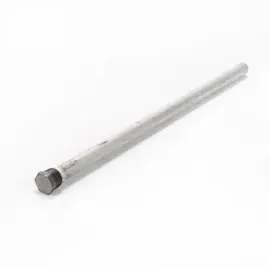
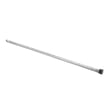
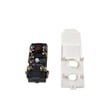
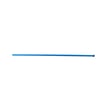
- Water heater anode rod 100109594 (protects the tank from corrosion)
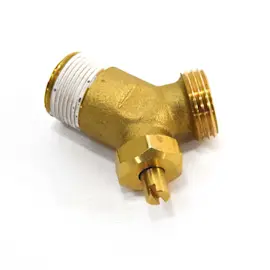
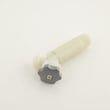
- Drain valve 100109106 (helps with draining and flushing)
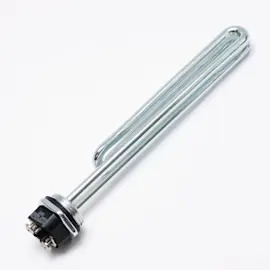
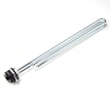
- Element 100108290 (restores heating performance if an element fails)
Why it matters
Once the tank itself corrodes through, replacement is usually the practical fix. Keeping the anode rod active and sediment under control is the most effective way to get full life from a 50-gallon electric water heater.
Last updated: February 2026
How much should I expect to pay for a new water heater installed?
For a typical installed replacement, most homeowners pay about $600 to $2,500 for a traditional tank water heater and about $1,400 to $3,900 for a tankless unit; the final price depends on capacity, electrical upgrades, permits, and how much plumbing work is needed. For your American E1F50RD045 electric tank model, costs usually stay in the tank range unless the install requires major code or electrical changes.
What drives the installed price
The water heater itself is only part of the bill; installation labor and required upgrades often make up a large share of the total.
- Tank size and recovery needs (larger tanks and higher wattage can cost more)
- Electrical work (breaker, wire gauge, disconnect, bonding, junction box)
- Plumbing updates (shutoff valves, piping changes, expansion tank, fittings)
- Code requirements and permits (varies by city and utility)
- Location and access (tight closets, attic installs, stairs, drain pan needs)
- Disposal and haul-away of the old tank
Typical cost ranges (installed)
| Type of water heater | Typical installed cost | When it trends higher |
|---|---|---|
| Electric tank (like E1F50RD045) | $600 to $2,500 | Electrical upgrades, difficult access, permit requirements |
| Tankless (electric or gas) | $1,400 to $3,900 | Service upgrade, venting (gas), new gas line, major re-piping |
What to confirm before you get quotes
We recommend checking these items in your owner's manual so your installer quotes the right scope and avoids surprise add-ons.
- Model and serial information from the data plate (often near the element access door)
- Voltage and circuit requirements for the heater
- Clearances and location requirements for safe installation
- Water piping material compatibility (use potable-water-rated piping)
- Temperature setting approach (thermostat adjustment and safe hot water delivery)
Why it matters
A low quote can jump quickly if the installer discovers the job needs electrical corrections, a new shutoff, or code-required safety items. Getting quotes that include permits, disposal, and any required upgrades helps you compare apples to apples.
Last updated: February 2026
What is the average cost to replace a 50 gallon electric water heater?
Replacing a 50-gallon electric water heater like the American E1F50RD045 typically runs $800 to $2,500 installed, with basic tank swaps on the low end and higher-efficiency upgrades or more involved plumbing and electrical work on the high end. Permits and code updates can also raise the total.
What usually makes the price go up or down
- Type of heater: standard electric tank vs. heat pump (hybrid)
- Labor and access: tight closets, attic installs, or difficult drain access cost more
- Electrical work: new breaker, wiring, or disconnect requirements
- Plumbing changes: shutoff replacement, new piping, expansion tank, or valve updates
- Permit and inspection: common for water heater replacements
- Haul-away: removal and disposal of the old tank
Typical cost breakdown (what you are paying for)
| Cost item | Typical range | Notes |
|---|---|---|
| 50-gallon electric tank | $400 to $1,200 | Higher for premium or specialty models |
| Labor (remove and install) | $300 to $1,200 | Varies by region and complexity |
| Permit/inspection | $50 to $300 | Depends on local requirements |
| Parts and materials | $50 to $400 | Valves, fittings, piping, expansion tank |
Why it matters
A correct replacement is not just about the tank. For example, the installation instructions for this style of electric water heater discuss pressure control in closed water systems and note that an expansion tank sized for potable water is commonly used (often 1.5 gallons per 50 gallons stored) to help manage pressure during heating cycles. Details like that can affect both safety and total installed cost; see the owner's manual.
When repair is the better value than replacement
If your tank is not leaking and you are dealing with performance issues (no hot water, slow recovery, temperature swings), repair often costs far less than replacement. Common service parts for the E1F50RD045 include:
- Heating element: element 100108290
- Upper thermostat: top t-stat 100108683
- Lower thermostat: lwr t-stat 100108421
- Corrosion protection: water heater anode rod 100109594
Last updated: February 2026
Are water heater parts interchangeable?
Most water heater parts are not universally interchangeable, even within the same brand. For the American E1F50RD045 electric water heater, replacement parts must match the original style and electrical ratings (especially heating elements and thermostats); we use the E1F50RD045 owner's manual and the data plate to confirm compatibility.
What is usually interchangeable (and what is not)
Some items are more standardized, but many are model-specific due to voltage, wattage, tank design, and safety requirements.
- Sometimes interchangeable (with matching specs):
- Heating elements (only when style, voltage, and wattage match)
- Upper and lower thermostats (only when the control style and ratings match)
- Drain valves (only when thread type and length match)
- Often not interchangeable:
- Temperature and pressure relief valves (must match the required rating and fit)
- Dip tubes (length and outlet design vary)
- Anode rods (length, thread, and core type vary)
Model-specific guidance for E1F50RD045
The manual calls out that replacement heating elements must be the same style and voltage/wattage rating as the ones installed; that information is typically printed on the element flange/terminal block or listed on the water heater data plate. Use that information before ordering.
Here are common E1F50RD045 parts you can match by exact ID:
| Part type | Example part for this model | What must match |
|---|---|---|
| Heating element | Element 100108290 | Style, voltage, wattage, mounting |
| Anode rod | Water heater anode rod 100109594 | Thread, length, clearance |
| Drain valve | Drain valve 100109106 | Thread size/type, outlet style |
| Upper thermostat | Top t-stat 100108683 | Control type, ratings, fit |
Why it matters
Using a “close enough” part can cause poor heating performance, nuisance high-limit trips, leaks, or unsafe operation. Matching the exact electrical ratings and fit helps protect the heater and keeps hot water temperatures stable.
Quick compatibility checklist (before you order)
- Confirm the model number E1F50RD045 from the data plate.
- For elements: match voltage and wattage exactly.
- Match thread type and length on valves and rods.
- Replace parts with the same style and mounting.
- If a safety control has been wet or submerged, follow the safety guidance in the manual.
Last updated: February 2026
What is usually the most common water heater problem?
The most common problem we see with electric water heaters like the American E1F50RD045 is sediment buildup in the tank, which causes popping or rumbling noises, reduced efficiency, and can shorten tank life. Other frequent issues are inconsistent hot water from a failed thermostat or heating element, and leaks at valves or fittings.
What “most common” looks like in real symptoms
- Rumbling, popping, or crackling sounds during heating: sediment on the tank bottom
- Not enough hot water: failed heating element or thermostat, or heavy hot-water demand
- Fluctuating water temperature: thermostat issues, element problems, or “stacking” from short hot-water draws
- Water on the floor: loose connection, leaking drain valve, leaking T and P relief valve, or an aging tank
- Rotten egg smell: anode rod reaction with certain water conditions
Quick checks you can do (before replacing parts)
- Turn off power at the breaker before opening access panels.
- Confirm the tank is completely full of water before energizing the heater.
- Listen for noise during heat-up; noise plus slow recovery often points to sediment.
- If you see water, identify whether it is from a fitting/valve versus the tank body.
- Review the maintenance and draining guidance in the owner's manual.
Common causes and the parts that usually fix them
| Symptom | Most likely cause | Parts commonly involved for E1F50RD045 |
|---|---|---|
| No hot water or slow recovery | Burned-out heating element | Element 100108290 |
| Temperature swings | Upper or lower thermostat out of range | Top t-stat 100108683, lwr t-stat 100108421 |
| Rotten egg odor | Anode rod depleted or reacting with water | Water heater anode rod 100109594 |
| Leak at drain point | Worn or cracked drain valve | Drain valve 100109106 |
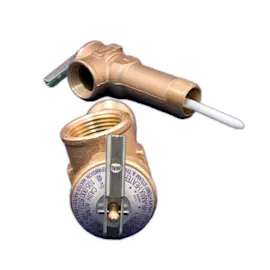
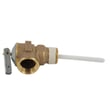
| Dripping from discharge pipe | T and P relief valve opening or failing | T&p valve 100108279 |
Why it matters
Sediment buildup can create noise and reduce heat transfer, making the heater work harder and potentially leading to premature tank failure. The manual also notes that tanks eventually leak after extended use, so controlling leaks and protecting the area (such as with a drain pan) helps prevent property damage.
Last updated: February 2026