Error Codes

Can you replace a thermostat on an electric water heater?
Yes. On the Kenmore 153320551HT power miser 10+ electric water heater, you can replace a failed thermostat if you follow safe electrical shutoff steps, keep the insulation in place, and set the new thermostat to a safe temperature (typically 120°F).
What you need to know before you start
- Turn OFF the water heater breaker and verify power is off with a meter.
- Water heater thermostats are mounted behind an access panel and insulation.
- Many electric water heaters use two thermostats (upper and lower); replacing the wrong one will not fix the problem.
- Keep the plastic shield, insulation, and access cover in place after the repair.
- Set temperature to 120°F to reduce scald risk and energy use.
Which thermostat should I replace on model 153320551HT?
Use symptoms to choose the most likely thermostat.
| Symptom | Most likely area | Common part to check first |
|---|---|---|
| No hot water at all | Upper controls | Thermostat 100108683 |
| Some hot water, then it turns cold | Lower controls | Thermostat 100108424 |
| Water too hot or temperature swings | Either thermostat | Start with the thermostat that controls the problem zone |
Basic replacement steps (high level)
- Shut off power at the breaker; confirm 0 volts at the heater.
- Remove the access panel; fold insulation back carefully.
- Take a photo of wire positions; move wires one at a time to the new thermostat.
- Mount the new thermostat flat against the tank (good contact matters).
- Reinstall the plastic shield (if present), insulation, and access cover.
- Restore power and allow time to heat; recheck temperature.
Why it matters
A weak or stuck thermostat can cause no hot water, short hot water supply, or overheating. Correct thermostat selection and proper reassembly (insulation and covers) helps the heater sense temperature accurately and run efficiently.
Last updated: January 2026
What is the life expectancy of a Kenmore water heater?
Most Kenmore electric water heaters, including model 153320551HT, last 8 to 12 years. If your unit is in that age range and you are seeing leaks, rusty water, or inconsistent hot water, it is time to evaluate repair versus replacement.
What affects water heater lifespan
- Water quality (hard water and sediment shorten element and tank life)
- Temperature setting (higher settings increase wear)
- Maintenance habits (regular flushing helps)
- Installation conditions (corrosion, moisture, and poor venting around the tank)
- Part failures that cause overheating or short cycling
Quick age and condition check
Use this checklist to decide whether a repair is worth doing:
- Under 8 years: repairs like thermostats, elements, or a drain valve often make sense
- 8 to 12 years: base the decision on condition, leak history, and performance
- Over 12 years: replacement is usually the best long-term value
Common symptoms and likely next step
| Symptom | What it often points to | Typical next step |
|---|---|---|
| Not enough hot water | Sediment, failing element, thermostat issue | Test electrical parts, consider element/thermostat replacement |
| Water too hot or swings | Thermostat out of calibration | Replace thermostat |
| Slow leak at element area | Gasket seepage | Replace element gasket |
| Won't drain or drips | Drain valve worn | Replace drain valve |
| Water on floor from tank body | Tank corrosion | Replace water heater |
Parts that commonly extend service life
If the tank itself is sound, these model-matched parts are often involved in “no hot water” or temperature problems:
- Thermostat 100108424 (temperature control)
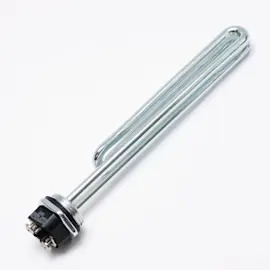
- Lower element 100108796 (heats the water in the lower portion of the tank)
- Water heater heating element gasket 100108379 (seals the element opening)
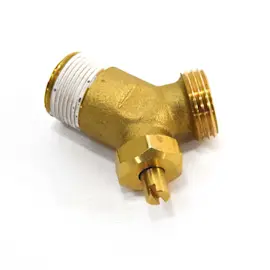
- Ao smith water heater drain valve 100108605 (draining and maintenance)
Why it matters
Once a water heater reaches the end of its typical lifespan, efficiency and reliability drop quickly. Knowing the 8 to 12 year range helps you avoid repeated part replacements on a tank that is already near the end of service life.
Last updated: January 2026
How do I know if my electric water heater element is bad?
If your Kenmore 153320551HT electric water heater has no hot water, runs out of hot water quickly, or takes a long time to recover, a failed heating element is a top suspect. We confirm it by safely shutting off power and testing the element for continuity and proper resistance with a multimeter.
Common signs the element is failing
- No hot water (often points to the upper element or upper thermostat)
- Lukewarm water or short hot-water supply (often points to the lower element)
- Slow recovery after heavy use
- Popping, sizzling, or rumbling sounds (sediment can overheat an element)
- Breaker trips after the heater starts heating (can indicate a shorted element)
How we test an electric water heater element (safe, basic method)
- Turn OFF the water heater breaker (240V). Confirm power is off with a meter.
- Remove the access panel and insulation at the element area.
- Press the high-limit reset button on the upper thermostat once (if present).
- Disconnect the two wires from the element screws.
- Set a multimeter to ohms and test across the two element terminals.
- Test each terminal to the metal tank (ground) to check for a short.
What the meter readings mean
| Test | Normal result | What “bad” looks like |
|---|---|---|
| Terminal-to-terminal resistance | A steady ohms reading (not OL) | OL/open circuit or near 0 ohms |
| Terminal-to-tank (ground) | OL/no continuity | Any continuity to ground |
Parts that commonly get replaced with an element issue
If testing points to the element, these model-matched parts are common fixes:
- Lower element 100108796 (when you get lukewarm water or short supply)
- Water heater heating element gasket 100108379 (replace whenever the element is removed)
- Thermostat 100108424 or thermostat 100108683 (if the element tests good but heating is inconsistent)
Why it matters
A bad element can leave you without reliable hot water and can also overheat wiring or trip the breaker. Testing first prevents replacing the wrong part and helps you target the real failure (element vs thermostat vs wiring).
Last updated: January 2026