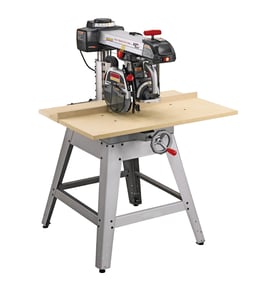

Can I use a dado blade on a radial arm saw?
Yes, a radial arm saw can cut dados, but you only do it when the saw is explicitly set up to accept a dado stack and you can keep proper guarding and work control in place. For the Emerson model 509346, confirm your specific saw’s arbor, flange, and guard clearance before installing any dado set.
What to verify before installing a dado set
- Arbor diameter match: the dado set bore must match the saw’s arbor.
- Arbor length and nut engagement: the arbor nut must fully tighten with several threads engaged.
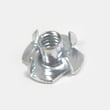
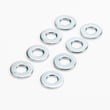
- Flange and washer fit: the stack must clamp flat and evenly with no wobble.
- Guard and anti-kickback compatibility: you must be able to reinstall the guard and any anti-kickback features after the dado is mounted.
- Clearance at full travel: the wider cutter must not contact the guard, yoke, or table hardware through the full stroke.
Safer operating practices (radial arm saw specific)
- Unplug the saw before changing blades or adjusting the guard.
- Use a sharp, complete stacked dado set; do not run damaged blades or mismatched chippers.
- Make multiple shallow passes instead of one deep, full-width pass.
- Keep the work tight to the fence and table; use hold-downs and stop blocks when possible.
- Maintain a controlled feed; if the saw starts to self-feed, stop the cut and reset your setup.
Quick decision guide
| Check | If you see this | Do this |
|---|---|---|
| Guarding | Guard cannot be installed with the dado | Do not use a dado on this setup; restore guarding |
| Arbor nut | Nut bottoms out or barely catches threads | Reduce stack width or do not use a dado |
| Cut behavior | Saw pulls hard into the work | Reduce depth per pass, improve hold-down, slow feed |
Why it matters
A dado stack increases cutting width and load. On a radial arm saw, that can increase self-feeding and kickback risk, so compatibility and guarding are as important as the cut itself.
For general safety fundamentals before any DIY repair or adjustment, use are diy appliance repairs safe.
Last updated: February 2026
How do I find the model number on my 509346?
For the Emerson 509346 radial arm saw guard kit, the model number is typically printed on an ID label or stamped plate on the saw’s frame or arm assembly. We use that exact model number to match the correct diagrams and replacement parts.
Where to look on a radial arm saw
Check these common locations first:
- The back or side of the saw’s column (vertical support)
- The arm casting near the carriage travel area
- The motor housing or motor mounting yoke
- The base frame or table support structure
- Under the table surface or on the front edge of the base
What to write down (so parts match)
Record the full identification details, not just “509346”:
- Model number (for example, 509346)
- Serial number
- Any prefix/suffix characters on the tag
- Electrical rating (volts/amps), if shown
Quick ID checklist
| Item on label | Why it matters | Example |
|---|---|---|
| Model number | Primary parts match | 509346 |
| Serial number | Production run differences | Varies |
| Prefix/suffix | Narrows exact configuration | Letters/numbers |
Why it matters
Radial arm saws and guard kits can change across production runs; using the complete model and serial information prevents ordering the wrong guard components, hardware, or mounting pieces.
For more help identifying the correct tag and using it to search, use [how to find your appliance model number (and what it means for parts)].
Last updated: March 2026
What is the average lifespan of 509346?
The average lifespan of an Emerson 509346 radial arm saw (and its guard kit components) is 20 to 30 years with normal homeowner use and basic maintenance. Many units last longer when kept clean, aligned, and used with a properly functioning blade guard.
What affects lifespan most
- Dust buildup in the motor and switch area
- Worn bearings, brushes (if equipped), or power cord damage
- Misalignment of the arm, yoke, or fence causing strain and poor cuts
- Missing, cracked, or binding guard components
- Storage conditions (humidity leads to corrosion)
Maintenance that extends service life
- Vacuum dust from vents and the arm/column after use
- Inspect the power cord and plug; replace if cracked or loose
- Verify the blade guard moves freely and returns to its resting position
- Check fasteners for tightness and keep the table/fence secure
- Confirm smooth carriage travel; address binding promptly
Typical lifespan expectations
| Use pattern | Typical lifespan | Notes |
|---|---|---|
| Light DIY | 25 to 35 years | Clean storage, periodic checks |
| Regular homeowner | 20 to 30 years | Most common range |
| Heavy/continuous | 10 to 20 years | More wear on motor and bearings |
Why it matters
A radial arm saw can keep running for decades, but safety and cut quality depend on the condition of wear items (cord, switch, bearings) and the guard kit. If the guard does not operate smoothly, address that before continued use.
For general safety guidance before DIY work, review [are diy appliance repairs safe].
Last updated: March 2026