Installation guide
 Owner’s manual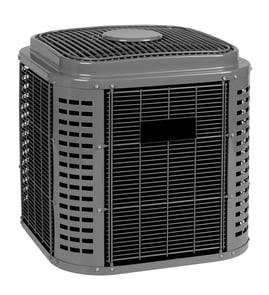



What is the tonnage of Carrier 38TKB030?
For the Carrier 38TKB030 condensing unit, the “030” size designation typically corresponds to about 2.5 tons of cooling capacity (roughly 30,000 BTU/hr). For the most accurate match to your exact unit configuration, confirm the unit size on the rating label and in the installation guide.
Carrier model sizing commonly maps to nominal BTU capacity:
- 018 is about 1.5 tons (18,000 BTU/hr)
- 024 is about 2.0 tons (24,000 BTU/hr)
- 030 is about 2.5 tons (30,000 BTU/hr)
- 036 is about 3.0 tons (36,000 BTU/hr)
- 042 is about 3.5 tons (42,000 BTU/hr)
- 048 is about 4.0 tons (48,000 BTU/hr)
- 060 is about 5.0 tons (60,000 BTU/hr)
| Model size code | Approx. BTU/hr | Nominal tons |
|---|---|---|
| 024 | 24,000 | 2.0 |
| 030 | 30,000 | 2.5 |
| 036 | 36,000 | 3.0 |
Correct tonnage helps us match the right components and performance expectations for your Carrier 38TKB030, including electrical and motor-start parts. A mismatched size can lead to poor comfort, higher energy use, and harder starts.
If you are troubleshooting hard starts, short cycling, or a fan that will not run, these parts are often involved:
- Run capacitor (helps start and run the compressor and fan motor), such as capactr dual CAP050300440RSP
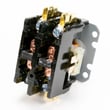
- Contactor (switches high voltage to the outdoor unit)
- Condenser fan motor (moves air through the outdoor coil)
For ordering, we recommend using the parts list for model 38TKB030 on this page; you can also search by model number on Sears PartsDirect.
Last updated: February 2026
How much do 3 ton AC units usually cost?
A typical installed price for a 3-ton central AC system is about $3,000 to $15,000. For your Carrier 38TKB030 condensing unit, the final total depends mostly on efficiency rating, required electrical and refrigerant-line work, and whether the indoor coil and line set need replacement.
- Efficiency level (SEER/SEER2): higher efficiency usually costs more up front.
- Installation complexity: long line sets, tight access, rooftop placement, or pad work.
- Refrigerant-line requirements: correct liquid and vapor line sizing and insulation.
- Electrical upgrades: disconnect, breaker, wiring, and outdoor shutoff compliance.
- Indoor equipment scope: matching indoor coil, metering device, and any ductwork fixes.
Your installation guide notes that the outdoor unit is charged for operation with a factory-approved indoor unit of the same size when connected by 15 ft of field-supplied tubing, and it provides recommended refrigerant connection sizes by unit size. Use the installation guide to confirm the correct tubing diameters and clearances before quoting or scheduling work.
| Cost item | Typical range | Notes |
|---|---|---|
| Outdoor unit (3-ton class) | $1,500 to $6,000 | Varies by efficiency and features |
| Labor and standard materials | $1,500 to $6,000 | Removal, set, startup, basic line/electrical |
| Add-ons (as needed) | $0 to $3,000+ | Line set replacement, electrical upgrades, pad/roof work |
A low bid that skips correct refrigerant-line sizing, evacuation, or airflow clearances can lead to poor cooling performance, higher energy use, and premature compressor wear. Getting the install details right protects the investment in a 3-ton system.
If you are repairing an older 3-ton condensing unit instead of replacing it, these common electrical parts can influence total repair cost:
- Capactr dual CAP050300440RSP (run capacitor)
- Contactor (often replaced with the same style as original)
- Condenser fan motor (if noisy, seized, or overheating)
For replacement parts specific to Carrier 38TKB030, order from the parts list for this model or search by model number on Sears PartsDirect.
Last updated: February 2026
What is the most common part to fail on an AC unit?
On most central AC condensing units, the run capacitor is the most common electrical part to fail because it handles frequent starts and heat stress. For your Carrier 38TKB030 condensing unit, a weak capacitor or a worn contactor are two of the first components we check when the outdoor unit will not start or only hums.
- Run capacitor: outdoor fan or compressor will not start, humming, intermittent starts
- Contactor: thermostat calls for cooling but the outdoor unit does not pull in and run
- Condenser fan motor: fan blade stops or runs slowly; unit may shut down on overload
- Airflow and maintenance issues: dirty indoor filter strains the system and can overheat components
- Thermostat rapid-cycling: frequent on/off can be hard on the compressor (avoid quick setting changes)
For model-specific operating and maintenance guidance, use the owner's manual.
If you are troubleshooting the Carrier 38TKB030, these parts on our list align with the most common “no-cool” and “won’t start” complaints:
| Symptom at outdoor unit | Common suspect | Example part for this model |
|---|---|---|
| Hums, fan will not spin, hard starts | Run capacitor | Capactr dual CAP050300440RSP |
| No click at startup, outdoor unit stays off | Contactor | Contactor (part number HN51KB024) |
| Fan not running or overheats | Fan motor | Motor HC39GE233 |
A failing capacitor or contactor can prevent the compressor and fan from starting, which stops cooling and can lead to repeated short cycling. Good maintenance also protects expensive components; checking filters regularly reduces strain that can overheat and shorten the life of the system.
- Disconnect power to both the indoor and outdoor units before opening panels.
- Check the indoor air filter every 3 to 4 weeks and replace or clean it as needed.
- Keep the outdoor unit clear of leaves and debris; maintain open airflow around the cabinet.
- Avoid “jiggling” the thermostat setting; wait at least 5 minutes after the compressor shuts off before changing settings again.
- If you are ordering parts beyond what is listed for this model, search by model number on Sears PartsDirect.
Last updated: February 2026
How many sq ft will a 3 ton AC unit cool?
A 3-ton central AC (about 36,000 BTU/hr) typically cools 1,500 to 2,500 sq ft, but the right match for your Carrier 38TKB030 depends on heat gain and airflow, not square footage alone. Use the installation guide for setup requirements and operating limits.
Square-foot rules of thumb can be off by a full ton. These factors usually matter most:
- Climate zone and sun exposure (hotter climates and west-facing glass need more capacity)
- Insulation and air sealing (attic insulation and leakage can swing sizing dramatically)
- Ceiling height (tall ceilings increase the volume of air to condition)
- Window area and shading (large, unshaded windows add major heat load)
- Duct condition and airflow (restricted airflow reduces delivered cooling)
- Indoor humidity targets (higher humidity loads reduce effective cooling)
Use this as a starting point; a load calculation is the correct way to size equipment.
| Home situation | Typical 3-ton coverage | What you usually notice |
|---|---|---|
| Mild climate, good insulation | 2,000 to 2,500 sq ft | Longer, steadier cycles and better humidity control |
| Average insulation, mixed sun | 1,700 to 2,100 sq ft | Common real-world range |
| Hot climate, older/leaky home | 1,500 to 1,800 sq ft | Runs longer and may struggle on peak days |
Correct sizing helps the system run long enough to remove humidity and avoid short cycling. Oversizing often causes frequent starts and clammy air; undersizing can run constantly and still fall behind in extreme heat.
If the outdoor unit will not start, runs intermittently, or the fan will not spin, these parts are common causes on condensing units:
- Capactr dual CAP050300440RSP (a weak run capacitor can keep the compressor or fan from starting)
- Motor HC39GE233 (a failed condenser fan motor can cause overheating and shutdown)
For model-based parts lookup and ordering, use the parts list for Carrier 38TKB030, or search by model on Sears PartsDirect.
Last updated: February 2026
Where can I buy Carrier HVAC parts?
You can buy replacement parts for your Carrier 38TKB030 condensing unit from the model-specific parts list for this unit; it helps you choose components that fit your exact outdoor unit. For additional parts searches by model number, shop through Sears PartsDirect.
Carrier outdoor units can share similar-looking electrical and fan components across series; matching the rating plate details helps ensure the replacement part fits and wires correctly.
- Confirm the outdoor unit model number is 38TKB030 on the rating plate
- Record the serial number and any series identifier shown on the plate
- Use the model parts diagrams to match the part by location and description
- Match electrical parts by function (contactor, run capacitor, fan motor)
- Use the wiring and accessory notes in the installation guide before moving any wires
These parts are commonly replaced when the outdoor unit will not start, hums, or the condenser fan will not run.
| What you are replacing | What it does | Example on this model page |
|---|---|---|
| Contactor | Switches high voltage to the compressor and fan | Contactor (part number HN51KB024) |
| Dual run capacitor | Helps start and run the compressor and fan motor | Capactr dual CAP050300440RSP |
| Condenser fan motor | Spins the outdoor fan blade to move air through the coil | Motor HC39GE233 |
Ordering by model number is good; ordering by model plus rating-plate details is better. It reduces returns and helps prevent repeat failures caused by installing an incorrect capacitor, contactor, or motor.
Last updated: February 2026