Error Codes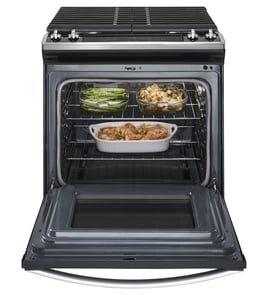


How long does a Kenmore gas range last?
A Kenmore gas self-cleaning range like model 9117398910 typically lasts 15 years with normal household use and basic maintenance. Keeping burners clean, ensuring steady ignition, and avoiding heavy grease buildup helps the oven and cooktop heat reliably for the long term.
What affects lifespan most
- Cleaning habits: Spills and grease left to bake on can shorten component life.
- Ignition performance: Slow or failed ignition strains the oven burner system.
- Heat stress: Frequent high-heat cooking and self-clean cycles accelerate wear.
- Ventilation: A clean vent hood filter reduces grease and heat buildup around controls.
- Door seal condition: A leaking gasket makes the oven work harder to hold temperature.
Quick maintenance checklist (monthly or as needed)
- Wipe up boilovers promptly; keep burner ports clear.
- Check that the oven lights smoothly and stays lit; if not, inspect the igniter WB2X9154.
- Inspect the oven door seal for gaps, tears, or flattening; replace if heat leaks are noticeable.
- Keep the oven window and door area clean so the door closes fully.
- Run self-clean only when necessary; use gentler cleaning between cycles.
Common wear items and what they do
| Part | What you’ll notice when it’s failing | Why it matters |
|---|---|---|
| Oven igniter | Oven takes long to light or won’t heat | Prevents reliable burner ignition |
| Oven door gasket | Heat leaks, uneven baking, longer preheat | Helps maintain stable oven temperature |
| Oven light bulb | No interior light | Makes it harder to monitor food without opening the door |
Why it matters
A range that holds temperature and ignites consistently cooks more evenly and uses less gas. Catching small issues early, especially ignition and door sealing problems, helps your Kenmore 9117398910 reach its full expected service life.
Last updated: February 2026
How to take the top off a Kenmore gas range?
On the Kenmore 9117398910 gas self-cleaning range, the cooktop (top) typically lifts up after you remove the grates and burner pieces, then release any front hold-down screws or clips. Once the top is free, support it securely so you can access burner tubes, wiring, and igniters.
Before you start (safety and prep)
- Turn all surface burner knobs to OFF.
- Shut off the gas supply at the range shutoff valve.
- Unplug the range (or switch off the breaker) to prevent shock.
- Let the cooktop cool completely.
- Protect the countertop and enamel with a towel or cardboard.
Basic cooktop removal steps (most Kenmore gas ranges)
- Remove the grates.
- Lift off burner caps and remove the burner heads/bases if your design uses them.
- Look for mounting screws near the front lip, under burner heads, or at the rear corners; remove them.
- Lift the front of the cooktop; if it hinges, raise it like a car hood.
- If the top does not hinge, lift and slide slightly to disengage rear tabs, then set it on a protected surface.
What to check if the top will not lift
- Hidden screws under burner heads or trim pieces
- A stuck spill tray or cooked-on residue acting like glue
- Wiring harness slack; do not pull hard on wires
- Misaligned burner tubes that catch on the cooktop openings
Parts you may see once the top is open
| What you see | What it does | When it matters |
|---|---|---|
| Igniter WB2X9154 | Lights the oven burner (glow-bar style) | No bake, delayed ignition, gas smell before lighting |
| Burner tubes/manifold | Routes gas to burners | Uneven flames, weak ignition |
| Wire connectors | Carry power to switches/ignition | Clicking issues, intermittent operation |
Why it matters
Opening the cooktop is the first step for cleaning spills under the top, inspecting burner tubes, and checking wiring. It also helps you diagnose ignition problems before replacing parts like an igniter, connector, or sensor.
Last updated: February 2026
What are the most common stove parts to replace?
On the Kenmore gas self-cleaning range model 9117398910, the most commonly replaced parts are the oven igniter, oven light bulb, and door sealing parts because they wear from heat and everyday use. When these parts fail, you typically see no-bake/no-heat symptoms, a dark oven cavity, or heat leaking around the door.
Most common replacement parts (and what they fix)
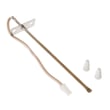
- Oven igniter: fixes an oven that will not heat or takes a long time to preheat (common on gas ranges). See igniter WB2X9154.
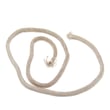
- Oven door gasket: helps stop heat loss, improves baking consistency, and can reduce long preheat times. See gasket WB2X9373.
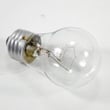
- Oven light bulb: restores oven light when the bulb burns out. See lamp bulb 40A15.
- Door glass: replaced when cracked, shattered, or heavily scratched. See door glass (black) WB56X1902.
- Temperature sensor: replaced when temperatures swing or the oven overheats/underheats. See sensor WB21X5301.
Quick symptom-to-part guide
| Symptom | Most likely part to check first | What you may notice |
|---|---|---|
| Oven will not heat (broil and bake weak or dead) | Igniter | No flame, gas smell, long preheat |
| Oven heats but bakes unevenly | Door gasket | Hot air leaking at door edges |
| Oven light does not work | Lamp bulb | Light stays off, oven still heats |
| Oven temperature is inaccurate | Sensor | Overbakes or underbakes repeatedly |
Why these parts fail most often
- High heat cycles dry out and weaken components
- Normal wear from frequent cooking and self-clean use
- Grease and spills can contaminate burners and door sealing surfaces
- Vibration and door slams can stress glass and connectors
Why it matters
Replacing the right wear part on your Kenmore 9117398910 restores safe ignition, stable oven temperature, and proper heat retention, which improves cooking results and helps prevent repeat failures.
Last updated: February 2026
What model is my Kenmore gas range?
Your Kenmore gas range model number is printed on a rating label attached to the appliance. On Kenmore gas self-cleaning ranges like model 9117398910, the label is most often in the oven door jamb, behind the storage drawer, or on the back panel near the vent area.
Where to look on a Kenmore range
Check these common spots in this order:
- Open the oven door and look along the left or right door frame (door jamb)
- Pull out the bottom storage drawer and look on the frame behind it
- Look on the back of the range near the upper vent area
- Check the side frame behind the broiler/oven door edge
- If the range is built into a tight space, use a flashlight and phone camera to read the tag
What the model tag looks like
Most Kenmore range labels include a few key fields. Here is what to match:
| Label field | What it means | What to copy for parts |
|---|---|---|
| Model / Mod. | Exact model identifier | 9117398910 (example format) |
| Serial / S/N | Unique unit ID | Helpful for service, not required for most parts |
| Gas type / rating | Fuel and input info | Useful when diagnosing burner or igniter issues |
Why the exact model number matters
We use the full model number to match the correct parts diagrams and compatible replacements for your specific Kenmore range. Even one missing digit can point to a different oven igniter, door gasket, or burner component.
If the label is missing or unreadable
Use these practical options:
- Clean the label gently with a damp cloth (do not scrape)
- Take a close-up photo and zoom in to read faded print
- Look for the model number on your purchase paperwork or service invoice
- If you are already troubleshooting a symptom (no bake, weak flame, gas smell), start with the most common repair parts for this model, such as the igniter WB2X9154
Last updated: February 2026