Installation guide
 Owner’s manual
 Error Codes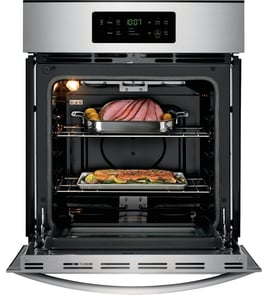




How long do GE wall ovens last?
Most GE wall ovens, including the GE JTP50SH5SS electric wall oven, last about 12 years with normal household use. With consistent cleaning, proper installation, and prompt repair of heating or door-seal issues, a wall oven commonly reaches 15 years.
Typical lifespan and what affects it
A wall oven’s life is driven by heat stress on components (elements, thermostats, wiring) and how well the door seals and cooling airflow are maintained.
- Heavy use (daily baking, frequent self-clean) shortens lifespan
- Poor cabinet ventilation or incorrect cutout fit increases heat damage risk
- A worn door gasket causes heat loss and longer bake times
- Failed bake or broil elements can mimic “old oven” performance
- Power surges can damage electronic controls
What “end of life” looks like vs. a simple repair
Many “old oven” symptoms are repairable with common parts.
| Symptom | Common cause | Often repairable? |
|---|---|---|
| Long preheat, uneven baking | Weak bake element | Yes |
| Broil not working | Failed broil element | Yes |
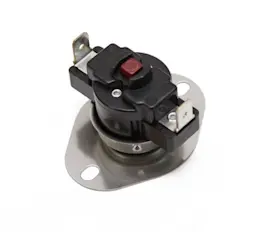
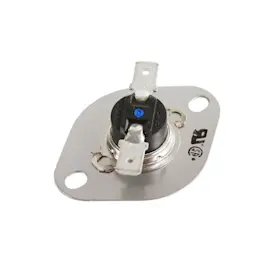
| Oven shuts down when hot | High-limit thermostat opening | Yes |
| Heat escaping, poor temperature stability | Door gasket leaking | Yes |
If your oven still powers on and the cavity is in good shape, replacing a heating or safety part is often the practical next step.
Maintenance that extends life
Use these habits to get the full service life from your GE wall oven:
- Keep the door sealing surfaces clean and free of baked-on debris
- Avoid slamming the door; it stresses hinges and glass
- Use self-clean only when needed; high heat accelerates wear
- Replace failed bulbs with the correct type to avoid socket damage
- Confirm the oven is properly hard-wired and grounded during installation
For model-specific care, cleaning, and operating guidance, use the JTP50SH5SS owner’s manual.
Why it matters
A wall oven is a built-in appliance; heat management and correct installation have a bigger impact than with a freestanding range. Following the cutout, clearance, and wiring requirements in the JTP50SH5SS installation guide helps prevent overheating that shortens component life.
Last updated: January 2026
What is the best brand for electric wall ovens?
GE is one of the best brands for electric wall ovens because it has a long track record, strong parts support, and widely available service. If you already own a GE wall oven like model JTP50SH5SS, staying with GE often makes ownership simpler for installation, operation, and future repairs.
How we recommend choosing the “best” brand
We focus on the factors that affect day-to-day cooking results and long-term ownership.
- Reliability history for the specific series (not just the brand name)
- Parts availability for common wear items (bake element, broil element, oven lamp)
- Service access in your area (authorized technicians and typical turnaround)
- Features you will actually use (convection, self-clean, controls)
- Fit and installation requirements for your cabinet cutout and electrical setup
Brand comparison (what matters most)
| What you care about | GE | Bosch | Thermador | Café |
|---|---|---|---|---|
| Parts availability | Strong | Strong | Strong | Strong |
| Service network | Broad | Broad | More specialized | Broad |
| Feature focus | Practical, widely supported | Premium fit/finish | High-end performance | Premium GE family |
| Best for | Value + serviceability | Quiet, refined builds | Luxury kitchens | Style + smart features |
Why it matters for JTP50SH5SS owners
If you are replacing an older wall oven, choosing a brand with dependable documentation and clear installation requirements helps avoid delays and rework. For example, GE wall ovens are designed to be hard wired (direct wired) into an approved junction box, and a plug and receptacle is not permitted for these products; confirming details in the JTP50SH5SS installation guide helps you plan correctly.
Parts support is a practical “brand advantage”
Even the best wall oven needs occasional maintenance. For the GE JTP50SH5SS, common service parts include:
- Oven lamp 40A15 for a burned-out cavity light
- Bake element (for weak or no bake heat)
- Broil element (for poor broiling performance)
- Door gasket (for heat loss and uneven baking)
Last updated: January 2026
Are wall ovens hard wired or plug-in?
GE electric wall ovens like model JTP50SH5SS are hard wired (direct wired) into an approved junction box; they are not designed to plug into a receptacle. During installation, the flexible conduit must stay full length and be secured with a proper strain relief clamp.
What “hard wired” means for this oven
Hard wired means the oven’s power leads connect inside a junction box, not to a standard outlet.
- Power is shut off at the breaker before making connections
- A junction box is used for the splice and grounding
- A strain relief clamp secures the conduit to the junction box
- The oven is on an individual, properly grounded branch circuit
- Circuit protection (breaker or fuse) matches the rating plate
For the exact wiring method (3-wire vs 4-wire) and connection steps, follow the JTP50SH5SS installation guide.
3-wire vs 4-wire connections (what to expect)
The correct connection depends on your home wiring and local electrical codes.
| Connection type | Typical use case | Key point |
|---|---|---|
| 4-conductor | New construction and many code-required installs | Separate neutral and ground conductors |
| 3-conductor | Some existing installations where allowed | Neutral and ground may be combined per code |
Why it matters
Using a plug-in cord or skipping the junction box can create loose connections, overheating, nuisance tripping, and grounding problems. Correct direct wiring protects the control, bake and broil circuits, and keeps the installation compliant with common electrical standards.
Quick safety checklist before you start
- Turn off power at the main disconnect or breaker
- Confirm the oven is properly grounded
- Use the correct size strain relief clamp for the conduit
- Do not shorten the flexible conduit
- Have a qualified installer or electrician make final line connections
Last updated: January 2026
Where can I find the GE wall oven model number?
On the GE JTP50SH5SS electric wall oven, we find the model and serial number label on the side trim or on the front of the lower oven behind the oven door. This label is the fastest way to confirm the exact model before ordering parts or scheduling service.
Where to look on the oven
Check these common label locations first:
- Open the lower oven door and look along the front frame (around the opening)
- Look on the side trim area near the oven opening
- Check the front of the lower oven cavity behind the door (label is often visible with the door open)
- Use a flashlight and look for a white or silver rating label with “Model” and “Serial”
What the label looks like (and what to write down)
The rating label typically includes:
- Model number (example: JTP50SH5SS)
- Serial number
- Electrical ratings (volts/amps)
- Manufacturing information
We recommend copying the model and serial exactly as printed, including any letters.
Why it matters before ordering parts
Using the correct model number helps us match the right GE wall oven parts and avoid returns, especially for items that vary by revision.
| If you are replacing | Why the model number matters |
|---|---|
| Bake or broil element | Mounting style and wattage can differ |
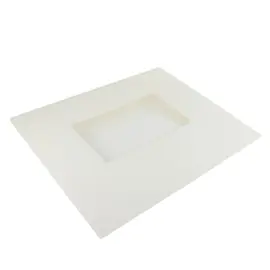
| Oven door glass | Glass shape and trim compatibility vary |
| Oven light bulb | Base type and heat rating must match |
Helpful next steps
- Confirm the model number on the label, then compare it to your paperwork
- Use the JTP50SH5SS owner’s manual to see the exact label location and model/serial write-in section
- If you are installing or reinstalling the oven, follow the JTP50SH5SS installation guide for safe handling and hard-wiring requirements
Last updated: January 2026